It’s Colonialism, Stupid!
It’s Colonialism, Stupid!

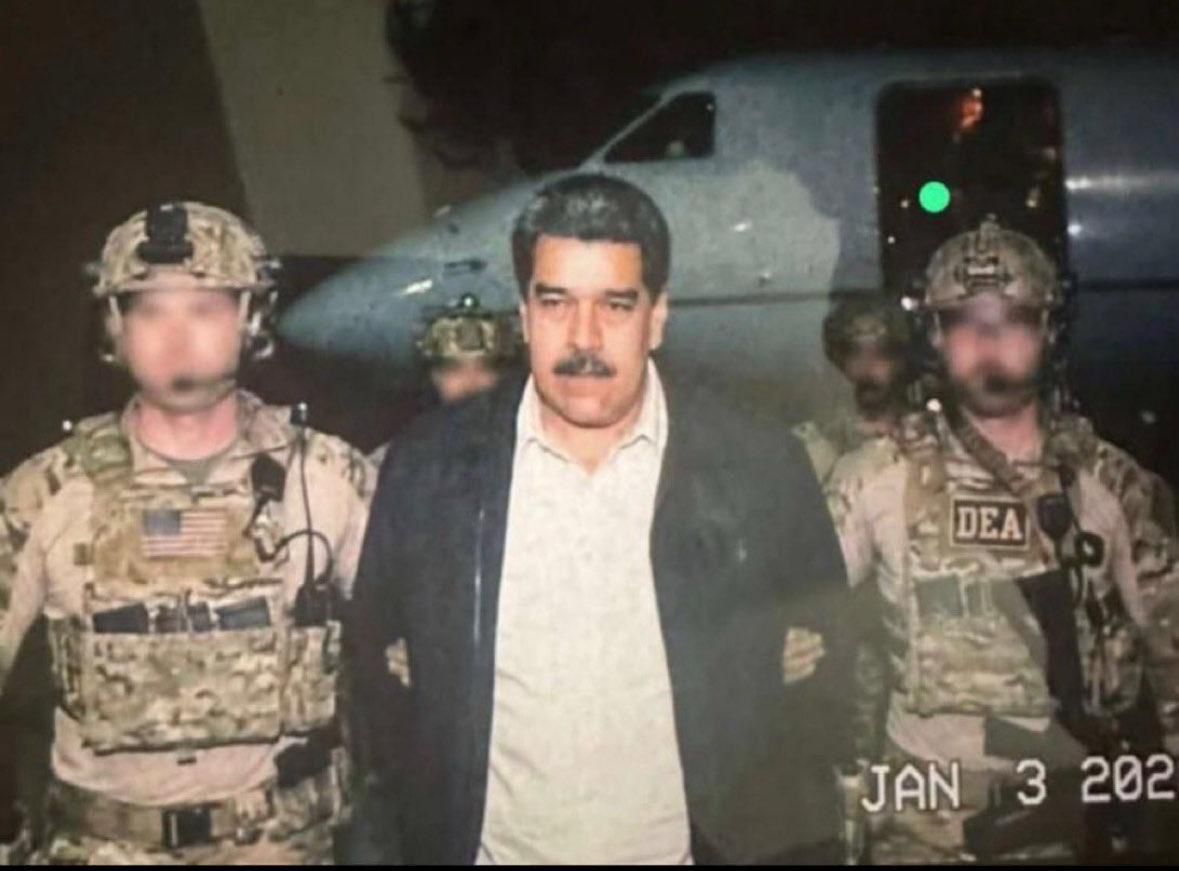
What happened in the early hours of January 3 in Caracas left the world stunned. But the strongest reason for astonishment is the fact that the world was stunned. What happened had been widely predicted. Since when? The less informed would say since Donald Trump came to power. But it is mainly since the publication of the National Security Strategy in November 2025, which states that the US reserves the right to intervene in any country whenever its interests are at stake.
Let’s go back in history and analyze the three main components of what happened: the surprise, the illegal capture of a political leader, and the reasons given for the act.
As for the surprise and the reasons, we need only go back to September 1939. In 1939, the world (the world that mattered then was Europe and the US) was stunned by Hitler’s surprise attack on Poland. The justification of the Nazi leader: “The Polish state has refused the peaceful settlement of relations which I desired, and appealed to arms… In order to put an end to this lunacy I have no other choice than to meet force with force from now on… Destroying Poland is our priority… The winner is never asked if what he said was the truth or a lie. As far as starting and fighting a war is concerned, there is no law – victory is the decisive factor. Be brutal and be without mercy.”
Anyone who closely followed Hitler’s behavior could predict what was going to happen. Hitler publicly invented Polish aggression while secretly ordering surprise attacks, telling his generals to act ruthlessly to achieve victory, illustrating the deceptive nature of the invasion. Polish aggression was invented, the invention was turned into reality through propaganda, and the invasion was invoked as an act of self-defense. Germany’s security was at stake. It so happened that European diplomats looked but did not see, listened but did not hear, read but did not understand. Denial was a cover for the impotence and poor political quality of the political leaders of the time.
As for the illegal capture of leaders, it is easy to recall the case of Panamanian President Daniel Noriega on January 3, 1990. However, we need to go back much further to see how a similar tactic was used in the past during the period of historical colonialism. King Ngungunyane was the king of the Gaza Empire between 1884 and 1895, a territory that today corresponds largely to Mozambique. Because of his resistance to Portuguese colonialism, he was known as the “Lion of Gaza.” He was defeated by colonialist troops in 1895 in Chaimite. Not satisfied with their victory and fearing that the king would continue to fuel anti-colonial resistance, the colonialists captured him and brought him to Portugal as a trophy of war. They paraded him along the main avenue of Lisbon. He was then deported to one of the Azores Islands, where he died in 1906.
In August 1897, French colonialists imposed colonial control over the Menabé kingdom of the Sakalava people in western Madagascar, massacring the local army. King Toera was killed and beheaded; his head was sent to Paris, where it was placed in the archives of the Natural History Museum. Almost 130 years later, pressure from the king’s descendants, as well as from the government of the Indian Ocean nation, paved the way for the return of the skull.
In other words, displaying symbols of resistance (sometimes the leaders themselves, their skulls, or their art objects) as trophies in the metropolis is a consistent practice of colonial rule. Whether the “deposit” is on an island, in a museum, or in a center in New York is a minor issue, a matter of convenience for the victor.
Has colonialism returned?
This is perhaps the most naive question that can be asked at this point. It is based on the idea that colonialism is a thing of the past, having ended with the independence of the European colonies. Nothing could be further from the truth. Colonialism is the treatment of a people or social group considered subhuman and, as such, unworthy of being defended by international or national law, human rights, or international treaties. The justification is perfectly rational: since they are subhuman, it would be absurd to treat them as human. That would jeopardize the defense of beings considered fully human. Colonialism is racism, slavery, plundering of natural and human resources, occupation by a foreign power, expulsion of peasants or indigenous peoples from their ancestral territories to make way for “development projects,” illegal deforestation, ethnic profiling, and racial discrimination.
Colonialism is a permanent and essential component of capitalism. Writing in England and bearing in mind above all the English case, Karl Marx was mistaken when he wrote that colonial violence was an initial phase of capitalism (primitive or original accumulation) that would later give way to the “monotony of economic relations based on the exploitation of free wage labor.” Colonial violence is permanent, and without it, capitalism would not exist. It is not present in the same way everywhere in the world precisely because colonialism-capitalism is an unequal and combined global project. From Rosa Luxemburg to Walter Rodney and David Harvey, this fact is now almost universally accepted.
More recently, what was the creation of the State of Israel if not an act of colonial occupation, a loathsome way for Europeans to unload onto the Palestinian people the atonement for the heinous crimes that they, Europeans, had committed against the Jews? Is the transformation of Gaza into the Riviera of the eastern Mediterranean anything more than an act of recolonization?
Another sign of recolonization is the anachronistic return of piracy. In times of peace or undeclared war, interfering with navigation in national or international waters is an act of piracy.
If Karl Marx, at the time he wrote (mid-19th century), had lived in India, Egypt, or Nigeria, instead of England, he would certainly have paid more attention to colonialism than to capitalism. Colonialism was the first modern global project, first as a pioneer of capitalism and then as a central component of the consolidation of capitalism. For this reason, the pioneering countries (Portugal and Spain) were promptly marginalized as soon as the pioneering period ended.
Recolonization and the duality of criteria
It is fair to think that colonial violence and capitalist monotony, despite being twin sisters, had periods of unequal coexistence. The post-World War II period gave more and better publicity to the capitalist sister, while in the current period, which did not begin with Trump and will not end with him, publicity is on the side of the colonialist sister. We are in a period of recolonization, while distracted intellectuals with false consciousness sing hymns to decolonial thinking. Others, such as Yanis Varoufakis, whom I greatly admire, speak of techno-feudalism, forgetting that feudalism, even in Europe, was a much more confined regime than is thought. If there is anything new in the world, it is not techno-feudalism, it is techno-colonialism.
One of the fundamental characteristics of colonialism is the abysmal line that separates “us” (the metropolitan sociability of fully human beings) and “them” (the colonial sociability of sub-humans). This division is neither essential nor ontological (humanity is one). It is driven by short-term tactical objectives. And the main objective is always free access to so-called natural resources, without which capitalism cannot survive. Vlodymyr Zelensky’s legitimacy is as great or as small as that of Nicolas Maduro, but while the former is welcomed as a hero, the latter is captured and treated as a criminal. If indeed Nicolas Maduro did not win the elections, Zelensky is the product of a coup d’état disguised as a color revolution (2014) – in which Ms. Victoria Nuland handed out sandwiches to protesters – and his term has long since ended. The prolongation of the war is his insurance policy for staying in power. Zelensky has long since handed over the minerals and land to US companies. Maduro’s crime was not handing over the oil until now. In addition, Zelensky serves to annoy Russia, China’s main ally, while Venezuela accommodates both.
The fear of Vladimir Putin and Xi Jinping
As current Western leaders measure others by their mediocre standards, their concern is not with the aberrant and barbaric illegality committed in Venezuela. They are primarily concerned with the possibility that Putin is now legitimized to capture Zelensky or China to invade Taiwan. I don’t like to make predictions, but I am convinced that the US has just given China and Russia a golden opportunity for them to show their moral superiority over the West. As rising empires, they have other means of imposing their will and doing so with the credible appearance of a positive sum: all countries win, although Russia and China win more.
What next?
I read the National Security Strategy published in November 2025 very carefully. It is an important document that should be read by all democrats around the world. The world is divided between two rival powers, one of which is willing to use all means to defeat its rival and to do so as quickly as possible. To do so, it must transform its sphere of influence into a fortress defended by loyal vassals. The two loyal vassals are self-mutilated Europe (Russia is part of Europe) and Latin America. China’s access to Europe is already blocked. That was the objective of the war in Ukraine, which Europeans are now consolidating at their own expense.
The important thing is to further weaken Europe and make it increasingly dependent on the US. To do this, it is important to reduce the European Union to irrelevance. The first act was Brexit and regaining the unconditional loyalty of the United Kingdom. Now it is a matter of ending the European Union: when they are isolated European countries are weaker and easier to control. Let us note one of the priorities of the policy for Europe (p. 27): “Building up healthy nations in Central, Eastern, and Southern Europe through commercial ties, weapons sales, political collaboration, and cultural and educational exchanges.” This formulation shows how the dominant countries of the European Union are excluded from this policy, especially France, Germany, and the Nordic countries. In Central, Eastern, and Southern Europe lies the hope of the world’s future.
This formulation shows how the dominant countries of the European Union are excluded from this policy, especially France, Germany, and the Nordic countries. In Central, Eastern, and Southern Europe lies the hope of vassalage. These are the weakest countries, with weaker social democracy and therefore more susceptible to being governed by conservative (preferably far-right) parties whose loyalty to the US will never be questioned. The Italians, Greeks, Spaniards, and Portuguese know what this means. For example, the Portuguese, on the eve of presidential elections, have certainly noticed the large investments in advertising by the far-right party, Chega. The poor vote, but the rich pay. All this in addition to their huge presence on social media. In a semi-presidential system, a Chega candidate, once elected President of the Republic, will easily convince the Portuguese that he wants to change Portugal, but that the system won’t let him because the blocking parties oppose it. There is no other solution but to provoke a political crisis, dissolve parliament, call elections, and hope that his party wins the elections (alone or in coalition with a right-wing party – PSD – whose political agenda is already “adapted” to that of the far right). Then everything will be different…
Latin America is problematic due to its important trade relations with China. The destabilization processes must be tougher. The case of Venezuela is very revealing. In the case of Osama Bin Laden’s kidnapping by special forces, no American soldiers died and only a few of Osama’s relatives died. In Maduro’s case, between 30 and 40 soldiers from the presidential guard died, many of them Cuban, according to information from the Cuban government. For now, nothing can be confirmed, not even whether there were negotiations and who participated in them. One thing is certain: the Venezuelan people knew nothing and were taken by surprise. And even less is known (or wanted to be known) about the Venezuelan indigenous peoples (Wayuu, Warao, Pemon, Yanomani, etc.) who make up 2-3% of the population and whose relationship with the Bolivarian revolution has long been tense due to the exploitation of natural resources (mining) in their ancestral territories.
Next come the three big puzzles for the NSS: Brazil, Mexico, and Colombia. Mexico is a priority because Cuba’s survival will depend on it, and Cuba must fall because it is a matter of prestige for the great statesman Marco Rubio. The interventions vary. Gustavo Petro has already been declared a narco-terrorist. In turn, as Brazilians are well aware, the blockade candidate, Lula da Silva, was arrested in 2018 to be removed from the presidential race. The governments that followed privatized the country’s strategic wealth so that, if Lula da Silva’s return could not be prevented, he would return to a country very different from the one he had left. And so it was. Nicolas Maduro may also return, but if he does, he will find a very different country, especially in terms of control over oil exploration.
Each country’s strategy will be different, but they will all have something in common: massive intervention by BigTech and the control they have over the Internet, strategic satellite communications, and social media. Selective digital blackouts will be one of the weapons used to immobilize resistance to imperial designs. China and Russia are already beginning to take precautions, and I think they have good reasons to do so.
Latin America is more divided than ever, as became clear at the recent meeting of CELAC (Community of Latin American and Caribbean States). In fact, some countries cannot play the innocence and surprise card in everything that is happening in Venezuela. In my view, Brazil made a very serious strategic mistake by blocking Venezuela’s entry into BRICS. This was an important contribution to Venezuela’s isolation. Another, even more perverse contribution came from the Europeans when they awarded the Nobel Peace Prize to someone who had called for US military intervention in her own country. Donald Trump is the protagonist of this barbarity, but he did not act without receiving encouraging signals. Signals imposed by him? Perhaps we will never know.
And how to block China in Africa and the Middle East? It is difficult to say whether Israel is, like Europe, a loyal vassal of the US, because in this case, it is not clear who is the vassal and who is the master. Iran is the big puzzle in the Middle East; in Africa it is Nigeria. The strategy is well defined. In one way or another, both countries are targeted for neutralization. The elephant in the NSS room is what will happen within the US, an impoverished, divided society, ignorant of what it is today and deluded about what it was yesterday, in short, a society where a civil war is already taking place in dribs and drabs with massacres in schools, supermarkets, and churches. What saves us is that history is not deterministic and that chance and the resistance of the people have reasons that imperial reason does not know.
What is to be done?
The left and the war of liberation
If it is true that we are in a period of recolonization, the response of the people can only be a war of liberation. Even if it is very different from previous wars, starting with that of Haiti in 1804. Unfortunately, critical thinking and left-wing politics have not yet realized the transformation, and each party is presenting its little candidate with its little program to entertain the long winter or summer evenings (depending on the country).
UN and European Council
At the institutional level, I dare to make two suggestions involving two Portuguese men whom fate has placed at the head of two institutions that are already dead and only show signs of life due to the illusion created by the inertia of history.
In the case of the UN, António Guterres should resign immediately. It would be the only act of similar impact and opposite to that of the invasion and recolonization of Venezuela. Those who know Guterres know that he has some virtues, but there is one he lacks: courage. We remember Kofi Annan and Boutros-Boutros Ghali and the price they paid for opposing the designs of the US. Guterres has eaten crow too often.
In the case of the European Council, chaired by António Costa, he too should resign because the sovereignty of peoples no longer makes sense, especially when one belongs to the sphere of influence of the US, which has just thrown sovereignty down the drain of the magnificent buildings in Brussels. But Costa has the same problem as Guterres and one more. To the pride of the Portuguese, António Costa was never a victim of racism (as far as I know) while he was minister and prime minister of Portugal. However, I am sure that if he dared to deviate from the script written by the US ambassador to the EU, Ursula von der Leyen, President Trump would be the first person to play the racist card against Costa with his usual rudeness. The same thing happened to Obama when he was in the White House. Obama behaved so well that he was even the great promoter of remote and aseptic killing by drones. Several thousand people died. And he had already won the Nobel Prize, of course. So, nothing to expect from Costa.
What remains? Everything.
https://znetwork.org/znetarticle/its-colonialism-stupid/

Comments
Post a Comment