How John Quincy Adams went from president to maverick
How John Quincy Adams went from president to maverick
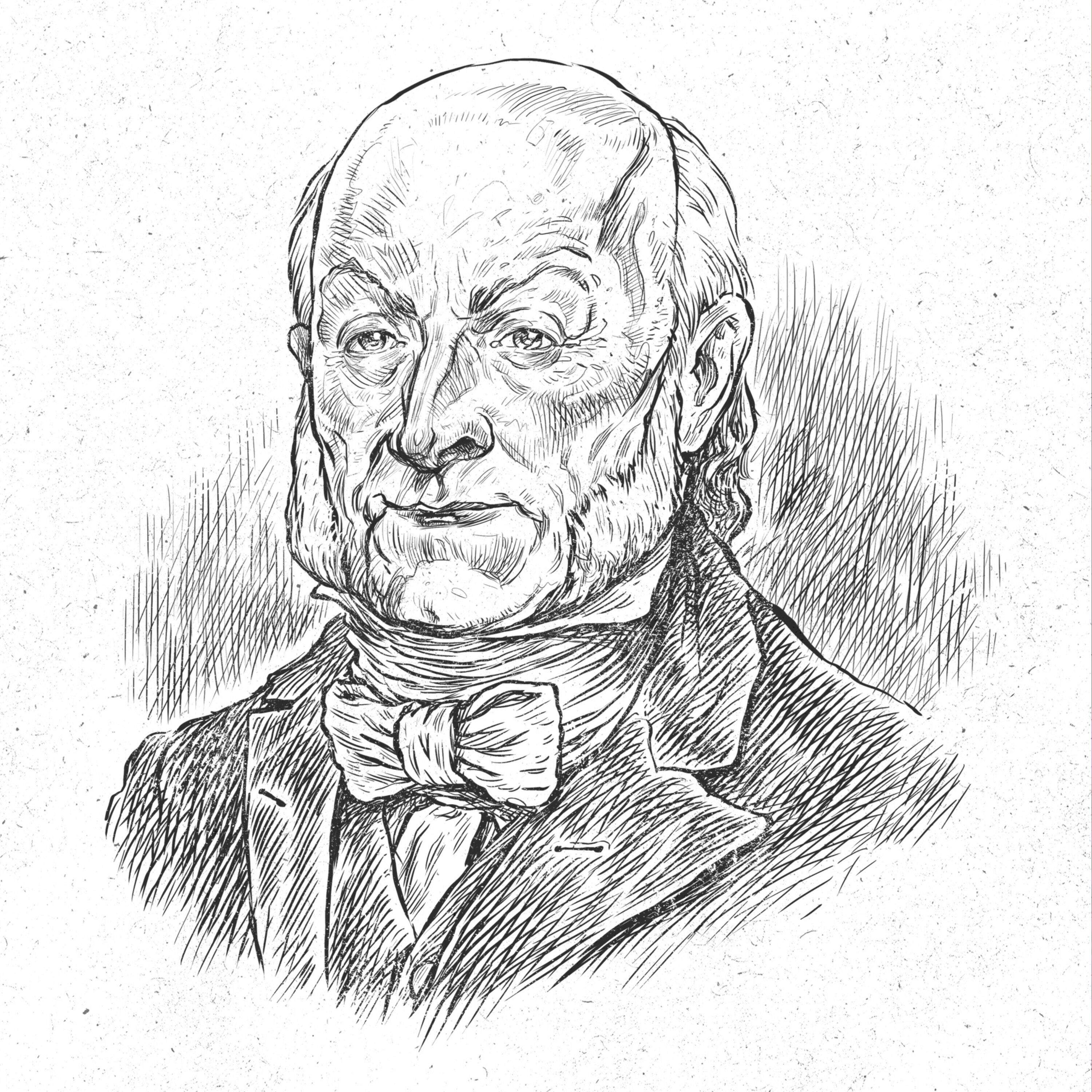
John Quincy Adams was a one term president. He then entered Congress where he presented so many anti-slavery petitions that Southern Congressmen wanted him out. What that says about how Congress can work.
Guest
Bob Crawford, author of America’s Founding Son: John Quincy Adams, from President to Political Maverick. Bassist for The Avett Brothers.
Book Excerpt
Excerpted from America’s Founding Son: John Quincy Adams, From President to Political Maverick, by Bob Crawford. Copyright (c) 2026 by Bob Crawford. Reprinted by permission of Zando, LLC.
Transcript of Full Broadcast
The version of our broadcast available at the top of this page and via podcast apps is a condensed version of the full show. You can listen to the full, unedited broadcast here:
Part I
MEGHNA CHAKRABARTI: Earlier this month, we kicked off our occasional look at the idea of America, the inspiration, concepts, and debates that shape our understanding of this nation. And we started off with the Declaration of Independence. And in that discussion, a bunch of familiar names popped up, Thomas Jefferson, Benjamin Franklin, and John Adams.
Support WBUR
Today we're going to talk about a lesser-known Adams, John Quincy Adams, eldest son to John and Abigail Adams. Now, maybe he shouldn't be all that lesser known because he was the sixth president of the United States. John Quincy Adams was, of course, following his father, who was then the new nation's second president.
John Quincy Adams served from 1825 to 1829. But it's what he did after leaving the presidency that needs to be better known, because it's far more consequential to the idea of America, and that is the story that Bob Crawford tells in his book, America's Founding Son: John Quincy Adams from President to Political Maverick.
And in the book, Crawford writes, quote, "This is the story of how a man with the pedigree of being John Adams' son, and after his own career as a Washington insider, brought the power of thousands of grassroots anti-slavery activists to bear on the People's House, making straight the path for the next generation, Lincoln's generation, to fulfill the promises embedded in the Declaration of Independence."
Bob, welcome to On Point.
BOB CRAWFORD: It is a pleasure to be here. Thank you.
CHAKRABARTI: The book was so enjoyable to read, and it's about a period of American history that I have to say I didn't know that much about. And I love that the Declaration keeps popping up over and over in your book as well. I just wonder, though, can we start off with John Quincy Adams' earlier life?
Was he let's say, burdened by the fact of being an Adams?
CRAWFORD: I like to say the only thing worse than being born into that family would be to marry into that family. Yes, he was indeed burdened by being an Adams because his parents John and Abigail really raised him, in many ways groomed him, to become president of the United States, and to be, they put on his shoulders the preservation of the nation that they had sacrificed so much to found.
They put on his [John Quincy Adams] shoulders the preservation of the nation that they had sacrificed so much to found.
Support WBUR
And that's a lot of pressure. There's a famous letter, and I can quote part of the quote. I don't have the whole thing to grasp in my mind, but it's from 1794, I believe, and it's a moment where John Quincy Adams, young John Quincy Adams, is kind of between gigs, and he's not sure what he's going to do, and his father writes to him, and they're talking about, first, it's like the first part of the letter is about geopolitics. And then in there, there's a little paragraph that says, "If you do not rise, not only to the head of your profession but of your country, it's owed only to your own laziness, slovenliness, and obstinacy."
CHAKRABARTI: And I thought I was a tough parent.
CRAWFORD: And you thought you ... yeah, we all do, right? And so I'm going to back up for a second to really answer your question. His early life, seven years old, he's an eyewitness to the Battle of Bunker Hill. Abigail takes him by the hand. They walk about a mile to a nearby overlook from their home, at the time it was Braintree.
It would later be Quincy, Massachusetts. And they see the flash of the cannon. They can smell the smoke. They're hearing the crackle of the muskets. And in fact, their family doctor dies in that battle, 10 years old, he is, in February, he is boarding a ship with his father, a warship, to go to France, so his father can join Benjamin Franklin, ultimately Thomas Jefferson, and negotiate France into the Revolutionary War on the side of the Americans.
They cross the Atlantic in the dead of winter. A nor'easter almost destroys their ship. They're pursued by British warships. It's this, it's an odyssey of an adventure. That's 10 years old. Then he gets what I call an internship in diplomacy, which fast-forward, Washington, George Washington, his idol, George Washington appoints him to his first diplomatic post, and then he'd serve in the diplomatic corps in his father's administration.
Comes home. He becomes the senator from Massachusetts, and so he's a Federalist. What does he do? He brandishes his maverick bonafides and supports the Republican president, Thomas Jefferson, on issues like the Louisiana Purchase and the Embargo Act, and he's drummed out of his party.
I could keep going, Meghna. I can keep going. You stop me when you want.
CHAKRABARTI: I actually, I will stop you right there because there's actually a couple of details internal to that I want to quickly go over and then get to his actual presidency. But first of all, before I do that, hats off to you for saying Quincy, Massachusetts.
CRAWFORD: I learned the hard way.
Support WBUR
CHAKRABARTI: Sorry. The rest of America has no idea why that's significant, but --
CRAWFORD: It gets deeper because the book was predated by a podcast series I made for iHeart, a six-episode podcast series, and we called the historic site, and we said, "Is it Quincy or Quincy?"
And what we were told was Quincy for the town, Quincy for the man. And some, though, some will say Quincy for the man as well, but I had the great honor of doing a book event at the Church of the Presidents in Quincy where all four of them, John, Abigail, John Quincy, Louisa Catherine Adams, they're all interred in the crypts in the basement.
And I just clarified this as well, and the crowd seemed to be okay with me saying Quincy for the town and Quincy for --
CHAKRABARTI: Oh yeah, no the sort of pronunciation idiosyncrasies of my current home state, I can't account for them, but I just know that they're real, and people care. So Quincy, Massachusetts, and John Quincy Adams.
CRAWFORD: There we go.
CHAKRABARTI: Okay, so back to the man himself. He becomes a senator, as you said, after his father's 1800 election loss to Jefferson. Very interesting. You write in the book, though, that even as a senator, John Quincy Adams shows a little bit of the sort of maverickiness that you talked about that would later come to define his career as a much older man.
What did he do in the Senate at that time?
CRAWFORD: He supported the two big things, and this wasn't the focus of the whole book, but this was definitely an area to note, an area of note. So Jefferson's president, John Quincy's a Federalist, and that's where you're talking about the New England part of the country, and they're very much opposed to President Jefferson, and they want to see him fail, his party does.
Support WBUR
But when issues like the Louisiana Purchase, which there was a great deal of debate over whether that was constitutional or not, and it probably wasn't really. But John Quincy could make that assessment for himself that this is good for the nation. And same with the Embargo Act, which was a way of us defying Britain and their harassment of our merchant vessels, and ultimately this leads to war, war of 1812.
And John Quincy Adams supported the president because he felt like it was the right move at the time. And Adams had that incredible background in diplomacy that you couldn't really doubt on those kinds of issues.
CHAKRABARTI: Okay. Maybe a little bit later in our conversation, I want to talk with you, Bob, about the interesting almost side story of the relationship between John Quincy Adams and Andrew Jackson, who also figures ... large in this tale. I want to talk in a minute or a few minutes with you about the largest party in Washington, D.C. to date.
CRAWFORD: Oh yes. But can I real quick just to put a point on this Jefferson administration? Adams is drummed out of his party for this.
He loses his seat in the Senate, and so that will ultimately throw him into the arms of what we call the Virginia Dynasty, the presidencies of Jefferson, Madison, and Monroe.
CHAKRABARTI: Okay. There's this is just the first part of your book, Bob, and there are so many little gems of history that I wish we could spend time on, like John Quincy Adams being the author of the Monroe Doctrine.
I'm going to just dangle that one out there for listeners to bite on when they read the book. But let's fast-forward now to 1825, when John Quincy Adams becomes the sixth president of the United States in a race against Andrew Jackson, but it's not because he rode a tidal wave of voter support to the presidency.
Can you tell us what happened?
CRAWFORD: Adams? No. Absolutely not. The one who was riding the tidal wave was Andrew Jackson. And the best way to understand this is that 1824, 1825, this is a moment where a populist wave is sweeping across, a populist wind, if you will, is blowing across the nation.
Support WBUR
And what you have is since the founding, slowly but surely, most state legislatures have changed the voting regulations, the suffrage laws, to include not just the property holder, but all white men. And these mechanics, these farmers, these tradesmen, they are, have gained the right to vote. The democracy is spreading rapidly.
So is the nation. It's moving south and west. And you have people, men who are setting out, they're further and further from the old nation, from the original 13 colonies, and this is the next generation, right? This is the generation after the founding. And so democracy, the early republic that we had, which was formed by the elites, is now being handed off and becoming a true democracy, or a truer democracy.
The early republic that we had, which was formed by the elites, is now being handed off and becoming a true democracy, or a truer democracy.
Not a true democracy. We don't get that until 1965, but a truer democracy. And the old way, the old guard is no longer good enough. John Quincy Adams, he's part of the establishment, and the establishment's time is coming to an end.
CHAKRABARTI: And he basically only gets into the presidency via a House vote, right?
CRAWFORD: Absolutely. Yeah. Based on the 12th Amendment. We can go into that, but I hear the music, so we'll save that for after the break.
Part II
CHAKRABARTI: Bob, before the break, you were telling us about how John Quincy Adams basically becomes President of the United States because of a House vote that was very controversial to say the least.
I think it was Andrew Jackson who said that this was, like, the most barefaced corruption in the then young history of the United States.
Support WBUR
CRAWFORD: That's right, yes.
CHAKRABARTI: So that really dogged him through his presidency. Plus, as you were saying, that sort of groundswell of Jacksonian populism as well, which is the reason why John Quincy Adams loses the next election.
But what I did wanna ask you though before we get to his post-presidential career is how would you describe the state of the nation at this time when John Quincy Adams was president?
Because, the issue of slavery was, it was there at the founding, and obviously it was there at the Civil War. In this interim period, was it also of pressing concern in Washington?
CRAWFORD: It had become of pressing concern because in 1819, 1820, Missouri Territory was coming into the Union, and the debate over whether Missouri would be a free state or a slave state ripped the country apart. See, from the time of the Three-Fifths Compromise and the founding of the Constitution, the ratification of the Constitution, until 1819, like that 30-year period, slavery was not really an issue nationally.
There were disparate groups of abolitionists, a lot of them were Quakers, a lot of movement in the Upper South like North Carolina, Virginia, but there was no coherent movement, anti-slavery movement. There were little bursts here and there, okay? Okay. But when Missouri's about to come into the Union, the Missouri Territory was, when the statehood bill arrives in Congress, everybody expects it's going to be a slave state.
Except for a backbench one-term congressman from New York named James Tallmadge, who puts an amendment on the bill that essentially ends, that would end slavery in the new state of Missouri, and it passes the House, and it fails the Senate, and then Congress adjourns.
CHAKRABARTI: And does this eventually lead to the Missouri Compromise, as it's known?
CRAWFORD: Yes, it does. But Meghna, there's a year between the Congress adjourns with this deadlock, and then they go home, and the issue of slavery is now being debated in legislatures, in states, in town halls, in taverns, in newspapers, and it begins to tear the fabric of the country apart.
Support WBUR
The issue of slavery is now being debated in legislatures, in states, in town halls, in taverns, in newspapers, and it begins to tear the fabric of the country apart.
I like to say that the Three-Fifths Compromise was a Band-Aid that they put on the issue of slavery, and what the debate over Missouri did was James Tallmadge ripped that Band-Aid off, and what was beneath it was a ... festering wound.
CHAKRABARTI: You know what's interesting about John Quincy Adams is that his parents never owned enslaved people.
John Adams was one of the few Founding Fathers who didn't. And so obviously the idea of the moral evil of slavery was alive in the Adams family, but does that mean that John Quincy Adams himself especially while president, did he consider himself an abolitionist?
CRAWFORD: No. Oh, that was a dirty word. Basically, you would be saying, "I'm the most, I hate to put right and left here, but because it's so confusing because the abolitionists of this time, they were radical. They were a minority of a minority. They were, I'm talking post-Missouri debate, Second Great Awakening abolitionists.
So there's an older generation of abolitionists, which we just referred to, was disparate. But once the issue was raised in the debate over Missouri, it really began to radicalize some folks. And there was this religious movement called the Second Great Awakening, and it really was this fire of moral spirit that blew across, mainly in the North mainly around New York and Ohio.
And these people became the radical abolitionists, and their tactics were not, were considered to hurt their, to be a detriment to their own cause. And so you didn't want to be, no one hated an abolitionist more than a Northerner. Because they didn't have any impact in the South, though they tried.
And they were basically people feared the end of the status quo. People feared civil war, and people feared emancipation like they would lose their jobs.
CHAKRABARTI: So let me just jump in here, because you write in the book, and this is the reason why I'm asking, because it's important.
Support WBUR
To the story that you tell later, like the really important story here, and that is that you write several times in the book, that though John Quincy Adams, again, may have seen slavery as this this moral stain, he was very practical about it. He was like, abolitionists, like you just, politically, the political reality of this country is that the Southern states are too influential. You're never gonna convince them to give up slavery. So he just saw the realism of the potential failures of the abolitionist movement, which I didn't know.
I thought that was a really interesting — no, go ahead.
CRAWFORD: I'm sorry to interrupt. So okay, people need to know this. He left behind a diary that was 14,000 pages long. He began it when he was a teenager, and he writes right up until close to his death at the age of 80.
No, I did not read every page. In 1820, during the debate over the Missouri Compromise, he is the Secretary of State, so he doesn't have a vote. But he's watching it and he's writing about it, and it's the first time he really writes about slavery. And he leaves these incredible, he's working it out.
You can see he's working it out on the page. And he says, "The only way slavery's --" And I'm paraphrasing. "The only way slavery's going to end is through a civil or servile war."
And at one point he says, "Maybe we should dissolve the union and reconstitute another nation of 14 free states." And then at one point he says, "Man, if only an angel would rise up, someone to take on this cause. It would be so noble for someone to do such a thing." Oh, yeah. And so he's working it out. And on top of that, Meghna, he is the Secretary of State. And John C. Calhoun from South Carolina, who he will become the father of nullification.
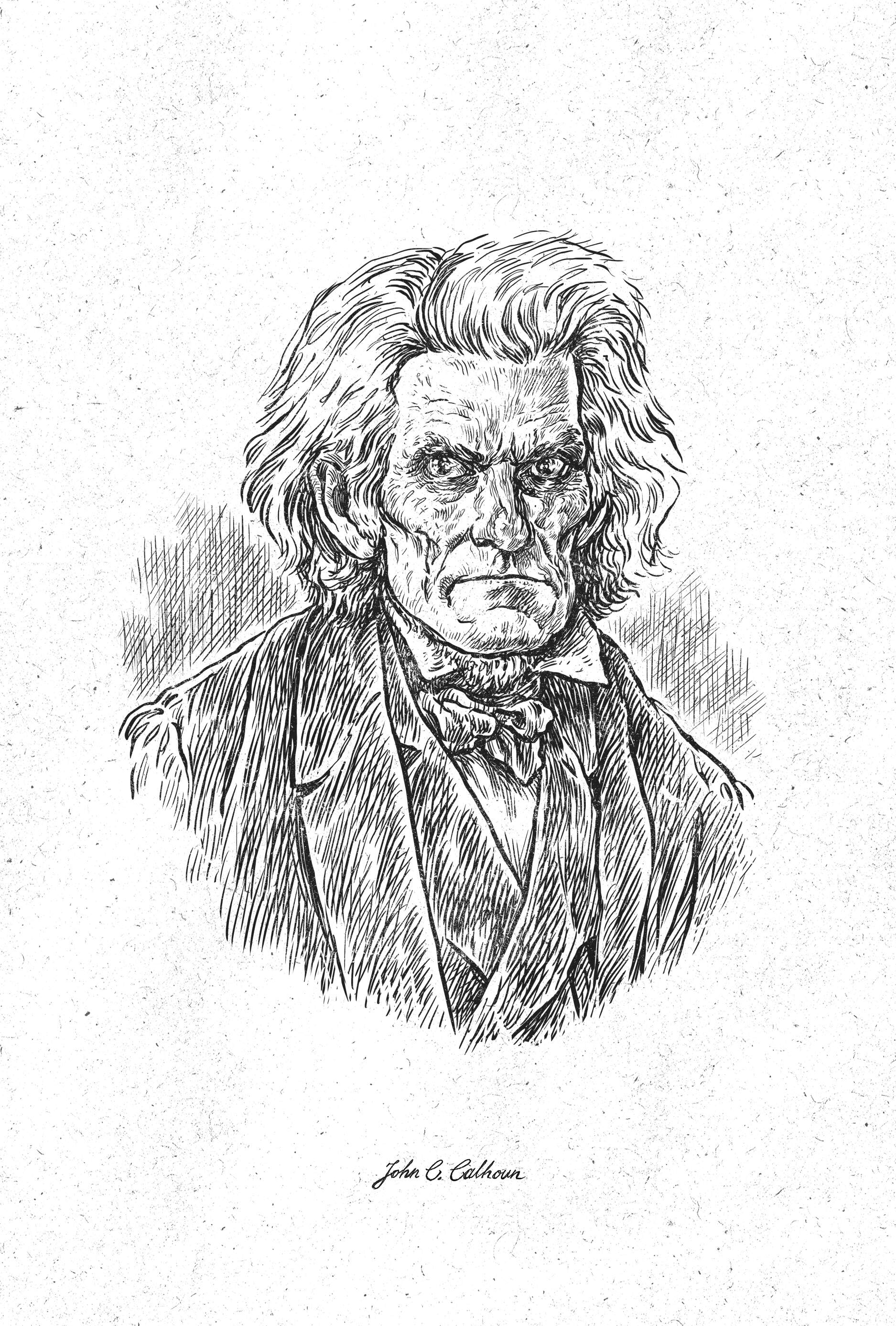
The Civil War was not fought over nullification, it was fought over secession, but nullification is a very important step on the way to secession. At the time --
CHAKRABARTI: Bob, I'm going to rein you in here.
CRAWFORD: No! This is important.
CHAKRABARTI: Okay then you gotta make it short because we haven't even got to the part where John Quincy Adams goes back to Congress.
CRAWFORD: Okay, here we go. Real quick, he, at this time period, these guys are, I say they're friends, the Massachusetts Historical Society disagrees with me, but anyway, they would have these long intellectual conversations about slavery, the southern idea of slavery and the moral opposition to slavery. And essentially, Adams is working it out at this time. Okay. Let me just say one more thing.
CHAKRABARTI: I waited. I waited a heartbeat.
Support WBUR
CRAWFORD: Okay, one, one last thing, because I think you were getting to this earlier. When Adams was in the White House, he was against slavery.
He didn't want it in his family. However, his wife was a Maryland, so his wife had a father from Maryland, and his mother was English, was British. She was the first First Lady who was not American-born. So when they come back to the United States and her sisters begin to pass away, or her sisters' husbands pass away, they take in the nieces and nephews.
The nieces and nephews owned enslaved people. And those enslaved people lived in the White House with John Quincy Adams when he was president. Now ... one passes away, one is emancipated while he's in the White House, but that needs to be noted.
Enslaved people lived in the White House with John Quincy Adams when he was president.
CHAKRABARTI: Yeah. Okay. So as we said earlier, John Quincy Adams only serves that one term.
Andrew Jackson in the next election boots him out of office, and you have this really moving quote from John Quincy Adams in his diary when he loses the election. He says, "The sun of my political life sets in the deepest gloom," "but that of my country shines unclouded." Okay, so what does an ex-president do?
Does he drift off into the sunset and into the history books? No. John Quincy Adams, through let's blame a local Boston newspaper, decides to run for Congress again and becomes a congressman. So let's fast-forward to this. This is really the heart of your book.
CRAWFORD: It is.
CHAKRABARTI: Now, you write that even though he didn't think abolitionists necessarily had a hope in heck of realizing their dreams of freeing enslaved people, in his first session in Congress --
Support WBUR
CRAWFORD: His first speech.
CHAKRABARTI: Very first speech what does he do?
CRAWFORD: Okay. There's so much to this story that folks, you need to read the book.
CHAKRABARTI: Yeah, because I want to get to, like, all the other really fiery speeches.
CRAWFORD: Alright, so. There's so many nooks and crannies. Okay, so anyway, so here he is, former president, the first, really the only president to serve in the Congress after his term as president.
A man of great prestige, honor, smartest man in the country. Of course, he thought so, but he stands up to make his first speech, and he's offering these petitions, okay? He's offering petitions from people around the country, like Pennsylvania and Massachusetts, who are asking Congress to end the practice of slavery in the nation.
Here he is, former president, the first, really the only president to serve in the Congress after his term as president. A man of great prestige, honor, smartest man in the country.
Now, petitions, what do you mean petitions? First Amendment, we petition our government for redress of grievances. Literally, like if you had wanted to talk to our congressman, we would go on their website, we'd fill out a jot form, or we would call their office. We have ways of contacting our congressmen. Back then, you literally had to write out a petition and send it to your congressman, and there was times set aside in the Congressional calendar where congressmen stood up, and they offered their petitions from their constituents.
So often it would be like "Mr. Crawford from North Carolina is praying for remittance of his father's Revolutionary War pension," and they would send it to the Committee on Veterans or this or that. So Adams, he gets these 15 petitions. He reads one, he says, these are all of the same nature.
Support WBUR
He says, I don't agree with the petitioners, but they have a right to be heard, and that was the point of that. And so the abolitionist will begin to use this. They will begin to use the petition as a means of trying to make news, get in the newspaper, get their point across, and they begin to slowly, over the 1830s, flood Congress with anti-slavery petitions.
It becomes a problem.
CHAKRABARTI: And so this is in your book where, to me, it started reading like an Aaron Sorkin political drama.
CRAWFORD: (LAUGHS)
CHAKRABARTI: No, seriously, because there's so much going on, and then of course the oratory that John Quincy Adams brought to Congress, too. It was just stunning. But here's where Adams becomes that angel that he himself had written about before, right?
Because in the book you write that by, what, 1835, Southern congressmen had become so sick of now the thousands of anti-slavery petitions that were ending up in the House that they did something that just really Adams completely objected to. They blocked every single one of them, and this became known as the gag rule.
CRAWFORD: The gag rule, and why? Real quick, here's why. Go back to the Missouri Compromise. There's debates in Congress at the time for and against slavery, and those anti-slavery, the Senator Rufus King from New York, is a famous one. His arguments against Missouri being a slave state made its way into the newspaper and made their way down to Charleston, South Carolina, where a free Black man named Denmark Vesey starts an uprising, the Denmark Vesey conspiracy.
He starts an uprising of enslaved people. And then years later, around 1831, I think it is Nat Turner, he starts an uprising in Virginia. And so southern congressmen are seeing, are hearing these petitions being read. They're living, they're experiencing these slave uprisings where the slaves who survive them say, "Yeah we heard about Mr. King, and we know we have allies in the North." And they're like, "No, this has to stop."
So they literally gag the petitioners, and this is the moment that John Quincy Adams becomes radicalized. He goes from being like slavery sucks, and I can't do anything about it because of the Three-Fifths Compromise, and I don't think Congress has the power to really interfere with slavery in the states. To saying, Wait a minute.
Support WBUR
Now you are silencing the petitioners, which means you are compromising the First Amendment. If you end the right to petition, then next will be freedom of religion, freedom of the press, freedom of speech, right to peaceably assemble. This cannot happen. This is unconstitutional. So Adams doesn't become an abolitionist at first.
He becomes a defender of the First Amendment.
Adams doesn't become an abolitionist at first. He becomes a defender of the First Amendment.
CHAKRABARTI: Yes. In fact, another quote that you have from one of his floor speeches, he says "The freedom of debate has been stifled in this House to a degree far beyond anything that has ever happened since the existence of the Constitution of the United States."
But to your point, though, he keeps saying you are stifling freedom of expression in this country, but at the same time, the quotes from his speeches that you have in the book, he does also take shots at the southern states for slavery. Because he says, "Will you introduce a resolution that members of this House shall not speak a word in derogation of the sublime merits of slavery?"
He does not back down from the issue at hand, even as he's saying, "My real problem is curtailing freedom of speech."
CRAWFORD: That's right. The deeper he gets into this, the abolitionists are coming to him and they're like, they are just lauding him and celebrating him, and they're begging him to be their spokesman.
And he's saying to them, "Look, I can do more good for you, I do more good for your movement if I'm not one of you. Once I become one of you, I'm small. Let me do my thing and then you can do your thing. And I don't even really agree with the way you go about doing your thing," yeah, just one point here.
He begins to, he has such a grasp on the rules of the House that he begins to manipulate every debate into being against the gag rule, and being against slavery. And you talk about him taking it to the South, and I don't wanna rope in every Southerner who ever lived in this time period, but to the Southern congressmen in particular.
Support WBUR
He has such a grasp on the rules of the House that he begins to manipulate every debate into being against the gag rule, and being against slavery.
He'll say things like, "They say that the offspring of enslaved women look an awful lot like their owners."
CHAKRABARTI: That quote --
CRAWFORD: "I wonder why that is."
CHAKRABARTI: ... Jumped off the page when I read it.
CRAWFORD: He would work these guys. He would tweak, it's funny because, ah, when he is the minister to Russia, like all these years before, under Madison, there's a diplomat from England or something, he's writing in, describing him and he called him a bulldog among spaniels.
And Adams was known to tweak people and get pleasure out of it. So he would say these things and it would just set off the Southern congressmen. And at one point they're trying to censure him, in 1837, and they, all the Southerners storm off the floor, and it's really hard to get them to come back.
Adams was known to tweak people and get pleasure out of it. So he would say these things, and it would just set off the Southern congressmen.
Part III
Support WBUR
CHAKRABARTI: Keen-eared listeners out there will wonder why I'm not also introducing you by another accolade, Bob. I promise we will get to that in just a few minutes.
Okay. So I'm calling him JQA now. That's how he shows up --
CRAWFORD: Yeah, you can do that.
CHAKRABARTI: In my notes.
CRAWFORD: He referred to himself as that, that as well sometimes.
CHAKRABARTI: So Southern congressmen try to censure John Quincy Adams as he's railing against the gag law, the gag rule. There's two major points in this, God, dramatic and epic battle.
One of them, and I couldn't believe this when I read it in your book, but basically there's a period from June 16th of 1838 to July 9th, so we're talking a little more than three weeks, John Quincy Adams holds the floor of the House, right?
CRAWFORD: Yeah, for an hour a day.
CHAKRABARTI: An hour a day.
Support WBUR
CRAWFORD: It was the morning hour.
CHAKRABARTI: Doing what?
CRAWFORD: Yeah. Holding them hostage. Because there were debates over the annexation of Texas, so here we're getting into, should Texas had gained their independence from Mexico, and there's this debate around the country from, should Texas become a state?
Should it not become a state? And so you had even states sending resolutions to Congress saying, Texas just like Alabama wants Texas to be a state, but Michigan doesn't want Texas to be a state. Then you have citizens sending petitions for and against. And the Foreign Affairs Committee says, You know what?
We've looked into this, and we're just gonna kinda leave this. We don't wanna get involved in this. And Adams is, he's, "But hey, has anybody read these resolutions? Has anybody read them on the committee?" And they admit that they never even read them.
At least one congressman does. And Adams pulls out rule 72 or whatever it was that the committee has to read the information on an issue. And he literally, I'll try to get not in the weeds here, but then there's an amendment. He offers a thing, where they have to do this, and then another committee member offers another amendment.
And then ... from South Carolina offers another amendment, and then Adams offers another amendment. And the way the rules work is the amendment to the amendment, that guy has the floor. It's just some kinda arcane House rules. And that's what I'm trying to say, Adams was so smart in everything he did that when he came to Congress, he learned the rules better than anybody else, and he manipulated the rules to his favor.
[Adams] learned the rules better than anybody else, and he manipulated the rules to his favor.
And because of that, he was able to practice what I've coined the term verbal jujitsu. And he would really turn every argument against the person he was in combat, verbal combat with. And so yes, he holds the floor an hour a day right here at the end of the session, and he is talking about women need the right to vote.
Support WBUR
And he's talking about an enslaved woman that he learned about, Dorcas Allen who murdered her babies because she didn't want them to be enslaved. And he's talking about Texas and how if Texas comes into the Union, they're gonna carve it up, and they're gonna make it five slave states.
And so he really has this moment of just center stage.
CHAKRABARTI: Okay. And he holds the nation's attention at that center stage. And again, even though he's saying, "This is all about freedom of expression," it's about slavery. He avoids censure that time.
CRAWFORD: He does because --
CHAKRABARTI: You gotta forgive me, Bob.
CRAWFORD: You got it.
CHAKRABARTI: Again, folks, read the book. The enthusiasm and knowledge that you hear in Bob's voice in this conversation is just, it's on every page of the book. He avoids censure the first time, but then it happens again and he's actually put on trial?
CRAWFORD: Yeah, so it's a censure. Who was the congressman from Texas who was censured Democrat last year? Al Green?
CHAKRABARTI: That sounds right.
Support WBUR
CRAWFORD: ... A censure happens, but back then if you got censured, you kinda had to leave, and then your people would, your constituents would either vote you back in or not.
And if you got voted back in, you were Teflon, right? But so they're threatening to censure a former president of the United States. Just imagine that. And why are they doing it? Because he offers these petitions that may or may not have been hoaxes, and one of them is coming from enslaved people.
And so he reads these, this petition from enslaved people, and Southerners get, in Congress, get really, like one of them says, "Can we burn it right here?" And it's this big duel going on. And at one point it goes and when everybody gets all worked up. And by the way, the speaker of the House at this point was James K.
Polk. Just another interesting factoid here. But because the speaker, they're like, he, speaker's, "I don't know. Can we present this petition? Can we, we've never been faced with this before." He's trying to figure it out, but ultimately Adams goes, You didn't let me read the whole thing.
They're saying, they're begging that to not end slavery. ... And they get so ticked off that they wanna censure him. And he battles them. He's, Oh, censure me? If you're gonna censure me, I should be able to speak in my defense, right?
And so he holds the floor for another two weeks and battles it out with these guys, and that is at the point where the Southerners storm off the floor, but then eventually they give up.
CHAKRABARTI: Can I just jump in here? ... Because there's another key aspect of this that you, again, illuminate in the book. It's not just that he continued to present these petitions to Congress. When this latest one comes along the Southern delegation, let's put it that way, goes so far as saying, they're like, "This is treasonous.
You are not a true American." ... And I thought that was really important to point out because the whole concept, even in a country that was very young at the time, of who gets to claim true Americanness, we've never actually outgrown that argument. So how does John Quincy Adams rebut that?
CRAWFORD: He's the, first of all, think about it. This is the son of John and Abigail. This is, we said, he witnessed the Battle of Bunker Hill. Washington appoints him to his first diplomatic post. Yeah, like we could go on and on, and author of the Monroe Doctrine, right? We could just go on and on about him.
Support WBUR
CHAKRABARTI: But apparently that's not enough for the southern delegation to think that he's not American.
CRAWFORD: No. It's not. Because, you know what the issue on that? And you can tell me with your Massachusetts pronouncing cities in Massachusetts, there was a petition that came in from the citizens of Haverhill.
CHAKRABARTI: Haverhill.
CRAWFORD: Haverhill. Yeah. Sorry, Haverhill. ... Love you, Haverhill. And he, they're saying, "Look, we're sorry. We're, wait. We're tired. We're sick and tired of carrying water for the South. We're done. We do all this for them. We are letting them, we're upholding this institution of slavery, and we're getting nothing in return for it.
It's a one-way street. If this is how it's gonna be, we want to secede. And Adams reads that, and that just set the House on fire. How could you say that? How could you? A lot of pearl clutching going on, because Southerners, every time slavery would come up, there was some yahoo, typically from South Carolina who were like, "We're gonna secede. Then that's fine. We're leaving." The South was like that. They were just like that.
And in Congress, Southerners in Congress were just like that. And so when Adams reads this petition, a lot of pearl clutching going on, and that's when they want to censure him. And who do they get to lead the prosecution, if you will?
A man from Kentucky named Thomas Marshall, who's the nephew of John Marshall, the late chief Supreme Court chief justice of the Supreme Court, who was appointed by John Adams.
CHAKRABARTI: Okay. So John Quincy Adams, JQA, is fighting this second censure and even treason charge.
TLDR, he wins it, and ultimately, we're jumping so far ahead, but ultimately the gag rule also is undone after some time. Okay. I really hate having to have jumped that far, Bob, but I'm just really conscientious of the time we have here. Because it's the theme of what is revealed by the Adams trial, as you write about, and this sort of, I would, let's call it fulcrum moment between the Revolution and the Civil War, that I think your book so just wonderfully describes.
Support WBUR
You called it a 360 view of American history, looking back on the nation's founding as well as quote-unquote, "its coming destruction." So why, in your opinion, was Adams's efforts to keep those petitions heard on the floor of the House on the floor of Congress so important?
Why was his fighting of the gag rule as you call it, as you describe in the book, an unheralded moment in the history of the United States as it continued to seek to, how should I put it, live up to the ideals that were put in the Declaration?
CRAWFORD: This is the period of our history where the Declaration of Independence becomes a sacred document. This is the period. Who used the Declaration of Independence? Who held it up more than anyone else in this period? It were the abolitionists. It was the abolitionists, and it was this idea of "This slaveholder wrote this, but the aspiration is here, and we will live up to this." And Adams looked at it like, it was two halves of a whole. The Declaration of Independence and the Constitution. Andwhat they're doing is they were destroying, they were nullifying the Constitution. At one point I think it's in 1846, John C. Calhoun will give a speech about Oregon Territory coming into the Union, and he'll say, "The Declaration got it wrong." The Declaration got it wrong. And so this is what we're fighting about at this point. We're fighting about is this true? Is this document, is the Declaration, is it real?
Is it true? How do we make it true?
CHAKRABARTI: You seem to be saying in the book that even at times where tyranny, let's put it that way, seems to be coming from our own government, because unfortunately we did not have even a second to talk about Andrew Jackson's presidency. But clearly the gag rule in Congress is an anti-democratic measure.
But the book, you seem to be saying that Hey, look, John Quincy Adams is an example for our time because through his brilliance he found a way within the rules of the system to push back against efforts to deny people their rights.
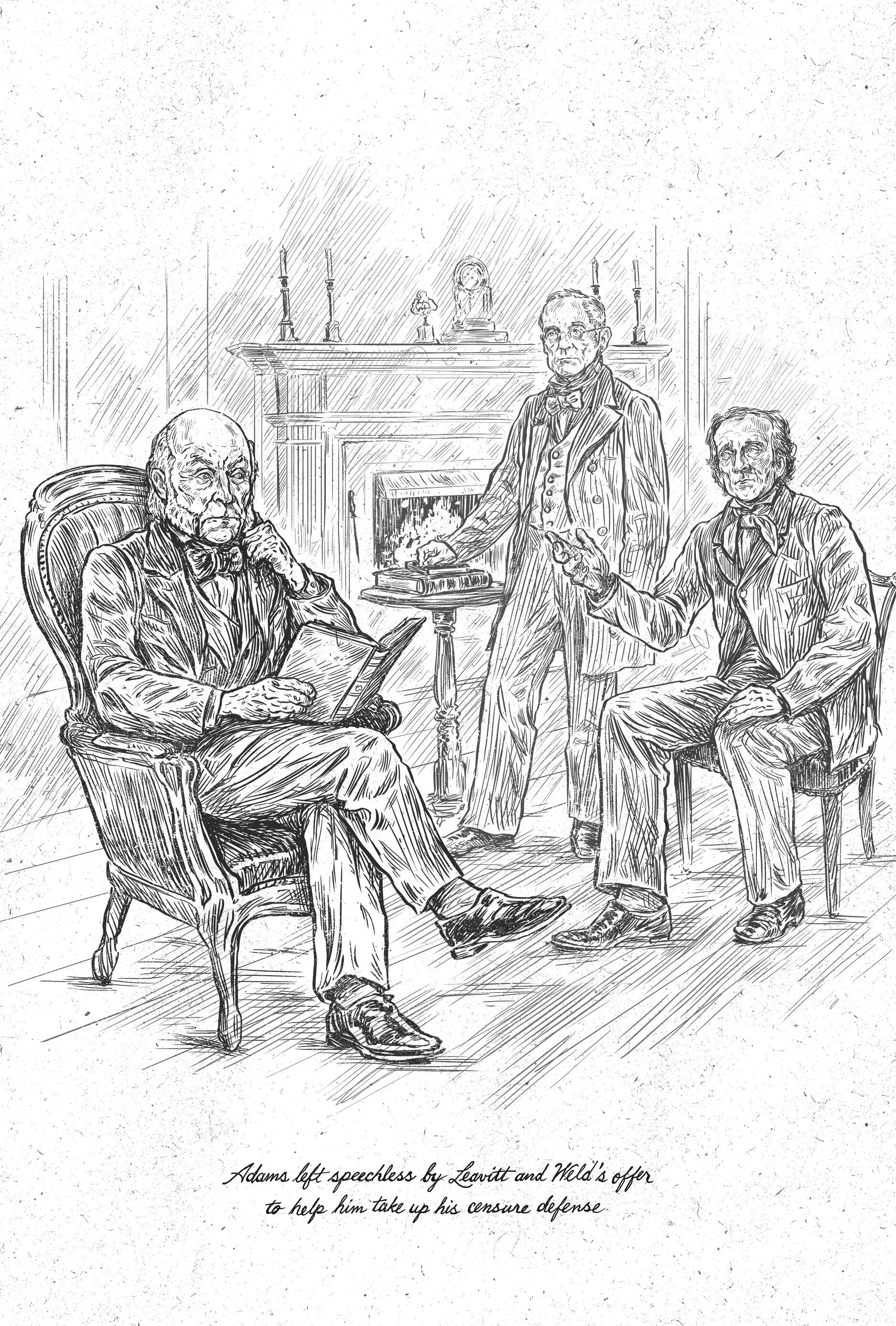
CRAWFORD: Yeah, he showed it could be done. Theodore Weld, who's an incredible abolitionist who is heavily featured in this book, at this point when Adams is, during that second censure trial, Weld is essentially your first congressional aide.
His staffer. He's the first staffer I like to call him. And he says he's writing to his wife was Angelina Grimké, the incredible abolitionist woman.
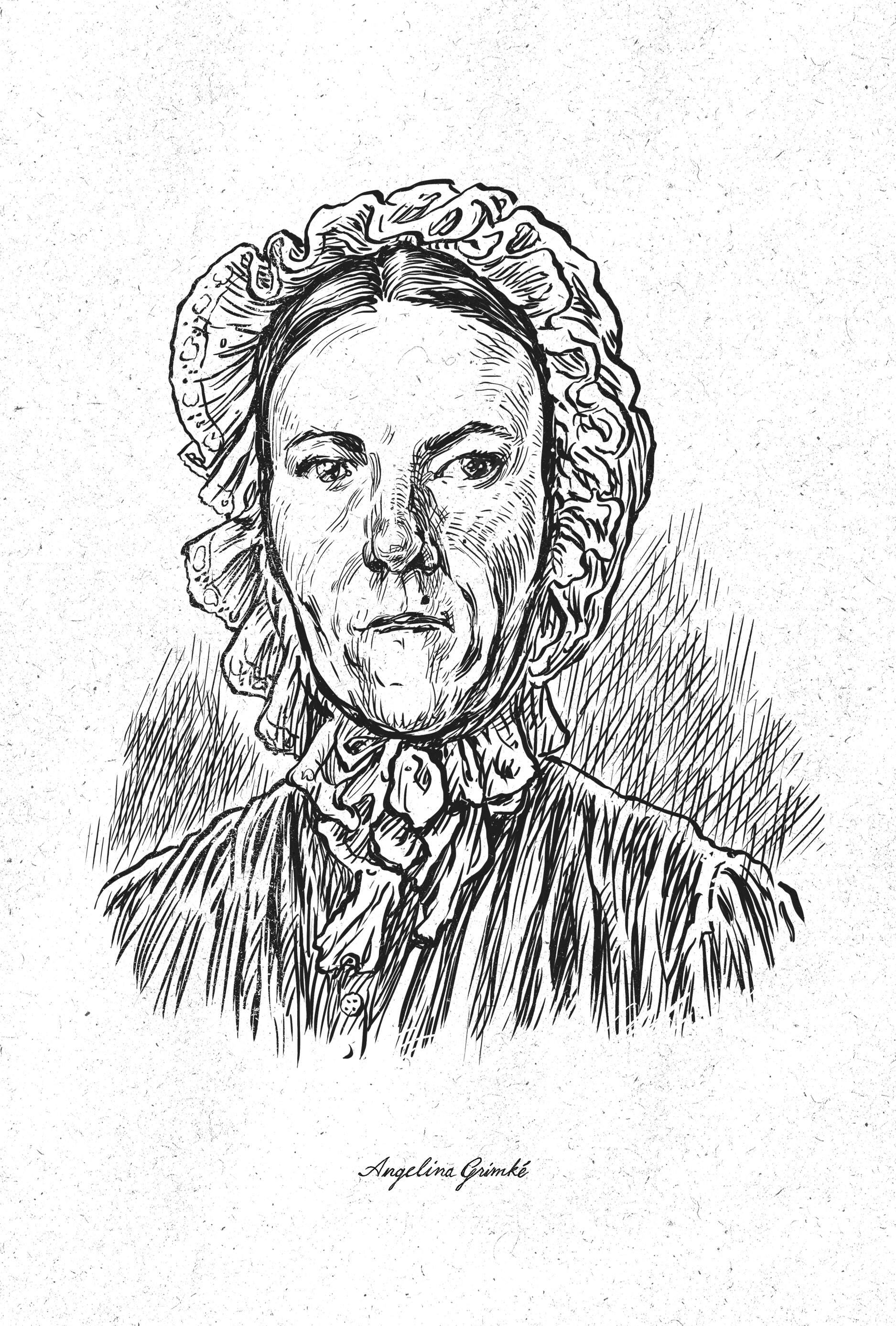
He's writing her about watching Adams fight on the floor of Congress, debate these Southern congressmen, and he says, "Adams struck the first blow against slavery ever." And that's the point here.
He showed that you could ... strike a blow. Because think about... I'm sorry, Meghna. Imagine living in the 1830s and 1840s where you could not fathom the end of slavery. No one could fathom it.
CHAKRABARTI: And also at the same time, the Civil War was yet to come. But the first blow, as you said, is what we're talking about here. I just want to quote a line from the book. Because I think it's a wonderful way to wrap up our conversation specifically about JQA. You write that, "John Quincy fought a different revolution because as hard as it is to create a democracy, it takes the long-suffering skill of perseverance to uphold it."
Now, there are some words for our time, Bob, and now I'm also looking at the time you and I have left in this conversation, and it is really painfully short. And just to, just to appease a lot of listeners out there who are wondering why I'm not talking about your actual day job, which is as a musician with The Avett Brothers, how is it that a touring musician came to fall in love so profoundly with the story of John Quincy Adams and even write a book about it, Bob?
CRAWFORD: The world of a touring musician, if used, that time, it offers you a lot of time, a lot of time, and over the history of music, of rock and roll, people have really used their free time to practice the art of self-destruction. And I just became, I've always been in love with American history, and I started out by using all those hours, first in a van reading books about American history, and then eventually in a tour bus, and this has been — I started a history podcast in 2016.
Now I have two history podcasts, and this was a slow one step at a time progression over the past 25 years to get to this moment, to where I would undertake such a thing.
Support WBUR
CHAKRABARTI: Were the guys --
CRAWFORD: But I'm glad I did.
CHAKRABARTI: Were the guys like, "Oh, Bob's in the back of the bus reading about those dead guys again!"
CRAWFORD: Yeah, pretty much. Yeah, this is, no the people who aren't surprised are the people who know me best.
CHAKRABARTI: So do you have another period of U.S. history you have your eye on for another book? Because what I loved about this book is that obviously all the history is there. You bring John Quincy Adams' voice to life so beautifully through his floor speeches.
But it's also a really readable book, so who's next on your list?
CRAWFORD: There's a jazz song standard called "There Will Never Be Another You" I've realized there will be, there will never be another Adams, John Quincy Adams. But I feel like I've got a book in mind and doing a lot of reading, and it will be a direct sequel to this book.
The first draft of this transcript was created by Descript, an AI transcription tool. An On Point producer then thoroughly reviewed, corrected, and reformatted the transcript before publication. The use of this AI tool creates the capacity to provide these transcripts.
This program aired on June 9, 2026.
https://www.wbur.org/onpoint/2026/06/09/america-founding-son-john-quincy-adams

Comments
Post a Comment