Is the Freedom of Information Act delivering on its promise?
Is the Freedom of Information Act delivering on its promise?
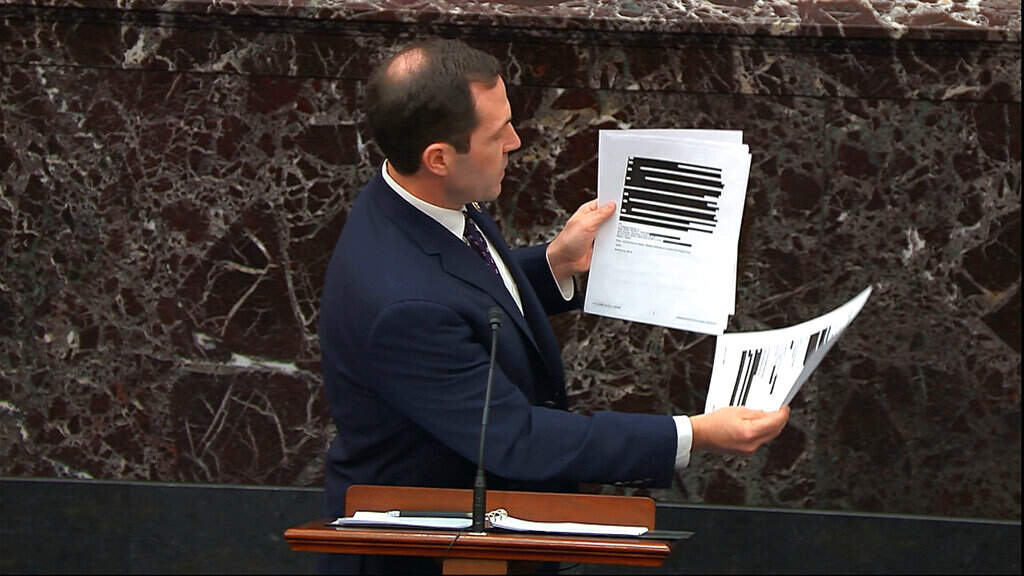
For a democracy to be for and by the people, what do the people need to know? The Freedom of Information Act is central to answering that question. What FOIA has uncovered in its 60 years, and what it's up against now.
Guests
Tom Blanton, head of the Nation Security Archive.
Emily Zentner, investigative data journalist at the California Newsroom.
Also Featured
Aaron Mackey, deputy legal director and free speech and transparency litigation director at Electronic Frontier Foundation.
Transcript of Full Broadcast
The version of our broadcast available at the top of this page and via podcast apps is a condensed version of the full show. You can listen to the full, unedited broadcast here:
Part I
AMORY SIVERTSON: This 4th of July, America will celebrate 250 years as a nation, but there's another notable anniversary for our country that day, 60 years of the Freedom of Information Act. The idea behind FOIA, as it's called, is straightforward: government records belong to the public.
Support WBUR
When President Lyndon B. Johnson signed the bill into law on July 4th, 1966, he closed with this, "I signed this measure with a deep sense of pride that the United States is an open society." But despite being rooted in an ideology that dates all the way back to the signing of the Constitution, the Freedom of Information Act didn't really have teeth until this happened.
Mr. Vice President, did you agree with President Nixon's decision not to release presidential documents to the Senate Watergate Committee to reject the subpoena?
FORD: It seems to me, Mr. Brokaw, that this is a decision that requires a great deal of thought, and I'm sure the thought was given to it by the White House.
SIVERTSON: Watergate.
That was then Vice President Gerald Ford defending Richard Nixon's notorious refusal to comply with subpoenas during the investigation in a 1973 episode of Meet the Press. The scandal shattered Americans' trust in government. By 1974, Congress had passed major amendments to the Freedom of Information Act that made it harder for government agencies to keep secrets from the American public.
But fast-forward about 50 years now, and things have taken a turn. Just a few weeks after returning to office, President Donald Trump fired the archivist of the United States, Colleen Shogan, the person whose job it is to preserve the story of our nation and ensure access to the government records that tell it.
Here she is in an interview with PBS last September.
COLLEEN SHOGAN: I think we have to be accurate in our telling of American history. When we're talking about the American story, and should we talk about our failures as well as our successes, how do you tell the story of American history accurately if you don't tell both?
SIVERTSON: Today On Point, we look back at 60 years of the Freedom of Information Act, what it's accomplished for the American people, the challenges it's faced, and the state of government transparency today. Joining us is Tom Blanton. He's the director of the National Security Archive at George Washington University, one of the most influential and successful users of and advocates for the Freedom of Information Act.
Support WBUR
Tom Blanton, welcome to On Point.
TOM BLANTON: Hi, Amory. Good to be with you.
SIVERTSON: So first, can you just briefly explain what the National Security Archive does, just to give us a little more context?
BLANTON: The archive was founded by a bunch of historians and journalists who really had been using the Freedom of Information Act, gotten lots of documents out, some in different versions, redacted or censored in different ways, had the idea to put them together in one institutional memory and follow them up with a lot of other freedom of information requests.
I once joked that we were founded on family values. Because one or another spouse said, "Get those documents off my kitchen table. And create a place where you can keep them, not in my house," right?
SIVERTSON: Yeah. And you've had a lot of documents over the year. You've filed, under your tenure as the director, filed more than 75,000 FOIA requests, and I know you have a literal list of greatest hits in the more than four decades of the National Security Archive. Can you share the story of just one of those requests as a way to bring the power of this legislation to life?
BLANTON: Take the CIA's own, it's called the Family Jewels, and what it was, you mentioned Watergate in the opener. A new CIA director named Jim Schlesinger came into office appointed by President Nixon, and that day he arrives out at Langley, Virginia, on the front page of The Washington Post, there's a story about, ooh, the CIA helped one of the Watergate burglars who had been one of their former operatives, right?
And Schlesinger's apoplectic, and he sends out a memo to everybody in the agency, and he says, "You write up right now anything you know of, that the agency did that might have violated the law or violated the charter or was out of bounds, and you send me that memo." And some of the offices really poured out their hearts, said, "Go look over in Annex B, room 636.
I think they're doing medical experiments on people without their permission." And other people wrote little, "My office has never done anything bad," right? But the compilation was 700 pages. Parts of it were seen in the 1970s by Seymour Hersh, investigative journalist, but the CIA never wanted to release the whole thing. Because it just was shattering to this mystique of the CIA and its possible recruitment.
Support WBUR
It took us 15 years to finally get that compilation declassified, I think I commented to the New York Times, it's like CIA agents are all trooping into the confessional and saying, "Forgive me, Father, for I have sinned." I think Stephen Colbert yelled at me. He said, "Don't you know that the confessional is secret?
You're not supposed to say, release anything in the confessional." I said Stephen, but hey, we have a right to know.
SIVERTSON: Wow. Okay. 60 years of FOIA, but the ideology behind it goes all the way back to the Constitution. Explain that for us.
BLANTON: There you go. Here we're at 250 years of this country, and our founders were making it up as they went along, shall we say.
They didn't know how it was going to come out. The debates are fascinating to see, of some people wanted more power in the executive, others less. But the main thing that they were all bent on was to not reproduce the King of England. Their grievances were all laid out in the Declaration of Independence, and they included grievances about being separated from public records, for example.
So the number one thing they wanted to do was to take away the king's prerogative, and one of those prerogatives is something called crown copyright. It exists to this day in England. It's been modified somewhat. It's not as overwhelming as it was in 1776. But our founders wrote into the Constitution, "No, only the Congress shall write the rules on any copyright."
Yeah, copyright is useful for book authors and inventors, give them an incentive to do more books, do more inventions, but the king can't control it. The records belong to the people. So it was a core paradigm shift, if you will, that I think is a foundational concept behind the Freedom of Information Act today.
The records belong to the people. So it was a core paradigm shift, if you will, that I think is a foundational concept behind the Freedom of Information Act today.
Tom Blanton
SIVERTSON: Okay, and so we don't see this as a piece of legislation that passes until 1966. And I mentioned President Johnson's "deep sense of pride that the United States is an open society," but Johnson was actually not a fan of FOIA.
Support WBUR
BLANTON: Not at all. His then press secretary, Bill Moyers, told us that he had to drag Johnson kicking and screaming into signing the law.
That left up to Johnson, he would've done a pocket veto, not taken any action. And we, using the Freedom of Information Act, went back to the Johnson Library and got the underlying documents. So we got Bill Moyers' version of the motive. Here, let me read this to you. "This legislation springs from one of our most essential principles, that democracy works best when the people know what their government is doing.
They must have access to the policies and rules by which departments operate. Officials should not be able to pull curtains of secrecy around decisions that can be revealed without injury to the public. Good government functions best in the full light of day." That was Moyers' draft statement.
And all of that language was crossed out by Lyndon Johnson. He said, "Democracy ..." Johnson wrote, "A democracy works best when the people have all the information that the security of the nation will permit." Very different.
SIVERTSON: So who were the cheerleaders of FOIA?
BLANTON: The unusual band of unlikelies.
A great, a Sacramento congressman named John Moss. In the 1950s, he was running a small subcommittee, very obscure, on the Civil Service and Post Office. And the government wouldn't tell him how many post office workers or civil servants had been fired as suspected communists. And he said, "We gotta have a legal tool to get that kind of information."
And he didn't have any, he was a Democrat, didn't have any Republican co-sponsors. It was a Republican president. But by the time he had Democratic presidents like Kennedy and Johnson, some Republicans came around, and John Moss got an unlikely ally, a young Republican congressman from Illinois named Donald Rumsfeld.
And to read Rumsfeld's statements in the Congressional Record about why he's supporting the Freedom of Information Act, you begin to see the motive from, it's not just a left wing or a right wing, it's about, Rumsfeld says, the government has so much to do with our businesses, with our lives, with our civic society.
Support WBUR
We need tools to know what the government is up to.
So he's for the Freedom of Information Act, Rumsfeld, to push back on government power, which actually is, fits pretty directly with the founders. Moss and Rumsfeld did it together. And Lyndon Johnson was not that happy about that. He was cussing to Bill Moyers.
Moyers amended it and just uses words like damn instead of the more colorful things Johnson said. "I thought John Moss was one of our boys, but he's out to ... et cetera."
SIVERTSON: So we'll leave that language off the air.
BLANTON: Yeah, we'll leave that off the air. But it was an amazing story. And finally, Moyers just rallied all the newspaper editors to send telegrams down to Johnson at the ranch, outside San Antonio, where Johnson was intending to pocket veto.
And Moyers and the editors together convinced Johnson that if he doesn't sign it, every newspaper in the country is going to say nasty things about him. So finally, he signs it, but we went and got the Johnson's daily schedule. There's not a single listing for the Freedom of Information Act on that day, July 4th, 1966. Instead, this is a guy, Johnson who used to sign bills with 20 pens, one for each letter of his name, so he could give the pens out to all the folks in attendance, didn't even have a public signing ceremony.
SIVERTSON: So Tom, we have to take a break here in just a minute, but I do wanna get a brief sense of what these records actually are.
Because when you hear the phrase government records, the brain sort of jumps to Watergate, the Manhattan Project, MKUltra, but really the vast majority of government records are not this. So briefly, can you give us a sense of the breadth of what the government keeps and why even seemingly mundane records might be FOIA'd?
BLANTON: Bottom line, look at the top five federal agencies that get the most freedom of information requests. Veterans Administration's right there. These are vets who are trying to get their own service record or their own benefit record. What am I eligible for? How do I get this service?
Support WBUR
What are my dates of service? How much credit do I get? What's my pension like? Senior citizens, genealogists, you name it. Homeland Security is another big target. Look, these folks are in every airport all over the country running immigration raids. Freedom of Information provides a way to get into their operations and see what they're actually doing and how effective they are.
So the kind of government information, it affects all of us, and freedom of information is our core tool for getting ahold of it.
Government information, it affects all of us, and Freedom of Information is our core tool for getting ahold of it.
Tom Blanton
Part II
SIVERTSON: Tom, I do want to hear more about some of the wins that FOIA has been responsible for over the last 60 years. But first, I think it's important to understand the barriers and what makes getting government documents so hard and so slow, as you mentioned in some cases. Things like exemptions, information that the government will claim or at least try to claim that it doesn't have to hand over.
So in that statement that Lyndon B. Johnson wrote, or maybe Bill Moyers wrote when he signed FOIA into law, he said, "I've always believed that the freedom of information is so vital that only the national security, not the desire of public officials or private collectors, should determine when it must be restricted."
So Tom this quote-unquote, need to protect national security is an all too familiar reason that the government gives for not releasing documents.
BLANTON: ... That's the main barrier we face every day. It's why we the National Security Archive was invented originally, because the hardest place for freedom of information to work was in national security files.
Because the government can say, "Oh no, that's classified. That would damage national security," and you don't have a lot of recourse. Judges will not overrule a government judgment that it would damage national security. So our core tool is to know more than the government bureaucrats know. We research the background.
Support WBUR
We figure out what else has been made public. We can argue that they should release this part of the document. We then look at footnotes in the documents that we have to ask for new documents and try to really target in, but there's this reflexive action of every bureaucracy. It's not just a United States phenomenon, but every bureaucracy around the world to protect its information, to protect its turf, to protect its budget, to have power.
So a core tool is to push back and to make the Freedom of Information Act work. I have to do a shout-out to the professionals inside the government who are key to making the law work, and that's where I think we've maybe taken the greatest hit in recent years from the budget cutbacks, from the kind of performative chainsaw that Elon Musk and others took to the civil service.
The actual elimination of whole freedom of information offices, the demoralization of civil servants. We already had backlogs, like pending requests that had been around for years. I mentioned with the CIA, it took us 15 years to get the Family Jewels, and that's not uncommon if you're talking about spy craft or nuclear weapons design.
There are real secrets, and those real secrets are the things, those exemptions that you mentioned, Amory are supposed to protect. The exemptions for personal privacy. So government shouldn't be able to release your personal information in response to a freedom of information request, because that damages you.
That's a balance, right? It shouldn't, government shouldn't release internal information about a criminal investigation of a mob boss, say, because that tips off the mob about what's going on. They're being chased. So there are some underlying realities, I think real concerns, that those exemptions are trying to protect.
But the way the bureaucracy, we actually call it securecrats, use the exemptions is to further their own power. So constant pressure.
SIVERTSON: So what is an example of something that at some point was considered top secret, but that really should have been public knowledge? That we would've been better off or maybe even safer knowing?
BLANTON: I think the classic example would be the briefing that President George W. Bush got in August of 2001 from the CIA warning him that there was this terrorist group with this guy Osama Bin Laden, and they were interested in hijacking airplanes and using airplanes as weapons, and he got that briefing, top secret code word, in August.
We would have been safer as a country if that had been on the front pages of every newspaper rather than in a top secret compartment, because a month later, that's exactly what happened. Bin Laden and his hijackers flew their planes in the World Trade Center and the Pentagon, and only some heroic passengers who found out what was going on from their own cell phones brought down that other plane in the fields of Pennsylvania.
Support WBUR
So that was, that's the classic trade-off. The 9/11 Commission looked into all those warnings about the terrorist attacks of 9/11 and said, "You know what? 75% of what we saw that was classified so secret should have been public because then we could have armed ourselves." Pilots or flight attendants could have barred the door, or the checkers at the airport in Portland, Maine, where a couple of hijackers got on board, would have done a better job, patting down the hijackers, maybe taking the box cutters.
Anyway, top secret, we would have been safer if it had been out.
And I'll say my favorite quote, though, Amory, you will love this, comes from a document we got through the Freedom of Information Act. It's a transcript of Henry Kissinger, Secretary of State, meeting with the Turks in 1975, so right after the Watergate amendments made the Freedom of Information Act more effective.
And the Turks are asking for secret weapon shipments, and the ambassador's in the room. The ambassador says, "That is illegal." And Kissinger says, "Before the Freedom of Information Act, I used to say in meetings, the illegal we do immediately, the unconstitutional takes a little longer." In the transcript, there's a little parenthesis, says, "Laughter."
SIVERTSON: Oh, gosh. So this is, you're hinting at something that I've wondered about here, which is, there are things that should be kept secret for privacy reasons. There are things that we should have known that would have kept us safer. And then, I wonder if there are things that the government likes to keep secret that are maybe less consequential or at least less obvious to the American public about why they would be trying to keep them secret?
Do you have an example of something like that, or something that defied your expectations when you finally got the documents and said, "Oh why were they keeping this secret?"
BLANTON: I think there are, there's unfortunately, there are millions of examples. We've published millions of pages with our publisher ProQuest and the Digital National Security Archive of secrets that they come out and you look at them and say, "Why was that secret?"
Most of the time, not all the time, but most of the time it's embarrassment, bureaucratic embarrassment of one kind or another. There are some real secrets, and I think designs of weapon systems or identities of somebody who's given us invaluable information and might be shot in a place like China, say that stuff that could get people killed, that's a real secret.
But even our diplomatic negotiations, which would be real secrets at the moment they're going on, like you don't wanna tell the other side your bottom line, after the deal's done, after the thing is signed, after the text of the treaty's public, that kind of material can come out in a pretty short time afterwards.
Support WBUR
I think we had a former Secretary of State, Lawrence Eagleburger, gave a speech to the diplomatic historians basically saying in my long career as a diplomat probably 90, 95% of the cables and memos that I saw could come out within five years, and we'd all know a lot more about how our government's working, what worked in the past, what didn't.
Look at right now, we're negotiating with Iran over its nuclear program. There's 50, 60 years of documentation about the nuclear problem and Iranians of all stripes, the Shah, the revolutionaries, you name it, who want some nuclear capacity. That history would give real context to our negotiations, maybe help us do a better job.
SIVERTSON: To bring it to right now, I mentioned at the top Trump firing the archivist of the United States, Colleen Shogan just weeks into his second term. This is the person in charge of preserving and providing access to government records. So how big of a deal was that in terms of the impact on the public's ability to access information?
BLANTON: I think the bigger deal wasn't as much the firing of the archivist, but the systematic starvation of the National Archives over probably three decades. In a way, the firing of the archivist by President Trump was adding insult to a long-standing injury perpetrated by multiple presidents, actually, and even with the complicity of some of the archivists.
[There's a] systematic starvation of the National Archives over probably three decades.
Tom Blanton
And the folks out at the National Archives are some of our best allies for open government. I treasure their service to our country, and the whole system wouldn't work without them, and yet they also have been an orphan child out there. They've basically had a flatline budget over 30 years, despite a tsunami of digital records coming in that they're ultimately responsible for preserving and providing access to, they don't even have the technical means.
They're still holding White House email from Bill Clinton's presidency on computers that date back 25 years that are obsolete, right? So it's that starvation in systematically of resources to the National Archives, I think, is the biggest threat.
And then next to that has been these recent purges, the downsizing, the layoffs, the targeting of people, not only the archivists, but people like the inspectors general who are inside each of the federal agencies, really important for that kind of accountability and establishing a record and helping us learn from mistakes and from successes.
SIVERTSON: Yeah, reporting from The Washington Post earlier this year found that the FOIA office had been put on, quote-unquote, "admin leave" last spring.
Support WBUR
There are vacancies within the FOIA unit, and the DOGE personal reductions are responsible for the government missing their FOIA deadlines on more than two dozen active FOIA lawsuits. I can appreciate the three-decade systematic starvation, as you put it. But what, how are you feeling this right now?
Since Trump has taken office again, since these DOGE cuts, at the National Security Archive, what has changed, or what has slowed, or how does your work look different today than it did maybe just within the last five years? Or, further back if that's a more reasonable timeline.
BLANTON: No, I think, Amory, you're really onto something there, because it's only been these last couple years that repositories of records like presidential libraries would actually write us and say, "We're really sorry, but you've written this good Freedom of Information request, but it's gonna be," and I'm not kidding here, "12 years before we get it into the review queue."
And when a government official writes you a letter like that, essentially, they're saying, "Help." They're saying, "Maybe you should ..." And we've actually had this happen. Officials at the Pentagon have said to us, "You need to go to court. You need to sue us." How often does a person say, "Please sue me," right?
But these are professionals who say, "If you get us into court, that gives us more leverage internally against the naysayers and against the lack of resources," which are the double threats inside.
SIVERTSON: Okay. That's something that I don't think that I realized, that these lawsuits sometimes are to create a sense of urgency.
And that there are people within the agencies who are saying, "This is how you get things done here." Because you actually bring a lawsuit. Okay.
BLANTON: But it's a sad thing too, Amory, because lawsuits are eaters of resources, both inside the government, and those are taxpayer resources to begin with, and for people like us who are bringing those requests, bringing those lawsuits.
We are represented by pro bono lawyers, and so it's not like we're running up the lawyers' bills. But yet that's a shame that our system is having to rely on going to court to get the documents released. In some other countries that have had Freedom of Information laws that were effective, they actually created information boards that had the power to override agencies and force the release of documents, and that would be, I think, a more efficient system.
Support WBUR
Other countries that have had Freedom of Information laws that were effective, they actually created information boards that had the power to override agencies and force the release of documents.
Tom Blanton
I think our law, by some international measures, ranks only in the 40th — 40 to 50 on the list of over 100 Freedom of Information request laws in the world.
SIVERTSON: I want to pick up on something that you said that you breezed by that I think is important to mention, which is you mentioned writing a good, you wrote a really good FOIA request.
What does that process actually look like? What does it take to write a good FOIA request and how do we do that, given that this is, anyone can file a FOIA request?
You don't even have to be a citizen to file a FOIA request.
BLANTON: That's right.
SIVERTSON: So what is a good one?
BLANTON: A good one is a precision-guided request.
In other words, not the old dumb bomb where you drop a bomb on an agency and say, "I want everything you got on UFOs," right? But if you know the date, the time, the event, the decision point, you know maybe the president met with somebody. You say, "Okay, I want just the documents on that." And I'll give you a good example.
Support WBUR
One of our great analysts figured out all the meetings and phone calls that President George W. Bush ever had with the Russian president, Vladimir Putin. And how did she do that? She did it by going to the Kremlin website, which listed all of them. Wow. She took notes every day that they ever met, like at Crawford, Texas, or at G7 or wherever, and every day that there was a phone call.
And the Kremlin website actually would give a sentence saying the subject. Using that, she did a targeted Freedom of Information request to the George W. Bush Presidential Library saying, "I want the transcript." She knows that note-takers sit in on every face-to-face meeting, and there's multiple note-takers and translators who are sitting in on every phone call between heads of state.
So she had the dates, the times, and a general idea of the subject. Go find those transcripts. Get those processed as a priority. We don't need all the administrivia around how did you get the president to Crawford, Texas, to do a summit and set up the high school press conference, whatever. We want what did the heads of state actually say to each other?
It still took a lawsuit to start getting those released, but those are the kinds of documents that the National Security Archive really goes for, the ones that put you in the room when powerful folks are making the life-and-death decisions about the rest of us, and that bring some accountability to the powerful.
SIVERTSON: So we talked about DOGE cuts, personnel reductions that are slowing things down. Do you get the sense that the Trump administration actually wants, actively wants to defang FOIA in some ways? Or how would you characterize its approach and attitude towards transparency?
BLANTON: I would say they're taking a normal bureaucratic or government impulse, which is to control the narrative, control the public relations to the nth degree.
And one of the ways they try to do that is, the Trump administration, is by getting out there on social media immediately before there's any evidence behind anything. Take the shootings in Minnesota. They already had a narrative out on social media before any of the police video or bystander video came out, which then allowed real investigation, real evidence to create a timeline so you see what happened and when, and assign some blame and what was reckless here.
So one of the things I think the Trump administration is trying to do by these huge cuts in Freedom of Information offices and in civil servants, and when, say, the Director of National Intelligence Office released a internal intelligence assessment that contradicted them, they fired those guys. So it's taking that control of the message, the propaganda production to the nth degree.
Part III
Support WBUR
SIVERTSON: When the Freedom of Information Act was signed into law back in 1966, government records were largely kept on paper, Manila folders, filing cabinets, you can picture it. But now in the era of Signalgate and Truth Social, records can look a lot different than they used to, and there are a lot more of them.
Aaron Mackey is the free speech and transparency litigation director at the Electronic Frontier Foundation. For more than a decade, he's used FOIA to investigate government surveillance programs, privacy issues, and other federal activities, and he says FOIA today has a problem with scale.
AARON MACKEY: Yeah, I think one of the biggest challenges with FOIA is it is written in contemplating an era in which individuals write, individually request information from the government, and then someone receives that request and then searches for records and discloses it.
And that model doesn't fit in a world in which there's so much more information. Sometimes the government agencies itself don't have a full grasp of how much information and what records they have and where they're stored.
SIVERTSON: Today, government agencies generate enormous amounts of digital information, emails, databases, cloud storage, surveillance records, on and on.
And Aaron Mackey says the law's basic structure hasn't evolved at the same pace. This speaks to another challenge, delay. Even though FOIA establishes timelines for agencies to respond to requests, those requests can sit unresolved for years.
MACKEY: Every March, agencies have to publish FOIA reports, and included in that information, they have to include the longest sort of FOIA requests that they have pending.
That is, one in which they've received a request from an individual and they have not fulfilled it. They have not provided information in response or told the requester that there's no information or that they're gonna withhold all the records that have been found. And oftentimes those are years old and sometimes more than a decade old.
SIVERTSON: For journalists, researchers, watchdog groups, or just the general public, that delay can undermine the entire purpose of transparency. It can also make the whole process feel pointless. Information about a government program may arrive long after a policy has changed or after public debate has moved on.
Support WBUR
And Mackey says even if you have the time to wait, the process of filing a FOIA request can be intimidating.
MACKEY: To make a FOIA request shouldn't require you to have a law degree or specialized knowledge. It should be one of the most public, do-it-yourself aspects of our civic engagement in life, is just filing a FOIA request.
At the same time, what I would say is every time that someone doesn't FOIA records or doesn't ask the government to disclose information is a missed opportunity for accountability, transparency, and broader public understanding of what the government is doing.
To make a FOIA request shouldn't require you to have a law degree or specialized knowledge. It should be one of the most public, do-it-yourself aspects of our civic engagement.
Aaron Mackey
SIVERTSON: Now, as we've said, you don't need to be a lawyer, a journalist, or even a U.S. citizen to file a FOIA request in theory.
But in practice, navigating agency rules, identifying the right office, and potentially facing fees or litigation can make the process difficult for anyone. The solution, Mackey says, it's not that people need to file more FOIA requests, it's that the government should be providing more information without the need for requests.
MACKEY: I think one of the biggest sea changes that we need to address the issue of the digital era is we need FOIA to move to an affirmative disclosure model. There are some parts of FOIA that require, in very limited circumstances, that the government affirmatively disclose certain information to the public.
But if we completely flip the model and require it as a default that FOIA requires government agencies to disclose a vast amount of information online to make that available in digital libraries and other repositories on government sites, then the everyday task of what people want to do, which is to get information from the government and to get information quickly, becomes a lot easier.
SIVERTSON: That was Aaron Mackey, free speech and transparency litigation director at the Electronic Frontier Foundation. And I'm talking with Tom Blanton. He's the director of the National Security Archive at George Washington University. And Tom, I'm curious what you make of Aaron Mackey's point there that perhaps the solution to more transparency isn't more FOIA requests, it's more information being available to the public already.
Support WBUR
What do you think of that?
BLANTON: Totally agree with that, Amory, and actually the whole first section of the Freedom of Information Act law is about that kind of proactive affirmative disclosure that the government's gotta put out there when it's making a rule or a regulation or a policy that affects the public.
I think the problem there with affirmative disclosure we had is resources fundamentally and political will. Some of the great reforms recently under President Obama was he ordered each agency to prepare each year an open government plan. What collections of data are you holding that would affect the public or the public will want to see?
How can you make that public affirmatively without having to wait for a request? Or if more than a couple people have asked for it, you should put it up online. I think those are great ideas. The problem I think is twofold.
One is the government resources devoted to this kind of Freedom of Information response and affirmative release are so much smaller than the amount of government resources devoted to public relations, PR, speech writing and events. And one of the ideas that reformers have had on the outside is at least make those two budget lines equal. That they get to spend, government gets to spend on its events and public relations and speech making, but it has to put an equal amount of money into its responses to requests and its identifying of data sets that it can publish right up front.
I would say the second piece is the idea of sunsets. All these exemptions that we've talked about at the top of the program, national security, but others, should expire at some point. They can't be indefinite. They can't go on infinitely because each one of them requires some kind of review, and that's the opposition. The bureaucracy will say, "Oh, we can't put up all the diplomatic cables online because some of them have visa information or people's personal information."
There ought to be automated ways to take out Social Security numbers or phone numbers, that kind of thing, and there should be sunsets. We finally got one in the law on this, the fifth exemption, which is called deliberative process. It creates a space, kind of like in the TV series Get Smart, where the Cone of Silence would descend on the Chief and Maxwell Smart, and they could have their own little quiet conversation.
The problem, of course, with the Cone of Silence was it created so much disruption they couldn't hear each other, so it's not really effective. But the idea to have sunsets on the secrecy over time so that there would be automatic release at a certain point, you don't have to do a further review. In the deliberative process exemption, that sunset is 25 years, which means you can see files on President Clinton's decision to nominate Ruth Bader Ginsburg to the Supreme Court.
That's pretty useful and interesting for us citizens today looking at new nominees.
Support WBUR
SIVERTSON: So Tom, I want to bring another voice into the conversation and another example of FOIA at work. And so I'm going to set the scene for us a little bit and take us back to August 14th, 2021. The Caldor Fire began burning in El Dorado County, California.
At first, it was a slow burn. It barely made headlines. Other devastating fires were already ablaze across the state, and Caldor, for the moment, seemed minor. But a combination of wind and dry vegetation soon changed that.
NEWS BRIEF: The Caldor Fire is still burning out of control. That fire just quadrupled in size.
Thousands of people are under evacuation orders this morning. Now, firefighters actually say that this fire has grown so quickly they've had a hard time even keeping their maps updated with the perimeter.
SIVERTSON: That was from KTVU FOX 2 in San Francisco just four days after the fire started. By October, when it was finally contained, more than 200,000 acres had burned.
More than 1,000 properties had been destroyed, resulting in more than a billion dollars in damage. Journalist Emily Zentner was part of a CAP Radio and California Newsroom investigation into the Caldor Fire and the destruction it caused, and through months of reporting and records requests, her team uncovered evidence that the U.S. Forest Service had known for years that the mountain community of Grizzly Flats was at extreme risk of wildfire.
They found that a major forest thinning and fire mitigation project intended to protect the town fell years behind schedule and remained largely unfinished when the Caldor Fire wreaked havoc in 2021. And that investigation relied heavily on government documents, project plans, agency data, and other public records that allowed Zentner and her colleagues to compare what federal officials had promised with what had actually been completed on the ground.
So Emily Zentner, investigative data journalist at the California Newsroom, welcome to On Point.
EMILY ZENTNER: Thanks so much.
Support WBUR
SIVERTSON: So can you say more about how you knew which threads to pull in this investigation and what records and data you might need to be able to determine what the U.S. Fire Service, Forest Service, excuse me, knew and then did or didn't do?
ZENTNER: I think this investigation is a really interesting example of the ways that public records law can be used to, as journalists, dig deeper into things that we're hearing from the community. And I think that's a really important partnership there because in this story, Grizzly Flats, prior to the Caldor Fire, had a very engaged local fire safe council that was working among the community to try to prepare for a possible wildfire.
And fire safe councils are generally members of a community who are working together, and it's like a little bit of a grassroots community thing. And my reporting partner, Scott Rodd, was talking with people who had been involved in the Grizzly Flats Fire Safe Council, and they were telling him, "Hey, the Forest Service told us a fire exactly like this could happen, and they told us they had a plan to do work to prevent it."
And we were then able to use the information we got from community members to file FOIA requests with the Forest Service for plans around, it was called the Trestle Project, this project that was set up that was supposed to prevent a fire that they predicted, and that fire that they predicted ended up being eerily similar to the Caldor Fire.
And so ... we were able to ask for the plans and see, okay, what did you say you were gonna do, and what were you actually able to get done before this fire that was really predicted actually came into being?
SIVERTSON: So Emily, you are obviously a journalist, but because you do not have to be a journalist to do this, I imagine there are people hearing this right now, this history of FOIA, and thinking what information would I even be requesting?
And that's like the tricky thing about FOIA, is that we don't know what we don't know about what the government is or isn't doing. So where do you even begin?
ZENTNER: I think you hit on something really important, which is I tell everyone, including reporters I work with and my neighbors sometimes, these records belong to you.
They are public records. You are asking for something that you have a right to and that belongs to you. And I like to say in thinking about what is out there, think about anything that creates a document or a paper trail. Even in your own job if you are filling out a form, if you are sending an email, if you are typing up a document, anything that is creating some kind of a record is, in theory, a public record.
Support WBUR
They are public records. You are asking for something that you have a right to and that belongs to you.
Emily Zentner
We've talked about exemptions, but I think just really thinking about, okay, I have this question, what kinds of things might a government official be doing related to this that would generate some kind of spreadsheet, document, digital message, anything like that?
SIVERTSON: Okay. That is a point very well taken and we're talking about 60 years of FOIA already, but for you as a journalist, as a citizen, when you think about the next 60 years of FOIA and what it could look like and what it should look like, do you think that FOIA needs even more teeth or sharper teeth to shore up our right to information, or do we need the public to just get more dogged about requesting it?
ZENTNER: I think I would always say that I am an advocate for public records laws being more expansive and FOIA being more expansive. Again, I believe these are records that belong to the public. As a journalist, obviously believe that transparency and sharing information is key to our society. And I think we can always use more teeth, but I do think it's a combination.
I would love to see more people making public records requests. Again, I'm telling my neighbors sometimes when they're asking me things about the city, I'm like, "You can ask for that. You can reach out to the city and say, 'I want that file.'" So I think it's both. I think FOIA and all public records law really, I always am a super huge fan of seeing that be more expansive.
I also really love seeing people, and especially seeing people who are not journalists or officials going and requesting these things and asking for the information that they're entitled to.
SIVERTSON: And it can be a very slow and tedious process but worth it you would say it sounds like.
ZENTNER: I would say that.
It can be very slow and tedious. I have had to call an agency every single day for two weeks at one point to get them to answer me. So I would say, never give up and keep on it.
Support WBUR
SIVERTSON: And Tom, putting it to you when you think about what the next 60 years of FOIA could look like and how we uphold and protect FOIA how do we hold the government accountable when it can, as we've discussed, it can seemingly erode the law, not necessarily by flat out breaking it, but by ... backlogging?
BLANTON: I really agree with Emily telling people, "Don't give up. Use the law or we'll ultimately lose it." I was heartened these last couple years to see, I think there's 1.5 or 1.7 million Freedom of Information requests at the federal level. And while I agree with what Aaron was saying, that ultimately, we gotta get the government to put more information out affirmatively without waiting for the request.
At the same time, people are using the law, and that's a great thing. ... Persistence, I think, makes all the difference. As Emily said, calling an office for over, every day for two weeks. We've had to check in on FOIA requests that have taken years and years. You just find human beings on the inside who will take some responsibility, who will live up to the ideals of civil service, who understand the law is in all of our interests.
And you keep using it, and that's electronics, digital technologies will help us to search material, save it, and get it out to the public, but they're not the magic bullet. Humans are. FOIA, use it or lose it.
Digital technologies will help us to search material, save it, and get it out to the public, but they're not the magic bullet. Humans are.
Tom Blanton
The first draft of this transcript was created by Descript, an AI transcription tool. An On Point producer then thoroughly reviewed, corrected, and reformatted the transcript before publication. The use of this AI tool creates the capacity to provide these transcripts.
This program aired on June 25, 2026.
https://www.wbur.org/onpoint/2026/06/25/is-the-freedom-of-information-act-delivering-on-its-promise

Comments
Post a Comment