Bold Plans for a More Affordable America
Bold Plans for a More Affordable America
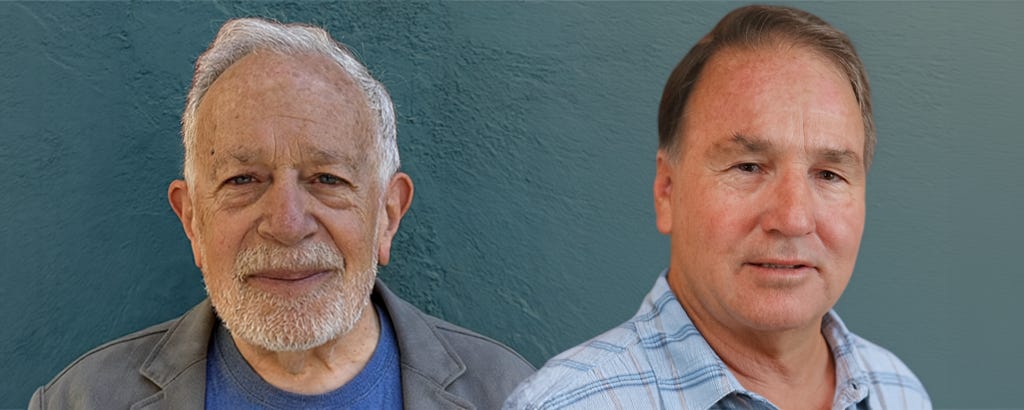
Ralph welcomes Robert Reich (professor of Public Policy and former Secretary of Labor) to discuss his "Pledge to Make America Affordable Again." Then, Ralph speaks to Derek Shearer (former economic policy adviser and US Ambassador to Finland) about his recent work, "A Bold Economic Program for America."
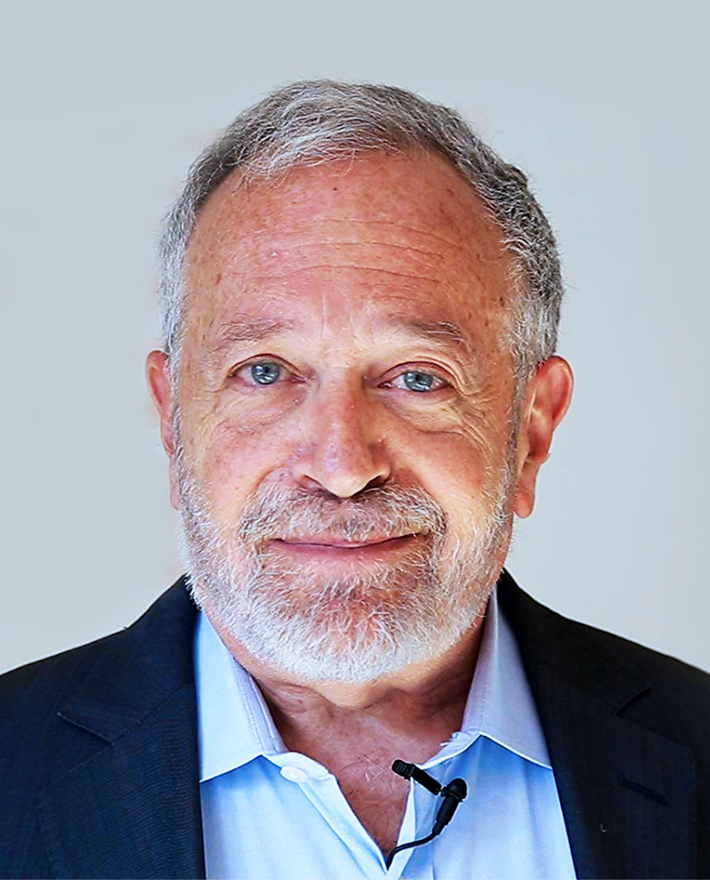
Robert Reich is Emeritus Professor of Public Policy at UC Berkeley. He has served in three national administrations, including as secretary of labor under President Bill Clinton. Mr Reich has written eighteen books, including The System: Who Rigged It, How We Fix It, The Common Good, Supercapitalism, and Coming up Short: A Memoir of My America. He is co-founder of Inequality Media, co-founder of the Economic Policy Institute, and co-founding editor of The American Prospect.
Democrats have an opportunity now to talk to the working class about—and not just the working class, the middle class too—about prices, about affordability in ways that are terribly important and meaningful and that really could get prices down or at least stop the onslaught of inflation. And also that are very, very consistent with what we believe as Democrats, as progressives, as people who want to see the nation move back toward its pursuit of social justice.
Robert Reich
You can bet that the right, the apologists for wealth in this country are going to say, “Oh, no, no, no, don’t do that because wealthy people will leave the country!” I mean, what they always do reflexively is say, “If you do that, we’ll leave.” And I say in California the same thing I would say about a national wealth tax—if they want to leave, let them leave. But they’re not going to leave because there are so many advantages to staying in California in terms of: this is where a lot of the high tech talent actually is. This is where the infrastructure for high tech is already. The climate, as I talk to you, I’m looking at a beautiful day out here. You know, who wants to leave California? And if you are a billionaire, and you are just so intent on leaving California because of this one very, very minor tax, then frankly, goodbye.
Robert Reich
I am a believer, though, in the common sense of the American people. Now, if that makes me naive, if that makes me gullible, so be it. But I think at the end of the line, the bottom line here is that the American people will make a decision starting with the midterm elections coming up in just 96 days (something like that). And those elections are going to be critical in terms of trying to constrain Trump and the people, the sycophants and lapdogs behind him and Hegseth and Robert F. Kennedy Jr. and all these people who are ripping the social contract to shreds. And I think that the one way that (this brings us back to my pledge, my affordability pledge for Democrats), I think one way the Democrats can be sure to get the House back and maybe even possibly the Senate in 96, 97 days, is to pledge to make America affordable again. And using these 10 particular steps that are widely, widely supported.
Robert Reich
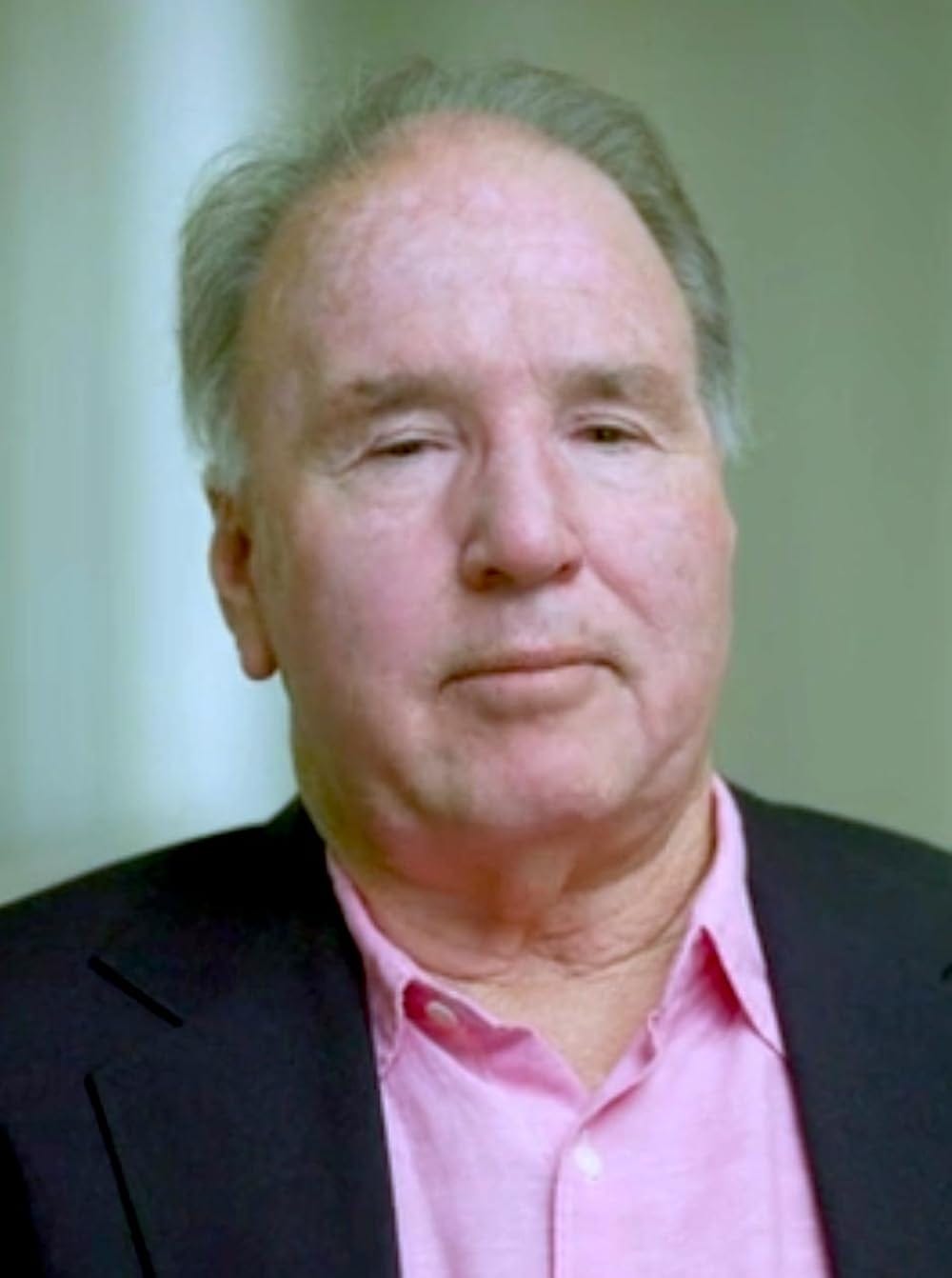
Derek Shearer served as the US Ambassador to Finland from 1994 to 1997. Previously, he worked in government at the national, state, and local levels, including the founding board of directors of the National Consumer Cooperative Bank in 1978 and Deputy Under Secretary of Commerce for Economic Affairs in 1993. During the 1992 presidential campaign, Ambassador Shearer was a senior policy adviser to Bill Clinton and helped to write the campaign’s economic program, Putting People First.
The point of our program is not that it should be endorsed in its entirety. It’s almost meant to be a discussion document to show what is possible—that this can be done. It doesn’t require some dramatic change in the way the government operates. It just demands a change in priorities and some new laws
Derek Shearer
You can’t get to those issues until you are actually in the government. And if we don’t win back the House and at least have a shot at winning back the Senate, talking about these issues while Trump and the MAGA Republican Party controls the government (and might continue to control it), makes us feel good, but it doesn’t change anything. What I’ve learned about the so-called leaders of the party is you don’t really expect them to lead. They will follow when they see where the voters are going. And they’ll also follow when they see if there is a Presidential candidate who takes off on these kinds of issues…I don’t expect the leadership to lead on these issues. So I don’t rail against them. Because what I’m doing (and I’m doing it with a lot of different people out there, including a lot of young people) is trying to find good candidates, provide them with economic ideas to run on, and then hope that we win back the House and that these kinds of then-elected officials who share our viewpoint become the Democratic Party. I mean, that’s how you do these things. If we don’t win these elections, then we’re just kind of crying in the wilderness.
Derek Shearer
Let’s Start the Revolution
Tools for Displacing the Corporate State and Building a Country that Works for the People
In his latest eye-opening exploration, political maverick Ralph Nader dissects the astonishing twists and turns of the 2020 presidential election, a race that left the nation on the edge of its seat. Although Joe Biden clinched victory with a substantial popular vote lead, Nader unveils the precarious nature of the outcome, where a mere 100,000 votes in key swing states could have catapulted Donald Trump back to the presidency. Get your copy here.

News 8/7/26
This week, a new wave of Democratic primaries were held, most notably in the state of Michigan. In the closely watched Senate primary, which came down to a two-way race, Bernie Sanders-backed progressive Dr. Abdul El-Sayed emerged triumphant. Some have played up the fact that his opponent, Congresswoman Haley Stevens, overperformed relative to her polling in an attempt to downplay the significance of El-Sayed’s victory. Yet, this narrative ignores the fact that Stevens enjoyed the backing of the Democratic Establishment and AIPAC, which gave her an 12-to-1 spending advantage according to Axios, and that she ran misleading ads that made it seem as though former President Barack Obama had endorsed her campaign. Viewed in this light, it is clear just how impressive El-Sayed’s victory – statewide, in a must-win swing state for Democrats – is. El-Sayed will now face off against former Republican Congressman Mike Rogers in the general election.
In Detroit, the left scored another major win with the victory of Donavan McKinney. McKinney, a DSA member and Michigan state representative, won his primary race against incumbent Congressman Shri Thanedar in Michigan’s 13th congressional district, the Detroit Free Press reports. Thanedar, a millionaire businessman, was a DSA member but left over disagreements over Israel. Thanedar fought hard to keep this seat, which he won in 2022, and was supported by Minority Leader Hakeem Jeffries despite many members of the Congressional Black Caucus supporting McKinney. Given that this is a heavily Democratic district, McKinney is essentially guaranteed a seat in the next Congress, bringing the number of DSA-backed House Members to an unprecedented high of seven. Moreover, between McKinney and Congresswoman Rashida Tlaib, the city of Detroit will now enjoy all DSA representation in Congress.
In Michigan’s seventh congressional district, progressive climate activist and co-founder of the Sunrise Movement William Lawrence pulled out a win in his primary as well. NBC notes that Lawrence defeated his two more moderate opponents, retired Navy SEAL Matt Maasdam and former Ambassador to Slovakia Bridget Brink, in part by aggressively criticizing the construction of new AI data centers. Some have alleged that Lawrence received support from Republicans using dark money to boost his campaign because they believe him to be an easier candidate to defeat in the general election. However, the Hillary Clinton campaign’s “pied piper” strategy to boost Donald Trump in 2016 proves that this is ever a risky strategy. Michigan’s seventh district is seen as a critical battleground seat. Donald Trump won the district by just one single percentage point in 2024.
In more data center news from the Midwest, Hell Gate reports former New York City Mayor Eric Adams was in “Wisconsin Rapids—population 18,654—trying to convince residents that they should allow a real estate developer to build a data center in the heart of their town.” In a video of his pitch, the townspeople can be seen heckling, booing and shouting down the former Mayor, with attendees saying “You belong in prison!” and “You’re here to steal our water!” Community activist Kaitlyn Federwitz is quoted in this piece saying “Our whole town does not want him here at all,” adding “We want our resources to be properly safeguarded, our farmers to be protected, our waterways protected.” The Wisconsin Rapids economy had been largely dependent on a local mill, which closed its doors in 2020; Federwitz spoke to this, arguing that “When the mill closed, we lost 900 jobs. We’re aware we need jobs and industry in our city.” However, she added that the people of Wisconsin Rapids are “not willing to accept that a data center is the answer to that problem.”
In more news from the midwest, United Auto Workers President Shawn Fain has published a new op-ed in Newsweek contending that “Democrats Must Pick a Side: Billionaires or Working-Class.” Fain cited numerous examples of Democrats in powers betraying their working class supporters, from NAFTA to modern governors like Abigail Spanberger of Virginia vetoing collective bargaining rights for public-sector workers. He criticized Michigan Governor Gretchen Whitmer in particular for vetoing “nine bills restoring pensions, lowering health care costs, and restoring bargaining rights for public-sector workers,” after “Michigan Democrats fought an 18-month legal battle to force the bills to the governor’s desk.” He claims that “When the courts finally ordered [the bills] delivered, Whitmer vetoed all nine the same day—without so much as a phone call to legislative leaders or the unions that helped elect her.” He ends this piece with a call for “every elected official and candidate to…[reject] corporate PAC money,” and “adopt a platform that addresses the needs of working-class people.” This clear-eyed, laser focus on the working class is what has put Fain into conversation for a 2028 presidential run by some on the populist left, particularly if Alexandria Ocasio-Cortez ultimately declines to run. A recent article in POLITICO quotes Bhaskar Sunkara, the 2020 Sanders surrogate and former vice chair of the Democratic Socialists of America, saying “If he’s willing to run, [Fain] might be the best candidate for the left…Since he’s progressive but very much says his egalitarian value system comes from his Christianity, [he] can speak in a moral language that can reach more independents than other candidates, and I think it would set a good precedent for labor.”
For the DSA left, all eyes now turn to Wisconsin, where Francesca Hong’s campaign for the gubernatorial nomination continues to pick up steam. Just this week, per Wis Politics, Hong picked up the endorsement of the SEIU Wisconsin Healthcare and Service Workers. In their endorsement statement, SEIU Wisconsin called Hong “a longtime advocate and fighter for the working class,” who is “committed to building back strong labor protections by overturning Act 10 and so-called ‘Right-to-Work’ laws, expanding Badgercare, and abolishing poverty wages in Wisconsin.” The union added that Hong’s “support for a $20 minimum wage, adopting family-centered policies such as paid family leave and affordable child care, and enacting much-needed regulations on corporate monopolies make her the clear choice for all Wisconsinites, not just the wealthy.” Hong currently leads in the polls, despite the sitting Democratic Governor’s attempts to boost her primary rival, David Crowley. Both Hong and Crowley have racked up labor support, though Crowley decidedly leads among the building trades and firefighter unions.
In St. Louis, the left experienced its biggest setback this cycle, with former Congresswoman Cori Bush losing her comeback bid against Congressman Wesley Bell by a large margin. Bush was ousted in 2024 as part of “a broader strategy by AIPAC to unseat Israel’s sharpest critics in Congress, including the ‘Squad,’ which Bush was a part of,” per the Missouri Independent. This piece notes that AIPAC spent over $8 million to oust Bush in that cycle and outside groups spent $7.2 million on Bell’s behalf this year. Bell’s official campaign outspent Bush’s by a margin well over 10 to 1. Bush is the first candidate backed by National DSA to lose their race in 2026, which, while disappointing in this case, is a stunning testament to the track record of the group.
In a totally different part of the country, this week Julian Beaudion, the Democratic nominee for Senate in South Dakota, dropped out of the race. Beaudion cited personal hardships for himself and his family in his statement of withdrawal citing a recent house fire. However, many see this as an acknowledgement that the independent candidate in this race, veteran and former park ranger Brian Bengs, has a better chance of defeating incumbent Republican Senator Mike Rounds in a head-to-head matchup. This dynamic has been playing out in other states; Democratic Senate candidates have dropped out to clear the way for independents in Nebraska and Idaho already and there is immense pressure on the Democratic nominee in Montana to do the same. For his part, Beaudion will not endorse either candidate in South Dakota, according to KELOLAND News, but South Dakota Searchlight reports the South Dakota Democratic Party will not replace Beaudion on the ballot, giving the greenlight for Democrats to coalesce around Bengs in the general election.
In another primary election story, Lehigh Valley Public Media is out with a story on the strange dynamic emerging in Pennsylvania’s 7th congressional district. According to this story, this race – between incumbent Republican Ryan Mackenzie and his Democratic challenger Bob Brooks, who seems to have done the impossible by getting Bernie Sanders and Josh Shapiro on the same side in a primary – has been upended by the entry of one Andrew Tupone. Mr. Tupone, a former Republican candidate, is running on the Green Party ballot line and claims to have “joined the Green Party this spring, drawn by its environmental policies on water conservancy and opposition to data centers, after growing disillusioned with both major parties.” Yet, apparently, “Green Party leaders warned in a statement this month that a wave of candidates may be posing as party members across the state.” Chris Robinson, a Green party spokesman, claims that “The party hasn’t endorsed any congressional candidates in Pennsylvania and has never heard from Tupone.” Robinson adds that he “looked at [Tupone’s] Facebook page, and he seems like he’s a nice Republican.” According to LVPM, “a third-party candidate wouldn’t need to move the needle much,” to influence the outcome of the election, noting that the current Congressman defeated the Democratic incumbent, Rep. Susan Wild by just 1 percentage point, in 2024, while “Tim Silfies, the last third-party congressional candidate to appear on a Lehigh Valley ballot, earned 8,011 votes, or 3 percent of the vote, in 2018.”
Finally, in more third party news, POLITICO reports several leading figures on the anti-MAGA right – including Congressman Thomas Massie, former Congresswoman Marjorie Taylor Greene, and commentator Tucker Carlson – convened last weekend to “[sow] the seeds for a future third-party political organization…aimed at undercutting the Republican establishment.” This gang of three, joined by former Trump national security official Joe Kent, are particularly incensed by the president’s intervention in Iran, with Greene writing “We said no more foreign wars and we meant it and supported Donald Trump because he made that promise. But he’s betrayed us all.” This group is reportedly mulling a right-wing, third-party presidential campaign in 2028. While Carlson has declined to launch a presidential bid in the past, despite urging from within his circle, a sprawling new “10-point vision for America” he debuted during a recent stream implies that he is increasingly interested in articulating an alternative vision of right-wing politics from those espoused by Trump. This manifesto, as reported by Axios, includes everything from declassifying records on the JFK assasination and 9/11 to enforcing universal sobriety to “halting immigration until the effects of AI become clearer.” We will be watching closely to see if this effort moves forward or peters out as has been the pattern with other recent third party attempts.
This has been Francesco DeSantis, with In Case You Haven’t Heard.
Discussion about this episode
https://www.ralphnaderradiohour.com/p/bold-plans-for-a-more-affordable


Ralph and Robert are my heroes!!They speak my language at 79. The Democrats need this kind of drastic change they advise! Weirdly, Schumer and Jeffries, the Democrat leaders, are more closely allied to Trump than many even realize.
People who are too old to serve? Mitch?
Where was the plan? All I heard was a wish list.
As Ralph recently pointed out there is a difference between an agenda and a strategy. The agenda described in this episode has no strategy to achieve the agenda making it a wish list.
Robert Reich asked how can a politician stand up to the big money interests when you are taking their money and correctly answered that question by saying you can't.
If the politicians are taking big money they will be working for the big money interests.
Ralph asked do the politicians want the money or the votes.
Forcing the politicians to choose between the money or the votes is a strategy.
We can't do that if we vote for politicians that take big money. It gives the politicians no incentive to not take big money. It actually validates the politicians taking big money.
This is why we need a litmus test that says if a politician takes big money that politician will not get our votes.
You may have heard of this concept, Ralph- it's called democracy.
The question is how can citizens use their votes to without voting for a candidate that takes big money when there are no candidates on the ballot running small donor campaigns? Even the candidates running ON progressive agendas take big money so they will run FROM the progressive agenda if they are elected as they have done for forty plus years.
Citizens can cast a write in vote in 2026 to register a vote against the big money candidates on the ballot and to create and demonstrate demand for small donor candidates in 2028.
Just think if the 7.1 million people that did not vote in 2024 had instead cast a write in vote for this purpose. Many more citizens would be participating in making this demand in 2026 and we could have some small donor candidates on the ballot in 2026..
Let's start the revolution with a strategy instead of another book on agenda by forming a Union for Politics with a discussion of this strategy for Labor Day.
Just as workers can go on strike by withholding their labor to get better pay, working conditions, etc. citizens can go on strike by withholding their votes from politicians that take big money and casting a write in vote demanding small donor candidates.
We need you, Ralph, to help implement this bold plan instead of just offering the same old bull wish list.
If you want Ralph to have this discussion so you can learn more about this strategy so you can decide if you want to participate send an email to LaborDay@nader.org telling him you want him to participate in a discussion on this strategy at a Labor Day event.
Reich is about as mainstream as can be, and is not the answer to anything, except for enriching Robert Reich. Such a disappointment to see Ralph, a long-time hero, offering a platform for Reich's pro-corporate control positions.
Can anyone name a democratic party platform and or plan to get high paying jobs back into America ? Can anyone name a democrat elected to the House of Representatives that does not talk all day long that the rich have all the money and has a Democrat ever talked to a rich Democratic doner and asked,,, how is their company going to provide a decent living wage to the people they employ ? . Has a Democrat leader ever presented a plan of how to exactly stop hedge funds from raising and lowering stocks with a I finance software programs that automatically skim billions of dollars each day into to the bank accounts of billionaires.,,? Leading to even more inflation.
Has a Democratic leader ever presented an exact day to day plan on how to stop the war with Iran ? Besides telling everyone giving money to Bibi is the problem.
Trump is not the problem, he lies, he cheats, every thing he does is in self-interest and the average Joe feels the democratic leadership has failed to take action with specific plans to right the ship .why not join trump ? they are tired of academic BS and do nothing democratic consultants,,,, Democrats should stop dreaming in their world of make believe ,,step up to the plate with a real plan or go under ,,,it's that simple and your choice, good luck America have a great day my friends.
All sounds very promising. But then how will money be taken from the war machine that was carefully spread across nearly every community in the US without all politicians screaming about "job loss" and the 40 trillion dollars of debt.
Steve, that was a nice jab about neoliberalism there in the discussion with Shearer. Klassik approves!
Klassik is far less approving of the narratives from Reich and Shearer though. Reich’s ten point plan is really just a rehashing of Democratic Party strategy from around the period of 1995-2010. Reich makes a bold claim in point 10 that everything above it will be ‘paid for’ by increased taxes.
Well, pay for what? Of all of those points, Reich only recommends two things which require any large government spending: point seven about healthcare and point eight about child/elder care. Even then, Reich’s recommendation for healthcare is hardly progressive, it only recommends allowing the public to buy Medicare coverage.
Then there is the most pressing point that the federal government is not constrained in their ability to spend. The US Dollar is not commodity-backed, the US can issue US Dollars as it pleases.
With that, we see how Reich’s agenda is really just a repeat of the neoliberal agenda implemented by Democrats in the period of 1995-2010. They promised something lightly progressive in that era, but then when they held power, they claimed their hands were tied due to the deficit and implemented social policy austerity. In the era after 2010, the Democrats shifted their policy to one of promising nothing and delivering nothing. Both the pre-2010 and post-2010 strategy opened the door to the likes of Trump.
On to Shearer et al.’s ‘A Bold Economic Program for America’. I read the entire 100+ page document. To me the most telling statements are on pages 86-87.
Prior to page 86, Shearer et al. describe the declining economic conditions for the public in the neoliberal era. There are many good points in there. However, starting on page 86 where Shearer et al. start discussing macroeconomic theory, things fall apart entirely and descend into the exact monetarism (and neoliberalism) which helped led to the exact degradation described above page 86.
While there is a lot which can be analyzed, Klassik will assess two pieces of balderdash from the report. First: “In 1972, President Nixon pressured the Fed to keep interest rates low, which helped his re-election but ushered in a period of increasing inflation” (p. 87).
Inflation in the 1970s was not primarily caused by low interest rates. To even say that is pure comedy. Inflation in the 1970s was primarily caused by rapidly increasing energy prices and shortages due to geopolitical conflict. To suggest otherwise would be equivalent to saying that increased gas prices in 2026 are caused by interest rates which are too low rather than the obvious cause of an ill-advised war disrupting the supply of oil in global markets. Nothing against Steve Skrovan, but even he cannot compose comedy with such hilarity to suggest that interest rates are the real reason for increased fuel prices now or in the 1970s!
Then the other monetarist point to analyize from the report: “Fiscal policy should use triggers to increase government spending when the unemployment rate is high, such as during the pandemic shutdowns, and run small surpluses when the unemployment rate is low, as was the case during the economic recovery from the pandemic” (p. 86).
So what Shearer et al. are suggesting here is that DOGE did not do enough to cut government expenditure! Say what?
There is absolutely no need for the federal government to ever run surpluses. Rather than this monetarist nonsense, the real economic strategy should be to eliminate unemployment entirely. This stabilizes the economy, and prices specifically, by smoothing the swings in prices and production caused by unemployment. When the federal government runs surpluses, it is putting the onus on the private sector to maintain economic growth which then leads to deregulation and increased focus on the finance sector rather than productive sectors of the economy...so a repeat of everything which Clinton and company implemented which led to the global financial crisis of 2008 and everything since.
Then there is the other obvious truth of monetarism, which Shearer et al. is promoting, is that unemployment is necessary to combat inflation. It is that exact ideology which led to the problems described above page 86 in his own report!
Klassik will grant Shearer the benefit of the doubt that he would like to see progressive policies implemented to benefit the American public, but Shearer’s entirely incompetent economic analysis is the exact reason why the American public continues to suffer setbacks regardless of which party is leading the federal government. Retreating to popular economic theories and ideology of the 1970s-2000s which have proven to be incorrect is not the path forward. The likes of Reich and Shearer need to be sent to retirement homes. They are, or should be, entirely irrelevant to modern Americans aside from studying how not to implement economic policy.