How socialism shaped Wisconsin -- On Point
How socialism shaped Wisconsin
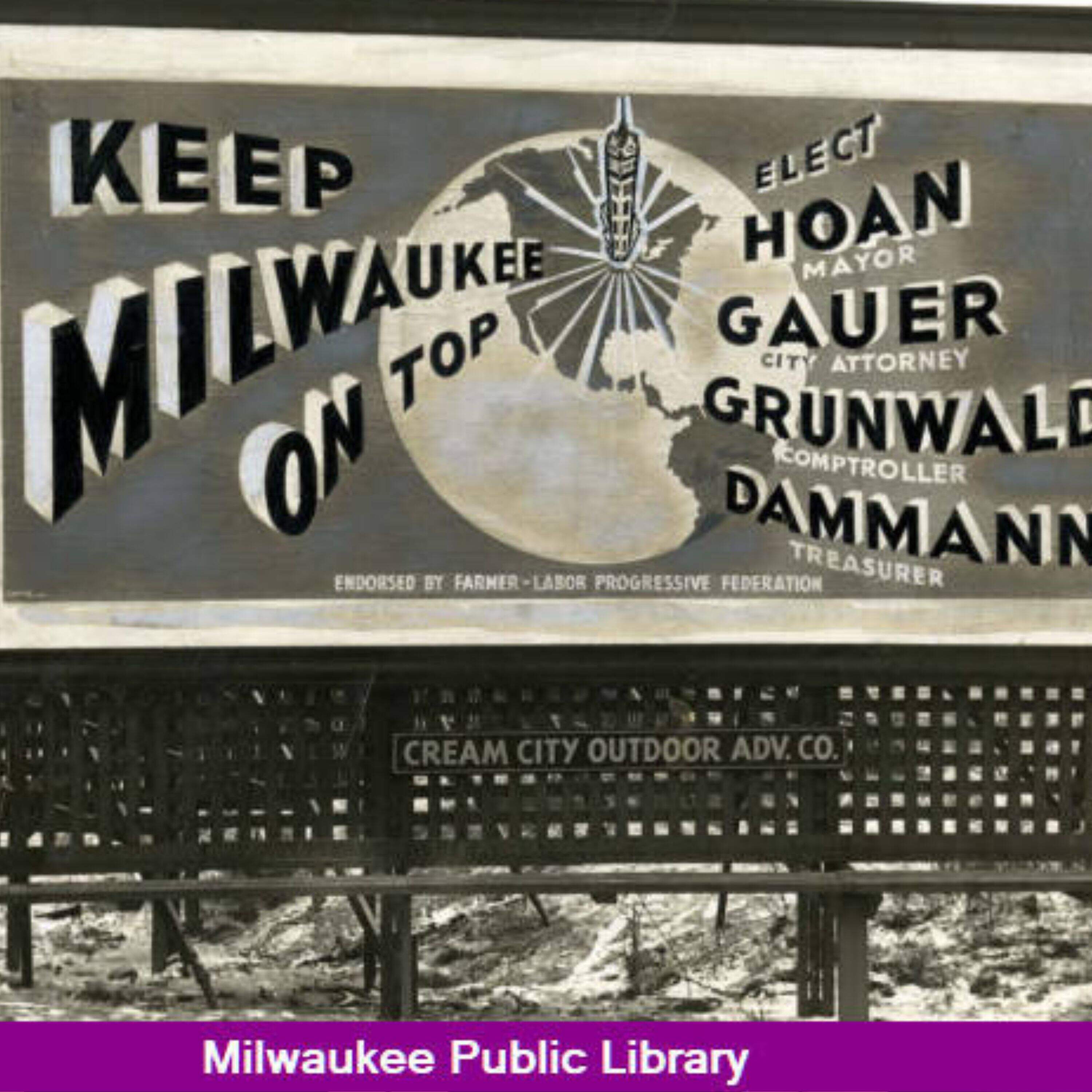
Wisconsin elected the first-ever socialist member of Congress in 1910, and Milwaukee was run by socialist mayors for some 50 years. Now, a Democratic socialist is leading a primary race for Wisconsin governor.
Guests
John Gurda, Milwaukee historian.
Anya van Wagtendonk, state capitol reporter for Wisconsin Public Radio.
Transcript of Full Broadcast
The version of our broadcast available at the top of this page and via podcast apps is a condensed version of the full show. You can listen to the full, unedited broadcast here:
Part I
MEGHNA CHAKRABARTI: Wisconsin, known for cheese, beer, the Green Bay Packers, and socialism?
Support WBUR
DANIEL HOAN: Having been mayor of Milwaukee, ladies and gentlemen, for 24 years, the city of Milwaukee has a budget practically as large as the amount in the state budget spent for state purposes.
CHAKRABARTI: That is Daniel Hoan, former mayor of Milwaukee, Wisconsin back in 1946.
Hoan served as Milwaukee's mayor from 1916 all the way to 1940, and he was a socialist. In fact, the city of Milwaukee was run by three different socialist mayors over a 50-year period. Now, this may come as a surprise because Wisconsin also gave the world the likes of Senator Joseph McCarthy, who spent his ignominious congressional career targeting alleged communists.
McCarthy was first elected to the Senate in 1947, but as I mentioned, for nearly 50 years before that, Wisconsin voters elected a slew of socialist candidates, not just to the mayoralty of Milwaukee, but also to state and federal office. For example, in 1911, Wisconsin sent the first ever socialist member to the U.S. House of Representatives, and in the State Assembly, lawmakers passed some 300 socialist-authored pieces of legislation between 1919 and 1931.
Frank Zeidler was mayor of Milwaukee for 12 years, and in his first inaugural speech in 1948, Zeidler, also a socialist, outlined one of his mayoral priorities: housing.
FRANK ZEIDLER: Thousands of Milwaukee citizens desperately need housing. The full power of the municipality must come into play to bring adequate relief for families living in substandard dwellings.
We must not temporize or quibble. Faith in democracy itself is at stake. Unless we can fulfill the hopes of our citizens for decent habitation, pillars of our way of life will be undermined.
CHAKRABARTI: Fast-forward some 75 years, and today, a socialist candidate is on the ballot in Wisconsin once again.
FRANCESCA HONG: We are showing not just Wisconsin, but the world what it looks like when working class people can come together to reclaim our power.
Support WBUR
CHAKRABARTI: Democratic socialist Francesca Hong is currently polling strongly ahead in the Democratic gubernatorial primary. Some polls show Hong with a double-digit lead over three other Democrats, David Crowley, Joel Brennan, and Kelda Roys. If she wins, Hong will face presumptive Republican nominee and current U.S. congressman from Wisconsin, Tom Tiffany, in November.
Now, Tiffany is a 2020 election denier who voted against certifying Arizona and Pennsylvania's election results and supported a lawsuit seeking to overturn the 2020 results in four swing states, including his own. Tiffany also wants the FBI to continue to question Wisconsin election officials and still refuses to say that Joe Biden won the 2020 race.
Now, Hong has her own history of political radicalism. In 2021, she wrote that she wanted to, quote, "abolish the Senate." Just three months ago, she wrote that she wanted to abolish prisons, and in November of 2020, she posted a call to, quote, "cancel Thanksgiving." And in that post, she tied COVID lockdowns to the holiday, saying, quote, "If it takes a worldwide pandemic for us to realize we should stop celebrating colonialism and the original super-spreader event that killed indigenous folks and women, so be it." End quote.
Hong has decided or tried to walk back all of those positions more recently, saying she doesn't want to abolish prisons, police, or the Senate anymore, and that she, quote, "actually loves Thanksgiving." So between Hong and Tiffany, I just have to give a quick shout-out to all you Wisconsinites because, wow, every election cycle, you guys know how to keep it interesting.
But let's get back to what we actually want to focus today. And what we want to focus on is the question of is the Francesca Hong modern-day version of socialism, of Wisconsin socialism, anything like the early 20th century version that actually won and governed in Wisconsin for almost a half-century?
And why does Wisconsin have such a strong history of socialism? How has that history shaped the state and its people? In order to help us answer that question, we're going to one of the experts on Wisconsin history. His name is John Gurda. He's a historian of Milwaukee and author of the book The Making of Milwaukee, and he also hosted a five-hour documentary series of the same name on Milwaukee PBS.
John Gurda, welcome to On Point.
JOHN GURDA: Glad to be here, Meghna.
CHAKRABARTI: Okay, so let's start at the beginning of the beginning. Where do we look to understand the roots or the root causes as to why socialism really flourished in Wisconsin 126 years ago?
Support WBUR
GURDA: If there was one city that was bound to give socialism a chance, it was Milwaukee back around the turn of the 20th century.
If there was one city that was bound to give socialism a chance, it was Milwaukee back around the turn of the 20th century.
John Gurda
And you have, first of all, a context of corruption. We had a mayor named David Rose, whose nickname was All the Time Rosy, who tolerated brothels in the shadow of City Hall and owned an Arizona copper mine on a salary of $4,000 a year. So you have open and shut bootlegging was what they called it back then.
There was a grand jury impaneled back in early 1900s, returned 276 indictments against public officials. So you have this kind of push factor, people are tired of corruption, and then you have three things that really made Milwaukee, if not unique, pretty unusual. One was a huge population of Germans, and about 60% of the population was German ancestry back in the mid-1800s, and they were still the largest group.
And in the vanguard there was a group called Forty-eighters who were, they fled after a failed revolt against royal rule back in 1848. And these were the cultured, educated, and quite liberal immigrants who founded the freethinker societies, the Turner societies, and those became the seedbeds, intellectual seedbeds of Milwaukee socialism.
So you have kind of this intellectual elite that is pushing leftist ideas, and you also have a huge working class population. About 57% of Milwaukee males worked in manufacturing back in 1910. So you have a very large receptiveness to calls to class consciousness, especially after the 1886 eight-hour demonstrations where the state militia opened fire on strikers and killed seven of them.
CHAKRABARTI: Okay. John, can I just jump in here because you said a bunch of super interesting things because when you first said there's this huge population of either direct German immigrants or people whose recent family members had immigrated from Germany, at first, I thought that doesn't seem to naturally lead itself to socialism. Because it wasn't like Germany in 1900 through 1910 was exclusively socialist.
In fact, I believe it was the opposite. But then when you said, okay, so we had this combination of highly educated, I guess progressive, left-wing Germans who had tried to change government in Germany, failed and came to Wisconsin, and then also the, what, almost 60% working class population.
That is a really interesting combo in Milwaukee, and in a sense, does it kind of echo at least the ambitions of modern-day Democratic socialists and the coalition they would want to or say they want to create between, you have all these college educated elites, I'll call them that and yet also speaking to wanting to improve lives for working class Americans.
Support WBUR
GURDA: The huge difference between then and now is that the definition of the working class has changed radically. The landscape has just transformed. Back then it was people with blue collars, and today I think about 15% of the workforce is in manufacturing, and unions are certainly as likely to be service employees and educators and health care workers.
The definition of the working class has changed radically.
John Gurda
So the definition of working class, you know, Francesca Hong says working people. It's become a rather elastic term.
CHAKRABARTI: So we're going to focus on Milwaukee more in just a second here, but Milwaukee's only one, it's an important part, but only one part of Wisconsin.
Was there the same or similar even partial support for socialism in the rest of the state?
GURDA: There was, but it took a different form. In Wisconsin as a whole, it was progressivism, especially as practiced and preached by Robert La Follette who was first governor and then the U.S. senator, became a national figure in the progressive circles.
And that was largely a native movement, and it was certainly more interested in reform. Victor Berger, who was the Moses of Milwaukee socialism criticized progressives as being obsessed with the mechanics of government. So railroad regulation, direct primary, referendum, recall, things that he thought were not radical reforms or not radical enough to replace capitalism with a socialist society.
But you have, where they joined forces, was reform. In 1911 legislature, the first income tax, state income tax in the country, the first workers' compensation law, independent Department of Labor. So you have socialists largely based in Milwaukee, but elsewhere in the state as well, joining forces with progressives to certainly spearhead some very real world reforms.
So you have a two-headed movement in some ways, progressivism in the state and socialism in Milwaukee.
Support WBUR
CHAKRABARTI: Oh, this is so interesting, John. It gets even more interesting. Because again, I hope I'm not just imposing my desire to find echoes in everything, but the debate between, as you said, incremental progress versus sort of radical reform sounds a little familiar to me.
GURDA: It does.
CHAKRABARTI: We've got about a minute before our first break. Tell me more about Victor Berger. Again, who he was and his fiery brand of Wisconsin socialism.
GURDA: Austrian immigrant, newspaper editor, teacher, theater critic, and he was a, I guess the term you'd use is a practical socialist.
And sometimes people would think that's an oxymoron, but it certainly was not in Berger's case. He was described by one of his, by Frank Zeidler, one of his successors, as an evolutionary moderate. So a gradualist and someone who believed the cooperative commonwealth would come, but only after a period of education and reform, and how better to educate and reform than by governing.
So he wanted to win elections. This was not someone who was theoretical.
Part II
CHAKRABARTI: Now, let's just point to the other fact that socialism was so influential in Wisconsin that it had the nation's attention, and specifically the National Socialist Party's attention at the time.
So we're about to hear some archival tape of Norman Thomas. He was the Socialist Party of America's candidate for president in the United States in six elections between 1928 and 1948. Obviously, didn't win any of them, but he did visit the Wisconsin Socialist Party around 1942 and gave a speech that included this.
Support WBUR
NORMAN THOMAS: American democracy is sorely wounded by political corruption and gross inefficiency bordering on corruption. Washington hums with whispered stories of numerous overcharges of the government on war contracts Tonight I have to report here in Milwaukee one case of an overcharge by a company which has long had contracts for Navy work.
I refer to the Falk Company of this city.
CHAKRABARTI: So John Gurda, you had mentioned that there was this enormous corruption in Milwaukee, which was a driving force for socialists to want to essentially clean out government. So remind me again, who was the first socialist mayor of Milwaukee, and when was he elected?
Emil Seidel, 1910, and he was a pattern-maker by trade, woodcarver as well. And during that landslide, two-thirds of the common council, the legislative body, was blue collar workers. So it really was the triumph of the working man and working woman.
CHAKRABARTI: Okay. And so once he got into office, and then subsequent socialist mayors, talk about what they actually did as political leaders.
Where were their areas of focus and change, if any, that they brought to Milwaukee specifically?
GURDA: My favorite quote from Seidel was from his memoirs, and Milwaukee's brand was called sewer socialism by Morris Hillquit, who was a New Yorker, a U.S. socialist leader. And he thought it was sort of socialism lite, they were being too proud of these public works.
And here's what Seidel said. "Some Eastern smarties called ours a sewer socialism. Yes, we wanted sewers in the workers' homes, but we wanted much, oh so very much more than sewers. We wanted our workers to have pure air. Pure air. We wanted them to have sunshine. We wanted planned homes. We wanted living wages.
We wanted recreation for young and old. We wanted vocational education. We wanted a chance for every human being to be strong and live a life of happiness. We wanted playgrounds, parks, social centers, reading rooms, clean fun, music, dance, song, and joy for all. That was our Milwaukee social democratic movement."
Support WBUR
CHAKRABARTI: Wow.
GURDA: These were not hair-splitting theorists.
CHAKRABARTI: But what did the, quote, "Eastern smarties" want from Milwaukee socialists?
GURDA: More ideological purity and less emphasis on the practical which was, the Milwaukee socialists, they were just fine with that label, because they were getting stuff done, and they were electing people to office.
So nationally they were the brightest spot in the socialist firmament back then. So it was and that was Berger's contribution, though, just sidestepping all these sort of arcane arguments. So that the left is, at the start of the show, you said that's always been a hazard of leftist ideologies.
CHAKRABARTI: Yeah, I'm saying, though, that the history, the table, the great table of history does turn. Because just a couple of weeks ago on this show we were actually talking about the current mayor of New York of all places. And the phrase sewer socialism in a positive context came up there.
GURDA: That came from Milwaukee. That came from Milwaukee, yep.
CHAKRABARTI: Exactly. Exactly. Again, how the table of history turns. I love it. Okay so they were actually focusing on these air and street level efforts. Was Milwaukee sort of cleaned up? Were the roads improved? Were the sewers improved?
Were all of the sort of fundamental quality of life things that Seidler was talking about, did they achieve them?
Support WBUR
GURDA: Yes. Certainly not in the entirety that they would've liked. But you have, especially during Dan Hoan's tenure, 1916 to 1940, he got his picture on the cover of Time Magazine back in 1936, and Time called Hoan one of the nation's ablest public servants and said Milwaukee was perhaps the best governed city in the U.S.
So there's one story from back in those years. This was efficiency, scientific methods, and Milwaukee won awards as the cleanest, safest, and healthiest city in the U.S. multiple times. Not sexy titles but they reflected a real, a very effective emphasis on quality of life. And Milwaukee won the Public Health Award so often that it had to be retired to give other cities a chance.
CHAKRABARTI: Wow.
GURA: So the answer is yes. This was not just smoke, they were doing things that were real world changes, especially for the working class.
CHAKRABARTI: Okay, folks, and you heard John just say that Daniel Hoan was Milwaukee's mayor from 1916 to 1940. That is quite a run. We actually have a little bit of tape of Hoan from after he left the mayoral office in Milwaukee.
He won 10 consecutive elections there, though. And we'll talk a little bit about what happened to him and his relationship with socialism a little bit later, John. But here he is in 1946, at the Marinette County Democratic Committee during his campaign for Wisconsin governor.
HOAN: There's no reason in the world why the state of Wisconsin shouldn't be the leading state of the union.
Milwaukee led all other cities in good government. Why shouldn't Wisconsin discard some of the old methods of doing business, just as you have on the farm, just as you have in running a city business? And adopt up-to-date efficient methods to make the state government of Wisconsin function as one of the best of the states of the union?
CHAKRABARTI: Okay, and here's a little more from 1946 where Hoan talked about his plan if he had been elected governor to make utilities publicly run.
Support WBUR
HOAN: The Department of Public Utilities Commission is there in Madison only to guarantee the profits of private utilities. It's paid for by the taxpayers. For example, the excess profits tax has been wiped out, and yet the Utility Commission has made no corresponding reduction in the rates.
This commission should either be abolished or an effective Department of Public Utilities, which will really function to protect the people, set up.
CHAKRABARTI: All right, John. I suppose now as then, or then as now, there's always the question of, if you're going to make radical changes to even just the concrete functioning of government, cleaning up sewers, air, et cetera, how are you going to pay for it?
And that's actually especially an urgent question at the state and local level, because they can't just print money, like the federal government does. So how did the socialist lawmakers, both in Milwaukee and in Wisconsin at the state level, handle that?
GURDA: There's this kind of a myth or a stereotype that the socialists were tax and spend liberals, as you hear that a lot now.
There's this kind of a myth or a stereotype that the socialists were tax and spend liberals.
John Gurda
The fact is that they were guides and guardians of good government. They hired a UW professor, Madison professor named Commons, John Commons, who was set up a Bureau of Economy and Efficiency, and he's working on Saturday afternoons with a caucus of working class aldermen, and he said he had never seen a more creative class of people who really wanted to get things done and do it efficiently and do it as cost effectively as possible.
So they were, Emil Seidel claimed that he saved the city $500 in printing costs, and he took a lot of dead people's names off the ballots. So they were trying to do whatever they could to not cut corners, but certainly make things as efficient as they possibly could. So they were pay as you go, and Hoan especially was famous for not wanting to spend money he didn't have, the city didn't have.
And for the first couple years of the Depression, they talked about the Milwaukee Miracle, where Milwaukee still had money in the bank where other cities were going bankrupt. So it was efficiency, certainly taxes, and the park system. That was expensive, but it was considered well worth the investment.
Support WBUR
CHAKRABARTI: So wait a minute. They actually had money in the bank during the Depression? Which makes me wonder, was it the corruption that you talked about earlier that was siphoning off that money in previous decades?
GURDA: I don't think it was so much the kind of the drain on the part of the Rosy Era.
... It was more just doing things efficiently. They were as economical as the most stereotypical German hausfrau in Milwaukee, they were trying to be as effective as they possibly could. And they did it. As time went on, the Depression just pasted Milwaukee because it was so heavily involved or it depended on manufacturing.
So 1933, about 40% unemployment, but for the first couple years there, '29, '30, '31 Milwaukee still had money in the bank, and other people were looking to Milwaukee to how you did it. And Frank Zeidler, he did not want to be in bondage to the banks, so they did not want to issue bonds.
So even after the kind of the 15-year period of Depression and war where you had infrastructure just decaying, he resisted the borrowing to solve some of those problems. So that was a really very strong socialist emphasis, trying to be as frugal as possible.
CHAKRABARTI: Okay, so we have some tape from Frank Zeidler. He was mayor of Milwaukee from 1948 to 1960, and here's a moment where after winning re-election for the first time, Zeidler used his 1952 inaugural speech to emphasize, as just said, John, his commitment to fiscal responsibility.
FRANK ZEIDLER: We must stay within our financial bounds.
Inflation and the great drain of tax revenues through the state and federal government have imposed limitations on local government. Therefore, we have stressed stronger budgetary controls and a tightly knit program of improvements. We must confine ourselves to the limits of our level annual tax rate and screen and re-screen all services and improvements.
CHAKRABARTI: Okay. Now, John, I'm wondering, we've been focusing on Milwaukee because, again, of its really long run of socialist mayors, but statewide, in looking at state government, I had mentioned at the top of the show that there was a similar, a huge slate of several hundred socialist authored pieces of legislation that were passed at the state level.
Support WBUR
Tell me more about what was going on in the legislature during this time.
GURDA: You have La Follette kind of plowing the ground and he goes on to Washington and becomes a national figure. But you have a very strong progressive infrastructure in Wisconsin, and aided and abetted when it was ideologically copacetic with both s, to put in these reforms.
So you have Francis McGovern who was the former Milwaukee DA, who prosecuted a lot of the prostitutes the houses of prostitution in Milwaukee, and real, a grand jury investigator as well. So he was the governor at the time, around 1911, 1912, when you have this huge, this raft of measures, socialist and progressive, that it made Milwaukee kind of, or it made Wisconsin kind of a national model as Dan Hoan said in '46.
So you have certainly public interest in cleaning things up and public interest in things working. And in some ways, it's rooted in the blue-collar heritage of Milwaukee industry and the farm ethic as well. Make things work. Do things well. It really is part of the DNA, I think, of Wisconsin and Milwaukee.
Make things work. Do things well. It really is part of the DNA, I think, of Wisconsin and Milwaukee.
John Gurda
CHAKRABARTI: Make things work. Okay. But I thought I got a hint earlier, John, that there might have been some beef sort of that way between Madison progressives and Milwaukee socialists.
GURDA: There was, and Berger, for a time, criticized Robert La Follette as a half-baked reformer. And then what happened, and we'll talk about this a little later on, you have all kinds of changes going on in the national scene.
In 1917, we entered the World War I, and the socialists had adopted their St. Louis Convention and a very strident anti-war platform that marginalized the party. La Follette himself became an isolationist. So you have a shrinking base of support for both sides. And in 1924, La Follette ran for president on a progressive, as an independent, but as a progressive.
And Berger and Milwaukee socialists backed him wholeheartedly. So there was a coming together of interests, and it got buried in the '24 election and died in 1925. But there was a reconciliation and a realization that they were on the same page and fighting for the same things.
Support WBUR
CHAKRABARTI: Okay. Now a lot of the not just Milwaukee level, but state level changes that were made in the first half of the 20th century in Wisconsin include things like lots of legislation that benefited labor, public utilities being created, and criminal justice reform. Again, all of these things sound so familiar to me, but you were saying at the same time there were major changes on the national level, even the wars, World War I and World War II aside.
And are some of those things that, I don't know, these platform level issues for socialists were subsumed into the larger Democratic Party?
GURDA: Absolutely. Woodrow Wilson, is the World War I president, and he adopts the limited eight-hour day, develops department of labor, nationalizes the railroads.
These are worker friendly measures. So the Democratic Party becomes more and more kind of the tent to which laborers, laboring classes were migrating. And then you have World War, the Depression, World War II, certainly also nationalization. But during the Depression FDR wins in 1932, and you have these causes that had been just favorite planks in the socialist platform.
Old age insurance is what they called it. It becomes Social Security in 1935. So the Democratic Party kind of co-opted, in many senses, both the rhetoric, the agenda, the strategy, and the base, the labor base of socialists and progressives nationally and in the state. So you have that tape of Dan Hoan talking in 1946 running for governor.
He was running as a Democrat. So there was this migration of the socialist wing and progressives into the Democratic Party, which became the vessel of liberalism in Wisconsin and nationally.
This migration of the socialist wing and progressives into the Democratic Party, which became the vessel of liberalism in Wisconsin and nationally.
John Gurda
CHAKRABARTI: Okay, we have one minute left before our second break, John. You're describing a half-century-long period of not just reform, but tangible improvement in Milwaukee and elsewhere in Wisconsin under socialist leadership.
But did those improvements last? Didthose increases in quality of life, did they have staying power after the socialist lawmakers had more trouble getting elected even, statewide?
Support WBUR
GURDA: Some of these things are baked in, Meghna. You have Milwaukee County has 15,000 acres of public green space, which is five times per capita more than Chicago has, and that's a good park system in Chicago.
I think 90% of Milwaukeeans live within walking distance of a park, and that was absolutely a socialist platform, socially, a socialist priority. And it's still here. Still enjoying it.
Part III
CHAKRABARTI: Okay, so let's now see how much we can tie Milwaukee's history in the first half of the 20th century to what's going on at the moment in the gubernatorial race. So first of all, this is 1952. We had mentioned Milwaukee Socialist Mayor Frank Zeidler, and in his '52 inaugural speech, he said Milwaukee's public officials should set an example for the rest of the country.
ZEIDLER: We must always remain accountable to the people of our city. Our deliberations must at all times be open and forthright. Integrity and honesty must be our armor and good faith our vestment. Here in Milwaukee, we will continue to conduct ourselves, citizens and city officers alike, to provide inspiration for good government all over the land.
CHAKRABARTI: Okay, so that's 1952.
Now, here we are in 2026, and Francesca Hong is polling ahead of the three other Democratic candidates in the Democratic gubernatorial primary in Wisconsin, and I definitely understand the foibles in polling, so I can't say that we'll know what happens, but she's polling ahead in double digits.
She has represented Wisconsin's 76th Assembly District in the State Assembly since 2021, and last year she was on the Wisconsin Public Radio show, Wisconsin Today, where she was asked what the word socialist means to her.
HONG: To me the S word, socialism, this is more about ensuring that working-class people have folks who are not only fighting for them, but fighting alongside them to ensure that every American and people in this country have the economic freedom, again, to be able to take care of themselves and not a state that is overreaching and going into their lives to take away resources that folks have been fighting for and absolutely deserve.
Support WBUR
CHAKRABARTI: Okay, so that is Francesca Hong on Wisconsin Today just last year. Joining us now from Madison is Anya van Wagtendonk. She is the State Capitol reporter for Wisconsin Public Radio. Anya, welcome to On Point.
ANYA VAN WAGTENDONK: Hi there.
CHAKRABARTI: Okay, so tell me a little bit more about how Francesca Hong describes her brand of socialism.
VAN WAGTENDONK: Yeah, she's been a member of the Socialist Caucus in the state legislature, and she does describe it in terms of what John just described of kind of the Wisconsin history of sewer socialism, so really focused on sort of infrastructure and problem-solving. That's, I think, how she's been running her gubernatorial campaign especially.
But I think a kind of important distinction in politics today in general is the arrival of what we might call culture war issues, and I think that's an area where she's also been very outspoken throughout her time in the legislature. And that is something that's also coming up on the campaign trail, both from her supporters, who are very loud and excited and energized, and then also from her detractors, who are also fairly loud and energized.
CHAKRABARTI: Yeah, I mentioned a little bit about that at the top of the show of sort of her past comments and posts which are coming back to haunt her. Here's an example. This is Francesca Hong on Fox News just in July, so about a month ago, and host Dana Perino asked Hong about the national platform of the Democratic Socialists of America.
DANA PERINO: Is there anything in the DSA platform that you disagree with?
HONG: Yes.
PERINO: Okay, good. What would that be?
Support WBUR
HONG: Abolishing the Senate, I believe it's nonsensical and not practical at this time.
PERINO: Okay. Would you abolish the Supreme Court?
HONG: No. I believe in checks and balances.
CHAKRABARTI: Okay, Anya, so that's what Hong says in July of this year, but she's on the record with posts from years past saying she absolutely wants to abolish the Senate.
In your reporting on her, do you get a sense as to whether she's had a genuine change of heart, or she figured that maybe she has to have a public change of heart because she was actually leading in the polls?
VAN WAGTENDONK: I would never try to guess what is actually in somebody's heart --
CHAKRABARTI: Fair.
VAN WAGTENDONK: As a politics reporter.
But certainly she has, I think shifted her positioning on some of these issues. Another kind of big one, as you mentioned, is her calls to abolish the police during the 2020 sort of summer protests. And she has talked about both I think, attempting to nuance her perspective on public safety and saying that she wants to go after the causes of crimes as well.
Support WBUR
And then also taking a little bit of a almost civics approach of explaining what I could actually do as governor. But I think it does speak to the fact that Wisconsin is an incredibly 50/50 state. So it's one thing, again, to be leading in the polls in a Democratic primary.
It's another thing to need to appeal to a general electorate for whom some of these statements are quite out there.
Wisconsin is an incredibly 50/50 state. So it's one thing, again, to be leading in the polls in a Democratic primary. It's another thing to need to appeal to a general electorate.
Anya van Wagtendonk
CHAKRABARTI: Yeah. So excellent point. It's a very 50/50 state. We've seen that not only in elections past, but it seems like every presidential election. That's why so many millions of dollars are spent in Wisconsin to swing, what?
VAN WAGTENDONK: Absolutely.
CHAKRABARTI: 10 or 11,000 votes.
VAN WAGTENDONK: Exactly. Our presidential are usually decided by about one percentage point, and that's what we'd be anticipating in a gubernatorial this year as well.
CHAKRABARTI: Okay. I think if memory serves, in the 2024 presidential election, it was, like, 11,000 votes, if that.
Okay, John, so this is where I want you to help us connect past and present. So you heard Anya say, and I think very accurately, that she feels that these particular sort of social justice issues are much more a part of the mix of what socialist candidates have to deal with regarding what they've said in the past than they were in 1900 to 1950.
Support WBUR
What do you think?
GURDA: There's a lot of similarity, a lot of sort of cross connections between old and new. The 1898 platform for the Socialists in Milwaukee included slum clearance, free medical care, jobs for the unemployed, free school books, and monthly symphony concerts at popular prices, these are things that are certainly a part of the DSA program as well. So I think the commonality there is kind of real world reforms and quality of life initiatives, especially for working people.
CHAKRABARTI: But really, can I just stop you there? Slum clearance? Because I think a modern DSA member would be like, "That's racist and classist, and it's, kicking people out of their homes.
And what we should do is build better homes for them where they are."
GURDA: Certainly, and I think certainly the slum clearance, that had a huge impact on the minority populations in Milwaukee and elsewhere. But the idea, as Frank Zeidler said in the quote you had a little earlier habitation is the root of familial stability.
So think having sound housing replacing slums is probably the more the priority there. But there are certainly strong ties between old and new. Certainly the big difference is the definition of working class has changed so radically.
CHAKRABARTI: Yeah. Yeah, okay. I actually was thinking about that a couple weeks ago, and I want to do a show on exactly that.
So we'll work on that for the near future but here's another question, John. Do you think that the Francesca Hong brand of socialism, aside from the sewer socialism aspect of it, would be recognizable to Emil Seidel, Daniel Hoan, Frank Zeidler?
GURDA: I think it would. I think they would recognize kind of a kindred spirit there.
Support WBUR
I think they would wonder who this kid was running for office at the age of, what, ... 37. So it's the seasoning that a lot of the socialists had and the La Follette wing as well, is there's still some seasoning to be done.
And I think the real world aspect, this kind of a how do you do it the terms of the nuts and bolts of governing, that's something that I think the DSA has yet to be specific enough about to have people or maybe doesn't have the record yet to make a judgment possible.
CHAKRABARTI: So John, forgive me for saying, but really? They'd be like, "Who is this kid?" And meaning including the abolish the police, abolish prisons, abolish the Senate, cancel Thanksgiving stuff?
GURDA: No, certainly not abolish the police.
Absolutely not. That's a non-starter. And you have certainly Milwaukee and Wisconsin public safety's always been a huge concern. And there were some legendary police officers, police chiefs in Milwaukee who had some strong socialist leanings. A guy named Jacob Laubenheimer. ... So they would talk while we're taking out the garbage. So you had strong, some strong allegiances, alliances there. So certainly, some of those platforms, abolishing the Senate as an anti-democratic small D institution, that was also part of the socialist platform back in the early 1900s.
So some things haven't changed that much. Public ownership of utilities, that's also a non-starter.
GURDA: How do you do these multi-billion-dollar facilities that are necessary to keep the grid going? So that's something that is being floated now or has been floated in Milwaukee, not something that's gonna happen.
But there is rhetorical echoes of what was going on back well over a century ago.
CHAKRABARTI: This is so interesting. Okay, Anya, let me turn back to you. I know there's probably a lot of listeners now who are like, "Meghna, why are you harping on the abolish the Senate stuff when Francesca Hong has actually tried to walk back from those statements?"
Support WBUR
But to be fair, I think she's, I'm gonna project. I think she's doing it because she might actually win the primary and is now looking towards, how does she win a general in Wisconsin. As John said earlier, the early 20th century Wisconsin socialists were very concerned with how do they win elections.
So there's another side to this story though, Anya, and I'm wondering how ... there's a state socialist caucus in state government. Do I have that right?
VAN WAGTENDONK: Yeah. In the legislature, there are four members of this caucus, and it was revived in 2023 for the first time in 90 years.
CHAKRABARTI: And what role are they playing in this, if any?
They're all Democrats, and so I think they have mostly been and I should mention Francesca Hong is a member of it. I think they've been more involved in perhaps cultural shifts within the Democratic Party, so essentially trying to pull it left.
And I think that's also part of, that was part of Francesca Hong's goal in getting into this governor's race, is not necessarily to be the kind of runaway frontrunner that we've seen, but really just to pull the conversation to the left, prioritize slightly different things within the Democratic Party.
But I should say, Republicans hold majorities in both chambers of the legislature. And so Democrats in general, and far left Democrats specifically, have very little power in state government right now. That could change after these November elections. And so I think that's also why you're seeing Democrats so focused on this question of electability in November, because so much is up for grabs.
CHAKRABARTI: Okay, so how then are voters responding to Hong's campaign? And first of all, is the Wisconsin primary an open one, or is it only party specific?
VAN WAGTENDONK: It's partisan, but the Republican one is essentially locked down by Congressman Tom Tiffany. He does have nominal opposition, but it would be very surprising if he does not end up as the nominee.
Support WBUR
But essentially, I think Democrats are fairly divided. Again, there's this kind of core base of support for Francesca Hong that is, again, very energized, very excited. Of all the events I have gone to, there's just no comparison between a Hong event and any of the other Democrats. But because there's that fear of electability, there has been a lot of kind of party coalescing around other options.
And so the first one was around kind of our current lieutenant governor, Sara Rodriguez. She had a sort of major collapse in her campaign. And so then David Crowley, who's the Milwaukee County Executive who had dropped out of the race, he actually reentered with the backing of our outgoing governor, Tony Evers, in what really seems to be an effort to counter Hong's popularity with an eye towards who can win in November and who'd be a little bit more perhaps palatable to a general electorate.
CHAKRABARTI: Yeah, it's interesting to say that she got into this race to pull the conversation left. Now she's "Oh my gosh, I'm actually leading with double digits. What do I do now?" But again, back to the voters it's one thing for her to have a lot of vocal support in, say, more urban areas of Wisconsin.
Are you seeing the same kind of excitement or not at all in, amongst voters in rural Wisconsin?
VAN WAGTENDONK: I'll certainly say, the only sort of, the only poll result that polls higher than Francesca Hong is undecided. And so throughout all of this, about a third of Democratic voters back her according to polls.
About a third are undecided. And I have to say, certainly out in rural areas, it's interesting. She's been leading pretty heavily on the issue of data centers. She would impose, she would call for a moratorium on data centers. That is an issue that resonates across the political spectrum.
And so when I am out in rural Wisconsin, it is Tom Tiffany territory, it's Republican territory. The only Democrat for whose yard signs I see is Francesca Hong yard signs out there. But what I will also say is that I'm based in Madison, which is obviously a core to any Democratic path to victory.
I have been receiving angsty people walking up to me in the grocery store, asking me, like where things stand and what they should do. So I'm seeing a lot more angst from the kind of core Democrats who don't really know what to be doing right now, than necessarily that kind of urban-rural divide.
I'm seeing a lot more angst from the ... core Democrats who don't really know what to be doing right now, than necessarily that kind of urban-rural divide.
Anya van Wagtendonk
Support WBUR
CHAKRABARTI: Oh, interesting. Okay, one more thing. I think I've seen some polling, and again, giant asterisks around polling. Because it's a far from perfect science, but that has the theoreticals of Hong versus the Tom Tiffany head-to-head, and they seem kind of even?
VAN WAGTENDONK: So again, because it's been such a chaotic, let's say, primary, especially on the Democratic side with numerous dropouts and things like this, Democrats have been going head-to-head among each other, and then Tom Tiffany has been relatively unanswered on the Republican side, just able to be focused on expanding his sort of name recognition while the Democrats duke it out.
And we can look to, for example, the 2022 Senate race as an example when Mandela Barnes was up against Ron Johnson, and around this time they also looked relatively neck and neck if not that Barnes was leading. And then because once the sort of general election and all the money and the national money came in, Ron Johnson ended up ahead.
And so I think there's some stuff that we can read in the polls right now, but I think wait till Wednesday and the national money that starts flooding in. And the ads against a definitive Democratic candidate.
CHAKRABARTI: Anya Van Wagendonk, thank you so much for joining us today.
VAN WAGTENDONK: Thanks for having me.
CHAKRABARTI: John Gurda, I have one last question for you and that is what lessons are to be learned about the long-term impact of socialism in Wisconsin? Because I was looking at life expectancy numbers of Milwaukeeans right now, and they actually lag other metro areas, and particularly there's a big life expectancy difference between the poor and the wealthy in Milwaukee.
There's a racial difference. So it seems like some of these socialist efforts just didn't really stick and have a lot of long-term effect. And we only have about 20 seconds. I'm sorry about that.
GURDA: No, absolutely, and there has been certainly a great deal of suffering in the Black community, and that's as a result of de-industrialization.
I'd say that the one thing that has stayed constant, though, is an expectation of honesty and efficiency in government, and that remains an operative value even as we face these urban problems of the 21st century.
The first draft of this transcript was created by Descript, an AI transcription tool. An On Point producer then thoroughly reviewed, corrected, and reformatted the transcript before publication. The use of this AI tool creates the capacity to provide these transcripts.
This program aired on August 11, 2026.
https://www.wbur.org/onpoint/2026/08/11/how-socialism-shaped-wisconsin


Comments
Post a Comment