Israel and JFK assassination, Part 2
What Israel Gained When Kennedy Died
PART 2: The Benefits Were Not Coincidental. They Were Immediate, Permanent, and Exactly What Kennedy Was Trying to Prevent.
History does not always announce its turning points. Sometimes it just changes the name on the door and keeps moving.
About This Series
PART 2
If you are starting here, go back and read Episode 1 first.
Not because this episode won’t make sense without it. It will. But because of 4 words the government hid for 58 years, the words that finally appeared unredacted in a 1967 FBI memorandum released in March 2025. Those 4 words are the foundation everything else in this series is built on. You should read it before you read what it connects to.
This is an eight-part documented investigation built on declassified government records, congressional testimony, and a single declassified document that was specifically redacted across four separate release cycles spanning eight years before finally being made public unredacted in March 2025.
Part 1 Part 2 Part 3 Part 4 Part 5 Part 6 Part 7 Part 8
If you have already read Part 1, you know that James Jesus Angleton, the CIA’s chief of counterintelligence for twenty-one years, ran joint intelligence operations with the Israeli intelligence service as a personal project, without congressional authorization, without proper oversight, and with a 180-page file on Lee Harvey Oswald sitting on his desk one week before Dallas.
Episode 2 asks the question Episode 1 was designed to make unavoidable.
What exactly did Israel gain when Kennedy died?
The answer is not subtle. It is not circumstantial. It is immediate, permanent, sequential, and precisely calibrated to undo every constraint Kennedy had spent three years building around the most dangerous nuclear program on earth.
By the end of this episode you will understand why the benefits matter as much as the motive. And you will have met the man whose network connected every node of the operation simultaneously, the man whose fictional alter ego called his actor after the premiere and suggested the performance needed more warmth.
The series is called We Know Who Killed Kennedy: The 2025 Documents Finally Confirm Why It Took 62 Years to Say It Out Loud.
Episode 2 begins below.
On the morning of November 23, 1963, Lyndon Baines Johnson woke up as President of the United States.
By nightfall, the most consequential foreign policy reversal in postwar American history was already underway. No announcement. No debate. No congressional vote. The constraints that John Kennedy had spent three years building around one of the most dangerous nuclear programs on earth began dissolving before the new president had finished his first full day in office.
To understand why Kennedy died, you need to understand what died with him.
Not the man. Not the myth. Not the Camelot narrative that the American media machine assembled in the grief-soaked weeks that followed. What died on November 22, 1963 was a specific, documented, escalating policy that represented an existential threat to one foreign government above all others.
And what was born on November 23 was everything that foreign government needed to survive.
The question serious historians have been afraid to ask out loud is whether those two facts are connected.
The 2025 documents make it impossible to keep avoiding the question.
⚔️ Kennedy’s Two Wars Nobody Taught You
Every American who went to school in the last sixty years was taught that John Kennedy was Israel’s friend. The first president to truly embrace the Jewish state. A champion of the democratic experiment in the Middle East. The man who sent weapons to a vulnerable young nation surrounded by enemies.
That story is not false. It is incomplete in a way that changes everything.
What your textbooks left out is that Kennedy was simultaneously engaged in two confrontations with Israel that the Israeli government considered threats to its physical survival. Not diplomatic disagreements. Not policy disputes. Existential threats. The kind that prime ministers resign over.
The first confrontation was Dimona.
Beginning in April 1963, Kennedy sent a series of letters to Israeli Prime Minister David Ben-Gurion that escalated in tone from diplomatic pressure to what historians now describe as an ultimatum. Kennedy demanded biannual American inspections of Israel’s nuclear facility at Dimona in the Negev Desert. He wanted American scientists inside that facility on a regular schedule with real access, not the staged tours that earlier visits had produced.
His language was unambiguous. America’s “commitment to and support of Israel” could be “seriously jeopardized” if the United States could not verify the peaceful purpose of the Dimona facility. This was not a request. This was a president telling a foreign government that continued American backing was conditional on compliance.
Ben-Gurion understood exactly what Kennedy was saying. Israel was three to four years away from completing its first nuclear device. The inspections Kennedy was demanding would expose that program, destroy its political cover, and potentially trigger the kind of international pressure that could stop it entirely.
Ben-Gurion resigned the prime ministership one week after receiving Kennedy’s final letter.
His resignation letter said nothing about Kennedy. His private communications said everything. He had written to colleagues that Kennedy’s position threatened Israel’s very survival.
Ben-Gurion’s successor Levi Eshkol inherited the confrontation. Kennedy pressed him with equal force throughout the summer and fall of 1963, demanding binding compliance on biannual inspections and making clear that all American military and economic aid remained conditional on Israel’s cooperation. Eshkol resisted, delayed, and maneuvered. The confrontation remained unresolved.
Kennedy was shot on November 22, 1963.
The second confrontation was AIPAC.
Simultaneously, Kennedy’s Justice Department under Robert Kennedy was demanding that the American Zionist Council, the direct predecessor of AIPAC, register as a foreign agent under the Foreign Agents Registration Act. This was not symbolic pressure. If successful, AIPAC’s entire political fundraising and lobbying operation would have been legally constrained. Its ability to shape American elections, fund congressional campaigns, and build the infrastructure of political influence that made it the most powerful lobbying organization in Washington would have been permanently limited from the moment of compliance.
Kennedy was attacking Israel’s nuclear program and Israel’s political influence operation in America simultaneously. In the summer and fall of 1963, those two pressure campaigns were reaching their peak.
On November 22, both campaigns ended permanently.
🔄 What Changed on November 23
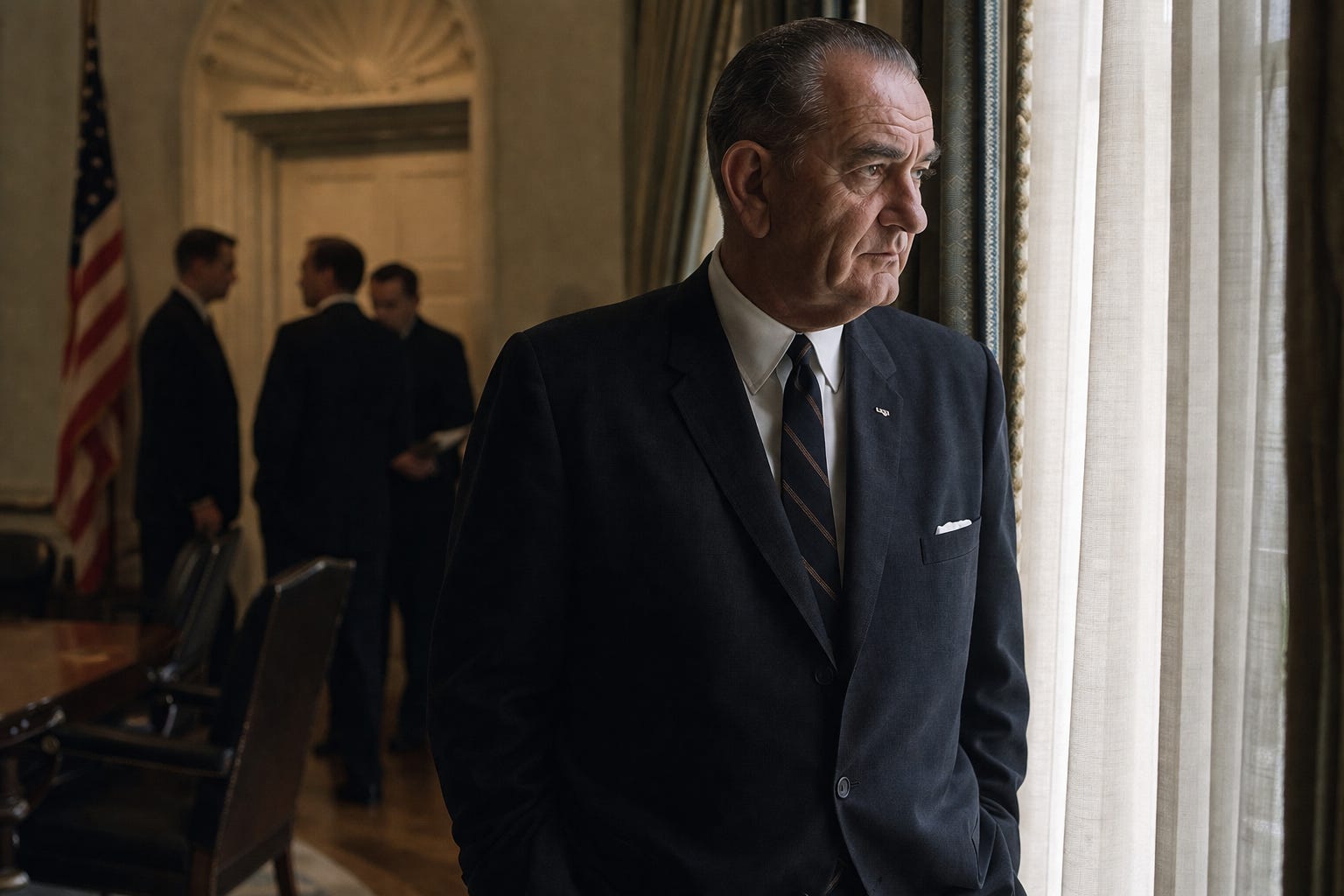
The benefits that flowed to Israel after Kennedy’s death were not gradual. They were not partial. They were immediate, comprehensive, and precisely calibrated to undo everything Kennedy had been building.
Dimona. Lyndon Johnson applied zero pressure on Eshkol comparable to Kennedy’s ultimatum letters. The inspection regime continued in technical form but became theater almost immediately. American inspectors were shown a false control room. Access to the underground reprocessing facility where the actual weapons work was happening was never granted. Johnson knew the inspections were fraudulent and did nothing.
Israel assembled its first nuclear devices by 1966. Three years after Dallas. On the eve of the 1967 Six Day War, Israel had operational nuclear capability as a deterrent. In 1969, Richard Nixon ended the Dimona inspection program entirely and concluded a secret understanding with Prime Minister Golda Meir that the United States would not publicly acknowledge Israel’s nuclear status. That policy of deliberate ambiguity, constructed in the ruins of Kennedy’s inspection regime, remains American policy to this day.
AIPAC. The Justice Department pressure to register as a foreign agent evaporated the day Johnson took office. AIPAC reorganized, rebranded, and over the following decades built the political fundraising and lobbying infrastructure that made it the most powerful foreign policy interest organization in the history of American democracy. The constraint Kennedy was trying to impose never materialized. What grew in its absence shaped American foreign policy for the next sixty years.
Weapons. Kennedy had resisted direct offensive weapons transfers to Israel, preferring to let France and Germany handle military hardware while America provided economic aid. Johnson broke this precedent almost immediately. In 1966 he approved the sale of A-4 Skyhawk attack aircraft. In 1968 he approved the sale of F-4 Phantom jets. Those decisions transformed the Israeli Defense Forces into a regional superpower and established the architecture of American military support that has made Israel the largest cumulative recipient of American foreign military assistance in history.
The Oil Depletion Allowance. Kennedy’s January 1963 tax reform proposals included the removal of the oil depletion allowance, a sacred tax break that had made Texas oilmen into billionaires. Its removal would have cost those men an estimated $300 million per year. Johnson dropped the proposal immediately upon taking office and never raised it again. Nixon followed his example. The allowance was not removed until Jimmy Carter.
Every single constraint Kennedy had placed on the most powerful interests in American politics dissolved within months of November 22. Every beneficiary had reasons to want him gone. Most of them knew each other. Several of them shared a hotel in La Jolla, California where nobody paid their bills.
We will get to that hotel.
🚢 The Exhibit That Closes the Case on LBJ’s Character
If you want to understand what kind of president Lyndon Johnson was in relation to Israel, one event answers the question more completely than any policy document or diplomatic cable.
On June 8, 1967, the fourth day of the Six Day War, Israeli aircraft and torpedo boats attacked a United States Navy signals intelligence ship called the USS Liberty in international waters off the coast of Egypt. The ship was flying the American flag. Its hull number was clearly visible. Israeli reconnaissance aircraft had flown over it that morning and identified it as American.
The attack lasted over two hours. Israeli aircraft dropped napalm on the bridge. Thirty millimeter cannons and rockets tore 821 holes in the hull, more than 100 of them rocket-sized. Torpedo boats followed. One torpedo struck the ship. Thirty-four American sailors were killed. One hundred and seventy-one were wounded. The casualty rate was seventy percent of the crew.
When the USS Saratoga received the Liberty’s distress call, it immediately launched twelve aircraft to assist. Those aircraft were recalled before they reached the Liberty. Recalled by direct order from Washington while American sailors were still dying in the water.
The Sixth Fleet carrier division commander, Admiral Lawrence Geis, challenged the recall order. When he did, Lyndon Johnson personally came on the line. The admiral’s subordinate, Lieutenant Commander David Lewis, later testified to what Geis told him. Johnson’s exact words, as Geis reported them, were: “I don’t give a damn if the ship sinks and all the Americans are killed. I will not embarrass my ally.”
That is a sitting President of the United States, on the phone with his own military commanders, ordering the abandonment of an American vessel under attack and the men dying on it. Ordering it because the country attacking American sailors was his ally and he would not embarrass them.
Retired Captain Ward Boston, senior legal counsel to the Navy’s original 1967 investigation of the attack, later signed a sworn affidavit stating that Johnson and Secretary of Defense Robert McNamara ordered those heading the Navy’s inquiry to conclude the attack was a case of mistaken identity despite, in his words, “overwhelming evidence to the contrary.” Boston described it as “one of the classic all-American cover-ups.”
This is the same man who constructed the Warren Commission. The same man who appointed Allen Dulles to investigate the murder of his predecessor. The same man who told a grieving nation that Lee Harvey Oswald acted alone.
If he was willing to let thirty-four American sailors die and bury the evidence, the question of what else he was willing to do answers itself.
Under Kennedy that attack would have produced a constitutional crisis. Under Kennedy Israel would have faced consequences that fundamentally restructured the entire relationship. Under Kennedy the evidence would not have been ordered destroyed before the investigation began.
But Kennedy was dead. And Johnson had already demonstrated, four years before the Liberty, exactly where his loyalties resided.
🎭 The Investigation Was Rigged Before It Started
If the Liberty tells you what kind of president Lyndon Johnson was, the Warren Commission tells you what kind of Attorney General Robert Kennedy was.
The mainstream account has held for sixty-two years. The passage from Johnson’s 1971 memoir The Vantage Point:
“As for the makeup of the rest of the commission, I appointed the two men Bobby Kennedy asked me to put on it, Allen Dulles and John McCloy, immediately.”
That is Johnson stating, in his own memoir, that RFK asked him to appoint Dulles and McCloy. And it is corroborated by the November 29, 1963 Walter Jenkins White House memo showing the recommendation flowing through Deputy Attorney General Nicholas Katzenbach from the Attorney General’s office.
Two sources. The sitting president who made the appointment stating on the record who asked him to make it. A contemporaneous White House staff memo written seven days after the assassination documenting the same recommendation flowing through the same chain of custody.
For sixty-two years this has been the story.
Robert Kennedy, the dead president’s own brother, put on the commission investigating his brother’s murder the CIA director JFK had personally fired after the Bay of Pigs.
The story does not survive close reading.
Dulles hated the Kennedys. The Kennedys hated Dulles. JFK had said privately he wanted to splinter the CIA into a thousand pieces and scatter it to the winds. Firing Dulles was the first move in that direction. RFK was operationally the more aggressive brother on intelligence matters, running Mongoose as Attorney General and personally overseeing the anti-Castro operations that had been taken away from the CIA after the Bay of Pigs failure. The idea that a grieving RFK, four days after his brother was killed, would have voluntarily invited the fired CIA director onto the commission investigating his brother’s murder requires ignoring everything RFK privately said and did in those days and for the next five years of his life.
David Talbot’s Brothers, the book-length treatment of RFK’s private response to the assassination, documents what actually happened. RFK was in near-total emotional collapse in the days after November 22. He was barely functioning. He told confidants privately he suspected the CIA in his brother’s death. He specifically distrusted Dulles. He told historian Arthur Schlesinger the CIA had killed his brother. He refused to cooperate with subsequent investigations. He never publicly retracted his endorsement of the Warren Report but he privately told those closest to him he did not believe the lone-gunman finding.
The Jenkins memo describes the recommendation as coming from the AG’s office. That was technically true. Nicholas Katzenbach was Deputy Attorney General and was speaking from the AG’s office. It was not the same thing as RFK personally requesting the appointments. Katzenbach’s November 25, 1963 memo, three days after the assassination and four days before the Jenkins memo, is on the record and states the objective plainly. The public must be satisfied that Oswald was the assassin. Speculation about a conspiracy must be shut down. The Justice Department was already operating on a narrative-management footing when the appointments were moved.
The chain of custody ran through McCloy first. John J. McCloy was chairman of Chase Manhattan Bank, chairman of the Ford Foundation, chairman of the Council on Foreign Relations, and the Rockefeller family’s most trusted trustee across three decades of American postwar institutional life. His appointment to the Warren Commission gave the commission its establishment credibility. His presence made Dulles’s presence acceptable. The McCloy-Dulles pair was not two independent selections. It was a package. McCloy the trustee, Dulles the compartment representative, moved through the Katzenbach channel while RFK was incapacitated.
Jefferson Morley’s work on the Angleton compartment explains the institutional stakes. The CIA had four vulnerabilities the commission had to be prevented from touching.
The Castro assassination plots. As Attorney General, Robert Kennedy had been the administration’s operational point man for Operation Mongoose and the successor programs. The CIA-Mafia collaboration to kill Fidel Castro had been authorized under Kennedy administration direction. Rolando Cubela was still being cultivated as an inside asset in Havana on November 22, 1963. A poison pen was being handed to Cubela in Paris at the exact hour Kennedy was riding through Dallas. A Warren Commission investigating the assassination without institutional control over what it examined risked opening the entire Castro-plot architecture. Oswald’s public pro-Cuba activity, his Mexico City embassy visits, his New Orleans Fair Play for Cuba leafleting would have provided every investigative thread the commission needed to pull.
The Mafia connection. The CIA had recruited Johnny Rosselli and Sam Giancana for the Castro plots. Robert Kennedy was publicly leading the Justice Department’s war against organized crime while the same organized crime figures were operationally partnered with the CIA under Kennedy administration authorization. If the commission had followed the thread from Ruby to the Chicago mob to Rosselli to the Castro plots, the Kennedy family’s simultaneous prosecution and partnership with the Mafia becomes the story.
The nuclear crisis pretext. LBJ told Warren directly that alternative theories of the assassination could produce nuclear war with the Soviet Union. That was not rhetorical inflation. If the public came to believe Oswald had killed Kennedy in retaliation for the Castro plots, and that Castro or Khrushchev had ordered it, the political pressure for military response would have been immediate and possibly uncontainable. The framing itself was a weapon. Warren, a Chief Justice who had never wanted the assignment, could be told that refusing to serve or refusing to reach the pre-scripted conclusion would risk World War III.
Angleton and the four words. Part 1 established that the CIA’s counterintelligence chief was running joint operations with a foreign intelligence service outside the sitting president’s chain of command. A Warren Commission with unrestricted investigative authority could have pulled the thread from Oswald’s HTLINGUAL surveillance file, monitored by Angleton’s CI Staff for four years before Dallas, straight into the Angleton compartment. The Dimona confrontation was live. Kennedy was pressuring Eshkol on inspections. The Angleton-Israel account was the operational relationship that stood to lose everything if the pressure held.
Dulles was the perfect gatekeeper for all four vulnerabilities.
He knew the Castro plots. He had run the CIA when they were authorized. He knew the Mafia collaboration. He had approved it. He understood the nuclear-crisis stakes and had every reason to protect the intelligence community from public exposure. And he knew Angleton personally, had built the counterintelligence apparatus Angleton inherited, and understood what would happen if the commission started asking questions about what Angleton had been doing.
McCloy carried the establishment weight. Dulles carried the compartment protection. Together they controlled what the commission could examine and what it could not. The Castro plots were withheld from the commission’s evidentiary base. The Mafia connection was minimized. The intelligence architecture was protected. Oswald was framed as a lone actor, no foreign contacts examined too closely, and the case was closed within ten months of the assassination.
RFK publicly endorsed the Warren Report. Privately he never believed it. He refused to provide additional information to investigators. He told Schlesinger and other confidants that the CIA had killed his brother. He ran his own quiet inquiries through trusted intermediaries. He never went public. He could not go public.
The story LBJ told in his memoir was the cover story. RFK did not ask for Dulles. RFK was incapacitated when the appointments were moved. McCloy and Katzenbach and the Justice Department institutional apparatus made the selections while RFK was still emerging from the shock. The Jenkins memo documented the paper trail. LBJ’s memoir eight years later locked in the false attribution.
RFK did not ask for the man who killed his brother’s dream of splintering the CIA. He accepted him because by the time he was functional again, Dulles was already inside and the choice was between silent acceptance and public confrontation that would have exposed the four vulnerabilities. He chose silence. He spent the last five years of his life privately trying to reconcile that choice, running his own quiet inquiries through trusted intermediaries, until he was killed on June 5, 1968 in Los Angeles.
The dead president’s brother did not put Allen Dulles on the commission investigating his brother’s murder.
The Rockefeller trustee layer did. McCloy delivered the establishment credibility. Katzenbach delivered the paper trail. Dulles delivered the compartment protection. LBJ delivered the appointment and eight years later delivered the cover story that has held for sixty-two years.
Under the Rockefeller trustees who moved through the vacuum, the commission became the mechanism that buried the case.
McCloy and Dulles will be investigated fully in future articles. Their roles on the Warren Commission were one moment in a much longer institutional relationship.
That is not conspiracy. That is documented history hiding in plain sight, waiting for the readers who were willing to read Talbot and Morley against the LBJ memoir and see what the memoir had covered.
The four words the CIA hid for fifty-eight years were the deepest secret the commission was designed not to find.
💰 The Man Who Connected Everything
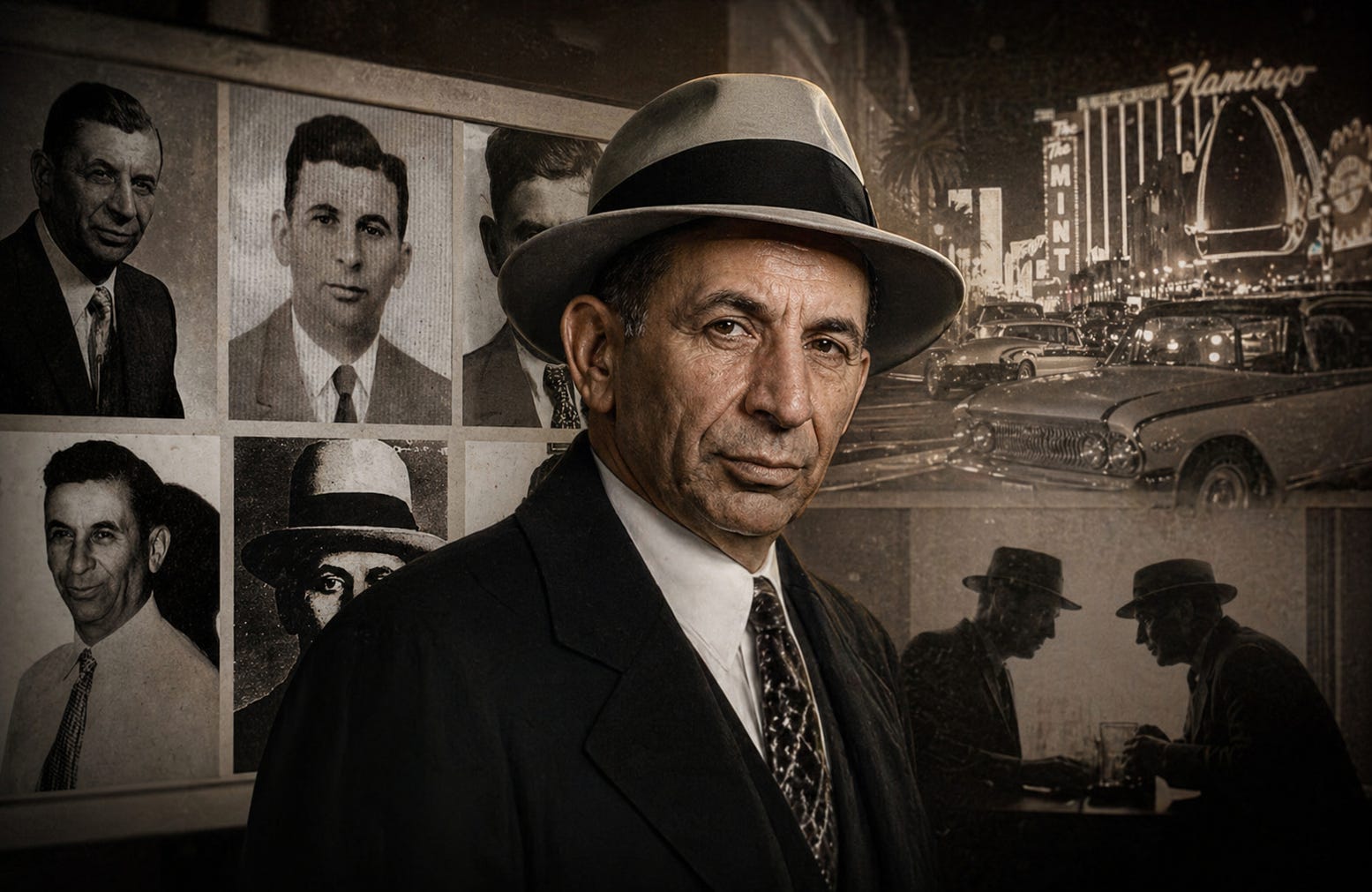
The benefits Israel received after Kennedy’s death did not flow through diplomatic channels or government policy alone. They flowed through a network that had been built over decades, a network that connected organized crime, intelligence services, political operatives, and foreign governments into a single operational infrastructure.
At the center of that network was a man most Americans have never heard of.
Born Maier Suchowljansky in Belarus in 1902, he arrived on the Lower East Side of Manhattan as a nine-year-old immigrant and spent the next eight decades building the financial architecture of American organized crime and the state of Israel simultaneously.
His name was Meyer Lansky.
His fictional alter ego is Hyman Roth in The Godfather Part II. The character’s original surname, Suchowsky, is taken directly from Lansky’s birth name, Suchowljansky. After the film’s premiere in 1974, Lansky called Lee Strasberg, who played the character, and told him: “You could have made me more sympathetic.”
The real Lansky was not sympathetic. He was something more interesting. He was indispensable.
His network co-funded the CIA’s anti-Castro assassination squad. His lieutenant connected directly to Jack Ruby, the man who shot Lee Harvey Oswald on live television 48 hours after Dallas, silencing the only man who could have testified under oath about what actually happened. His decades-long financial relationships with Israeli intelligence ran through the same Mossad operative who later ran Jonathan Pollard and later became Robert Maxwell’s handler. His wife later told biographers that her husband had photographs of FBI Director J. Edgar Hoover in compromising situations, and those photographs explained why Hoover spent forty years publicly insisting that organized crime in America did not exist.
And his network armed the state of Israel into existence in the 1940s, before Israel was a country, using the same smuggling infrastructure he had built moving bootleg liquor across the eastern seaboard in the 1920s.
Lansky is the connective tissue between every node in the network we are mapping. He is the reason the financial infrastructure, the criminal operational capability, the intelligence relationships, and the political cover all pointed in the same direction on November 22, 1963.
Next episode, we go inside his world completely.
The Godfather was not a work of fiction. It was a documentary with better lighting.
📌 What The Pattern Proves
Step back from the individual facts for a moment and look at the pattern they form together.
Kennedy threatens Israel’s nuclear program with an ultimatum. Kennedy threatens AIPAC’s political operation with foreign agent registration. Kennedy resists offensive weapons sales to Israel. Kennedy pursues Palestinian refugee rights. Kennedy is killed.
Johnson immediately abandons nuclear inspections. Johnson immediately drops AIPAC foreign agent pressure. Johnson immediately approves offensive weapons sales. Johnson covers up the killing of thirty-four American sailors by Israeli forces. Johnson constructs an investigation into Kennedy’s death that is chaired by a man Kennedy had publicly fired and staffed with an FBI informant who altered physical evidence to support a predetermined conclusion.
The pattern is not subtle. It does not require inferential leaps. It requires only the willingness to look at what happened in sequence and ask the question that sixty-two years of institutional pressure has been designed to prevent you from asking.
Who benefited?
The answer has been visible for six decades to anyone willing to see it.
The 2025 documents did not create that answer. They removed the last institutional excuse for pretending the question was not legitimate.
Thank you for any support you can provide!
The readers who share this piece are the ones keeping independent reporting alive. Every restack widens the circle. Every forward to a friend or colleague is a quiet vote for journalism that answers to its readers, not its advertisers.
And for those who choose to, the $3 tip jar is open below. It is less a payment than a small act of allegiance, a way of saying you stand with the work.
The story of how it was done, who did it, and how the cover lasted sixty-two years begins in episode three.
It starts, as so many American stories do, with immigrants, ambition, and the smell of money in Havana.
We’ve set the stage for the rest of story.
Series 1 Navigation
WE KNOW WHO KILLED KENNEDY
Part 1 Part 2 Part 3 Part 4 Part 5 Part 6 Part 7 Part 8
Series 2 Navigation
JFK: Too Big To Fail
PART 1 => PART 2 => PART 3 => Evidence Ledger => PART 4 => PART 5 => Part 6 => Part 7 => PART 8
The Sovereign Immunity Series Navigation
Part 1 => Part 2 => Part 3 => Part 4 => Part 5
📚 References
Cohen, A., and Burr, W. (2019). The Battle of the Letters, 1963: John F. Kennedy, David Ben-Gurion, Levi Eshkol, and the U.S. Inspections of Dimona. National Security Archive Electronic Briefing Book No. 663. George Washington University.
Cohen, A. (1998). Israel and the Bomb. Columbia University Press.
Hersh, S. (1991). The Samson Option: Israel’s Nuclear Arsenal and American Foreign Policy. Random House.
Burr, W., and Cohen, A. (2020). Duplicity and self-deception: Israel, the United States, and the Dimona inspections, 1964-65. National Security Archive Electronic Briefing Book No. 716. George Washington University.
Scott, J.M. (2009). The Attack on the Liberty: The Untold Story of Israel’s Deadly 1967 Assault on a U.S. Spy Ship. Simon and Schuster.
Boston, W. (2003). Affidavit of Captain Ward Boston, senior legal counsel, U.S. Naval Court of Inquiry into the attack on the USS Liberty, 1967. United States Navy Judge Advocate General’s Corps.
Moorer, T.H. et al. (2003). Findings of the Independent Commission of Inquiry into the Israeli Attack on USS Liberty. Capitol Hill, Washington D.C., October 22, 2003.
Lacey, R. (1991). Little Man: Meyer Lansky and the Gangster Life. Century.
English, T.J. (2007). Havana Nocturne: How the Mob Owned Cuba and Then Lost It to the Revolution. William Morrow.
Caro, R. (2012). The Passage of Power: The Years of Lyndon Johnson, Vol. 4. Alfred A. Knopf.
Summers, A. (1993). Official and Confidential: The Secret Life of J. Edgar Hoover. G.P. Putnam’s Sons.
Mellen, J. (2018). Blood in the Water: How the US and Israel Conspired to Ambush the USS Liberty. Prometheus Books.
Morley, J. (2017). The Ghost: The Secret Life of CIA Spymaster James Jesus Angleton. St. Martin’s Press.
Webb, W. (2022). One Nation Under Blackmail: The Sordid Union Between Intelligence and Organized Crime that Gave Rise to Jeffrey Epstein, Vols. 1 and 2. Trine Day.
House Select Committee on Assassinations. (1979). Final Report of the Select Committee on Assassinations. United States House of Representatives, 95th Congress.
National Security Archive. (2016). Kennedy, Dimona and the Nuclear Proliferation Problem, 1961-1962. Electronic Briefing Book No. 547. George Washington University.
Wolfe, J. (1989). The Murchisons: The Rise and Fall of a Texas Dynasty. St. Martin’s Press.
Corsi, J. (2013, November 20). Did JFK seal his fate with plan to dump LBJ? WorldNetDaily.
Twyman, N. (1997). Bloody Treason: The Assassination of John F. Kennedy. Laurel Publishing.
Shenon, P. (2013). A Cruel and Shocking Act: The Secret History of the Kennedy Assassination. Henry Holt and Company.
Illustration created using generative AI tools for editorial purposes.
Editor's Note, June 2026. This piece is part of the We Know Who Killed Kennedy series, grounded in the 2025 National Archives declassification. The new series Too Big To Fail builds on this same documented foundation and develops the institutional argument further. If you are arriving here for the first time, reading both series together gives you the complete picture.
Discussion about this post
“The Oil Depletion Allowance. Kennedy’s January 1963 tax reform proposals included the removal of the oil depletion allowance, a sacred tax break that had made Texas oilmen into billionaires. Its removal would have cost those men an estimated $300 million per year. Johnson dropped the proposal immediately upon taking office and never raised it again. Nixon followed his example. The allowance was not removed until Jimmy Carter.”
https://wavesandpositions.substack.com/p/what-israel-gained-when-kennedy-died


When you have eyes to see and the ears to hear you'll be open to understanding. America has been thoroughly brainwashed by something so diabolical that the majority of the populace will rather believe in the lies they've been fed instead of the truth that is so difficult to swallow.