Behind the public backlash against Flock cameras
Behind the public backlash against Flock cameras
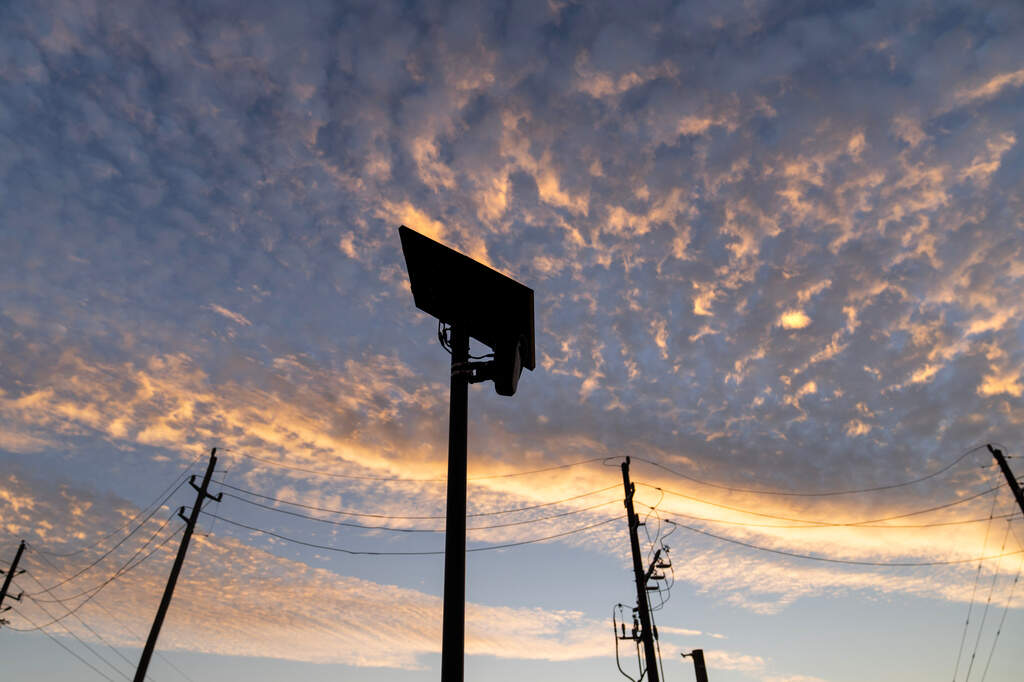
Flock cameras are used by thousands of police forces across the country to track vehicles. But a growing popular backlash has led to cities canceling their Flock contracts. What that says about the tension between public safety and privacy in America.
Guests
Jason Koebler, co-founder of 404 Media.
Charles Fain Lehman, senior fellow at the Manhattan Institute. Author of “In Defense of Flock."
Also Featured
Veronica Rector, reporter at the Bandera Bulletin.
Transcript of Full Broadcast
The version of our broadcast available at the top of this page and via podcast apps is a condensed version of the full show. You can listen to the full, unedited broadcast here:
Part I
MEGHNA CHAKRABARTI: This is the story of a little Texas town that fought back.
Support WBUR
VERONICA: Bandera itself is small. It's about 900 people that live there. It's called the cowboy capital of the world. That's what they like to proclaim, and I have to agree with them. They still have old Western buildings.
There's cowboys. It's a very conservative little town. Tiny, very close-knit community.
CHAKRABARTI: Veronica Rector reports for the local Bandera Bulletin. Bandera is about 50 miles northwest of San Antonio, and the town boasts sweeping hill country views. It claims to be the home of the last great cattle drives of the 1800s, a town where gunfights regularly break out, and I mean on the regular, every Saturday at Rattlesnake Ridge, not quite at noon, but at 11:00 a.m. and 1:00 p.m., through reenactments by the Bandera Texas Gunfighters.
It was to this little town where a new sheriff strolled in.
Flock cameras installed at the Bay Bridge alerted detectives to a pair of armed robbery suspects.
Violent crime is down to lows not seen since the 1950s.
Safety should not be a privilege. Safety should just be a right.
CHAKRABARTI: Flock Safety cameras. You've probably heard of them. These are the AI networked automated license plate readers that upload all their data to the cloud, enabling, according to the company, law enforcement to fight crime faster and more effectively than ever before.
You just heard a company ad that claims that crime has fallen by more than 40% in San Francisco since Flock cameras were installed in the city in 2024. In May of 2025, the Bandera, Texas, City Council decided that maybe they should give the Flock cameras a try. Let's go back to Veronica.
Support WBUR
VERONICA: The council actually voted on it, and that's when they said, "Okay, we're gonna do a year contract with Flock and see how it goes."
So that's how it initially started. There was no one there that went to go speak about it at that time.
CHAKRABARTI: By October, Flock Safety and the city council had agreed to pursue a motor vehicle theft grant from the state that would help cover the $17,000 cost for a one-year contract. Here comes 2026, and the city council changes in January, and the newly elected officials moved to get the cameras installed.
VERONICA: Flock was only able to install one camera within the city limits, and that immediately got vandalized. So they were like, "We're going to put a pause on this and not pursue installing others until we can get a town hall," which is what they did to get more information. There was a Flock representative that came to that town hall, Kerry McCormack, and he came and answered questions from residents. I feel so bad for him. He got torn apart during that meeting. Oh, it was so brutal.
REPRESENTATIVE: I'm a person that will not believe in big government. I don't believe things like this will be put up. For whatever reason, it is always a misuse of this kind of a system, and I don't like it. It's like Big Brother or deep state, all that stuff.
VERONICA: Maybe having these additional cameras in town feels a little bit disproportional to the local crime rate, and also to the essence of this community and our spirit, our cowboy capital way, our free state of Bandera.
REPRESENTATIVE: That type level of surveillance feels contrary.
Nobody is pro-murder or pro-criminal or pro-violence or pro-drugs or pro-human trafficking. But how much power are we gonna give to a government to be able to stop every crime?
VERONICA: But at the end of the meeting, after you hear countless residents being like, "We don't want this," one resident was like, "I just wanna make sure do you get what we're saying?
Support WBUR
We don't want it. Is there any questions?" And I couldn't help but laugh. I was like, "I think we get it." And even the city secretary was like, "No, we get it. We hear you."
CHAKRABARTI: They did hear them, and yet the townspeople still found themselves on the outs because even before Bandera, Texas, received that full state grant, the city secretary paid Flock Safety that $17,000.
VERONICA: They will not be getting reimbursed for it, so they're out $17,000. And obviously they're not going to get that grant because they're not using it for what the grant was intended for. So people were pretty upset about that because it was, again, a month after the explosive town hall, and they thought they had made their opinions very clear.
And also within that timeframe, a month after the town hall, the mayor actually gave Flock the go-ahead to continue installations.
CHAKRABARTI: You can imagine how that felt to the city councilors. They were still feeling really burned by that heated January meeting. They had said, "We hear you." They told that to residents, and yet the cameras still went up.
So the city council asked the city's legal team for more information.
VERONICA: After the town hall, they asked the city attorney like, "Hey, bring the contract so we can understand the terms of cancellation because that's where we're leaning." And at that meeting, the attorney was like, "Yeah, I don't have the contract to go through it."
So the city had to delay a meeting all the way until May, and I believe it was May 12th that they canceled the Flock contracts with a three to two vote.
CHAKRABARTI: And with that, the cowboy capital of America rode Flock cameras out of town. I promise that is my last cowboy pun for the day. But residents there in Bandera are still keeping an eye on their local officials.
Support WBUR
VERONICA: I have never seen City Council so packed now. There's residents constantly showing up to be heard because they're like, "We just wanna make sure you're actually listening to what we're saying." So it's been very heated politically.
CHAKRABARTI: So once again, that's Veronica Rector. She reports for the Bandera Bulletin, and folks, we could not do this show, we couldn't actually even have an America, I would say, if it weren't for local reporters like Veronica.
Now, so things are getting very heated politically, as she said, in Bandera, Texas, but this is also happening in cities and towns across the country. Flock Safety cameras are popping up in municipalities in order to protect public safety, but they have quickly become public enemy number one, even in places that traditionally profess almost unquestioned support for law enforcement.
So this is highlighting an age-old tension between safety and privacy, and it's a tension that has become so much more urgent in the age of AI. So let's turn to Jason Koebler for more on this. He's co-founder of 404 Media, and he's followed surveillance technology for years. He joins us from Los Angeles.
Jason, welcome to On Point.
JASON KOEBLER: Hey, thank you for having me.
CHAKRABARTI: Okay, so when Veronica said that the one Flock camera that had gone up in Bandera, Texas, was vandalized, I think a more accurate way of putting it is someone shot at it. Is that right?
KOEBLER: I believe it was shot by a shotgun, and yeah Veronica did such excellent reporting on that.
But I went back and watched a lot of the City Council meetings in Bandera, and it's a microcosm of what's been happening in cities and towns throughout the entire country. The type of rhetoric that you just heard, this idea that people don't want these, the vandalism, this is happening in dozens of towns all throughout the country.
Support WBUR
CHAKRABARTI: Okay, so we're going to talk about that, but let's get the backstory on Flock Safety, the company itself, because if memory serves, it was founded, what, just in 2017. Is that right, Jason?
KOEBLER: It was and it was founded as an automated license plate reader company. It really didn't blow up on the scene until 2021 or so, which is when Flock announced this product called TALON, which is a nationwide network of these Flock cameras that do license plate reader tracking.
And that's what really separates this company from a lot of its competitors, is this technology called automated license plate readers have been around for a really long time, and there's a lot of different companies that offer it. But what Flock did was they said, "We will network these all together."
So if you are in one town you can search for the license plate of not just people in your town, but also people one town over, other places in your state, and eventually the entire country. And so this is really how Flock differentiated itself in 2021.
CHAKRABARTI: So just to be clear, it means that someone, a member of law enforcement, say, in Duluth could theoretically see people moving around or track someone in San Francisco.
KOEBLER: Exactly right. And that has led to a lot of really interesting and quite complicated cases. Last year I reported that cops in Tennessee and Texas and South Carolina were partnering with ICE to do immigration enforcement using this technology. So they were searching license plates on behalf of ICE, and they were searching not just in their towns and states, but they were also searching in Illinois and in California, where there are laws that actually prohibit the use of this technology for immigration enforcement.
You had various cases of police searching these cameras for a stolen vehicle in some cases, but also for maybe protesters. And they were searching not the dozen cameras that were in their town, but they were searching 80,000 cameras nationwide.
CHAKRABARTI: Wow. Okay, so we're going to talk a little bit later with another guest about the purported benefits of this kind of both local and national surveillance system.
But I want to ask you, Jason, a little bit about Flock's decision to actually market directly to municipalities, right? Because if the attraction is eventually you're gonna join this national network, why did they decide to go local at the start?
Support WBUR
KOEBLER: Yeah, this is this is something that I'm very interested in.
Again, I've reported on surveillance technology for years at this point, and there is a playbook where surveillance companies will go to one or two small towns. They will say, "Hey, we have this really interesting technology. You can be seen as a really innovative player in this space if you pilot the tech."
This happened, Flock is from Georgia, and so a lot of police departments in Georgia tried this technology out. And once they got ahold of it, they said, "Hey, this is really interesting." And so police officers talk to each other. They have all these different conferences where they demo technology.
There's all these different LISTSERVS where police officers talk about new things that they are trying. And basically, it spreads by word of mouth. And so you have maybe one town that's piloting it, the town two towns over will try it, and suddenly it spreads throughout the state.
And this is exactly what happened with Flock. It has the local contracts directly with city councils or with police departments in different towns. And through word of mouth, it went from being in a couple dozen cities to a couple hundred cities. When I wrote this story about immigration and cooperation with ICE last year, it was in 5,000 towns.
Now it's in about 10,000 towns. So it's really spread in this very exponential way over the last few years.
CHAKRABARTI: And perhaps it's that speed of the spread which has also then given life to an equally exponential pushback against these Flock cameras. We're seeing entire states now saying, "Nope, nope, nope. Wait a second."
Part II
CHAKRABARTI: We started our show today with the story of what happened in tiny Bandera, Texas, and how residents there said they did not want those Flock cameras. Trickle up again to the state level, and here's Texas Governor Greg Abbott, a Republican, who frequently stresses his unequivocal support for law enforcement, but he said in a press conference late last month that he doesn't back Flock.
Support WBUR
ABBOTT: I've cut off any funding from the state for Flock cameras. Most of the money for Flock cameras actually comes from the federal government and is used at the city level and things like that. And it's going to be up to city officials themselves to unplug the Flock cameras. However, what has already been observed is that cities across the state are already unplugging from Flock cameras.
CHAKRABARTI: So that's in Texas. Over in Florida, Governor Ron DeSantis, also a Republican, said last week that he also does not support the use of Flock cameras.
DeSANTIS: So I think it's out of control, and this is something that in Florida, our highway patrol, we have readers for tolling by plate and things like that.
Now, I've never supported the automatic tickets being sent if you're speeding. I think a, a human being has to do that, and so I've never embraced that.
CHAKRABARTI: By the way, just this week, the state of Florida banned flock cameras or has instituted a ban of flock cameras on state highways in Florida.
So Jason Koebler's with us. He's with 404 Media. Jason, I'm wondering if you could give me, what you think is another good example or two of how really individual resident feedback and opposition to the Flock cameras has led to what now we're seeing is, in some places, even sweeping statewide change.
KOEBLER: Yeah. There's this it's called the deFlock movement, which actually grows out of this project to map Flock cameras in the United States. So it's an open source map, meaning anyone can walk around. If you see a camera, you take a photo of it, you upload it to this map, and this was an effort to determine where these cameras are.
And over the last few years, people have documented roughly 100,000 of these. And as people started documenting them, they started learning more about them, and this has led to people just educating themselves about how they're being used. As we've been discussing, people have very serious issues with them.
And there has been a backlash like at city council meetings primarily, where people will say, "Hey, we didn't know that this technology was in our town. Now that we have this map, now that we see them on the street, we're wondering, when were they approved? Did we miss a meeting?" And in some cases, they did.
Support WBUR
In some cases, there was this public process. In other cases, the cameras were bought using police discretionary funds, meaning police just decided to buy them, or they came in through a grant program or a pilot program. And this has led to a couple high-profile incidents like in Bandera, as you discussed, but then also in Georgia, there had been this town called Dunwoody where the residents there learned that their town was being used as essentially a sales pitch for Flock where Flock employees were going into the town's cameras and were demonstrating what was possible with this technology, which included tapping into cameras that were at a pool, at a children's gymnasium and the residents there were furious.
And so this has been now a months-long saga where residents are getting public records, showing all this sort of collaboration between the city and Flock and saying, "We don't want this here."
CHAKRABARTI: Yeah. So let's get back to what I think is at the core of this, which is, as I said earlier, this now AI-inflamed tension between public safety and personal privacy.
And Flock would say, and has said that, look, in places where our cameras have gone up, I pointed to the San Francisco example a little earlier, it has been an incredibly useful tool in the reduction of crime. For example, Flock CEO Garrett Langley was on ABC News just last week, and here's what he said.
GARRETT LANGLEY: We helped in over a million crimes last year, over ten thousand missing people.
CHAKRABARTI: Jason, does that seem accurate according to your reporting?
KOEBLER: It's really hard to say, and I'm sorry to be a little wishy-washy here, but there have been various studies trying to put a statistics on whether ALPRs reduce crime, whether they're used to solve crime, and they certainly are.
There's high-profile anecdotes of Flock network being used to solve crimes. There's also high-profile anecdotes of Flock cameras being abused. What there hasn't been is really good, strong studies showing this either reduces crime or helps to solve crime. Flock has tried to do this a few times. They have paid for various studies to show this technology is useful.
I think eventually we will get more and better data. There's no doubt that it has been used to find missing children, to find stolen cars. The question is just whether the privacy trade-off is worth it.
Support WBUR
CHAKRABARTI: Okay, so Jason Koebler with 404 Media. Hang on here for just a second.
I'm gonna ask you to sit back for a little bit because I'd like to bring in Charles Fain Lehman into the conversation. He's a senior fellow at the Manhattan Institute, and in the August issue of The Atlantic magazine, he wrote an article titled In Defense of Flock. Charles, welcome to On Point.
CHARLES FAIN LEHMAN: Thanks for having me on.
CHAKRABARTI: So tell me a little bit more about what evidence that Flock cameras, those license plate readers, are actually doing what the company says and have become an important tool for law enforcement.
LEHMAN: Yeah, I disagree with the characterization, although I understand how we got to the sense that there isn't a lot of research, because the research is moving very quickly.
What we know about fixed automatic license plate readers, ALPRs, is evolving pretty rapidly, but I would say basically we have three different kinds of studies. We have one very recent study done by a couple of criminologists at the University of South Carolina, where they exploit what researchers call a natural experiment.
They look at the staggered rollout of Flock cameras in 216 jurisdictions and what they find is an 11% reduction in motor vehicle thefts and then suggestive evidence for reductions in other kinds of property crimes, as well as suggestive, although not conclusive evidence that clearance rates for motor vehicle thefts go up.
So that to me is the strongest evidence that is available to us that says, yeah, Flock or ALPRs more generally almost certainly reduces crime. I can get into that study a little bit if you want me to. Then there's a second bucket of studies which are similar quality studies on cameras per se.
We have four or five of those which look at things like putting a camera in Montevideo, Uruguay, or putting cameras in the Stockholm subway system, and those pretty consistently show reductions in crime on the order of 20%. The question there is how analogous cameras are to ALPRs. You can go back and forth on that. The third bucket of study is earlier research that is lower quality, but it looks at fixed ALPRs, so we have research in Charlotte, in Buffalo, in Atlantic City, all three of which can be read to imply at least some crime-reducing effects.
Support WBUR
But none of those studies is optimally designed for doing what we talk about as causal inference. They don't have good control groups, and so there's a lot of limitation. What I like to say in a space like this is, "Look, we don't have perfect signal, but we have increasingly high-quality signal, and most of the signal points in the direction of crime is reduced when you implement these things."
And that is consistent with the prior theory that says if you put a camera in a place, all else equal, people commit fewer crimes in that place.
CHAKRABARTI: Yeah. Let me give you another example and let, and tell me what you think 'cause I did reference it at the top, and that is San Francisco, right?
And, Flock is really talking about the San Francisco example, but so are San Francisco city officials.
Because look, for years, San Francisco became infamous, I should say, for the amount of vehicular-based crime like vehicle theft, smash and grabs, things like that, to the point where people in San Francisco, when they were parking their cars, they were leaving their windows rolled down and their trunks open so that people wouldn't smash their cars to steal a backpack.
We have the mayor of San Francisco saying that era is over now, that kind of crime is so far down we haven't seen those levels since 1950. I'm just wondering what you think of that example. I'm not over, next door in Oakland, there's a really big pushback against Flock cameras, but what do you make of what's happened in San Francisco, Charles?
LEHMAN: Look, you always have to be careful with an example like that. Okay. There was a major surge in motor vehicle theft nationwide 2021, 2022, 2023. It's come down a lot in a lot of places, and so I'm always wary of going, "In this one city, it's working." That doesn't tell me a huge amount, but it tells me a little bit, right?
The fact that SFPD thinks that this technology is helping. There was an interview that got surfaced with a San Francisco-based rapper with what I would describe as an extensive alleged criminal history and so therefore some knowledge to speak on the topic, who said, "If you're a car thief in San Francisco, you just don't operate anymore.
There's just no point in being in the business because in large part of the ALPRs, of the license plate readers." I'm always wary when people go, "Look at this one, look at this one city." I'm certainly wary when a company like Flock comes and says the evidence is this one city's experience.
Support WBUR
I'm certainly wary when a company like Flock comes and says, the evidence is this one city's experience.
Charles Fain Lehman
But it's not nothing, and I think it's consistent with what we know, and so I can certainly say that is part and parcel of a broader base of evidence that says, "No, really, there are crime-reducing effects here."
CHAKRABARTI: , so let's look abroad. You did this in your Atlantic article. Is there evidence from, let's say, other countries where mass surveillance like this has actually had a meaningful reduction in or impact on reducing crime?
LEHMAN: Yeah, and I alluded to this a little bit earlier. Yeah. I think there are four different studies, one in Medellín, Colombia, one in Montevideo, one in Stockholm, and then we're looking at the rollout of cameras in China. And what all these studies do is basically say the cameras are put in different places at different times.
Let's say, let's compare what's happening in those places before and after the cameras are rolled out versus what happens in places where there aren't cameras. And pretty consistently what they show is significant, statistically significant, large reductions in crime on the order of 20%. There's a big question of course about can you analogize from a fixed camera in a subway system or in a city to what an ALPR does.
But in my mind, that is at least pretty good suggestive evidence of when you roll these things out, they are likely to have some crime-reducing effect.
CHAKRABARTI: Okay, so let's get straight to the concerns that people across the country have raised about having so many more cameras, and I think as Jason very accurately pointed out, they aren't just local.
They are able by definition, to be networked nationally, and the privacy concerns that it raises. You know of all the examples of police surveilling people who aren't even suspected of any crime, and Jason talked about cooperation with ICE, et cetera. Do you feel or not that this is a new level of mass surveillance that we haven't seen in the U.S. before?
LEHMAN: I'm wary of making that characterization for a couple of different reasons. One is that while the conversation is new, ALPRs really aren't. Some people say, "What if we had license plate readers during COVID?" And part of my answer to that question is, we did have license plate readers during COVID.
Support WBUR
67% of large police agencies used license plate readers in 2020. It's not a new technology. It's not a technology people have found particularly intrusive until recently. The second point I would make is, look the expectations of privacy here are different. The Supreme Court has been very clear.
You don't have an expectation of privacy as to the exterior of your vehicle, as to your movements on public thoroughfares, as to what you're doing with your license plate, which you don't even technically own. Those are the expectation is very different in that context versus in my own private home.
I'm much less worried about my privacy out walking around where everyone can see what I'm doing. I think there is a difference when it comes to really big, really high resolution collection of data. The way the court has talked about this is in cell phone data, for example, right? Where they've analogized your cell phone to basically being like an ankle monitor.
But I question the idea that most LPR networks as they currently exist look like that, right? The story that started the show is talking about a single LPR. You can't do mass surveillance with a single camera. Tempe, Arizona.
CHAKRABARTI: But it's not, it's not a single camera, right? The whole point is that it can, it's networked nationally.
LEHMAN: /// It's networked nationally, but if you wanna talk about nationally, then you have to talk the total area nationally, right? There are 4 million miles of roads in the United States. There are 120,000 Flock cameras. They cover 75 feet.
That's less than half a percent of all the roads in the United States.
But then again, if you're looking within PDs, Tempe, Arizona just tore down its Flock cameras for what I think were not very good reasons. It's a 40 square mile city. They had 33 cameras. I don't think you can do mass surveillance in the city of Tempe with that kind of structure in place.
Can I imagine a scenario where our nation is blanketed with cameras? Yeah, and I'd be very alarmed by that. But I don't actually think that's what most implementations factually look like.
Support WBUR
Can I imagine a scenario where our nation is blanketed with cameras? Yeah, and I'd be very alarmed by that. But I don't actually think that's what most implementations factually look like.
Charles Fain Lehman
CHAKRABARTI: Okay. Charles, l wonder what you think about this because as I've been exploring more the tension over these Flock cameras, it got me wondering about if Americans are being I don't know kinda hypocritical.
Because in my early days of reporting, I've been here in the Boston area for a long time, I had to report on crime in certain neighborhoods, and those neighborhoods, let's be frank, low income, largely people of color, they have had surveillance in their neighborhoods for a long time. Cameras on multiple corners, shot spotters, things like that, in order to reduce crime.
It's a fact of life in those neighborhoods. Lots of people want that stuff, some people don't. But I kinda get the feeling that right now a lot of the pushback against Flock, and it's especially from the populist right, like Tucker Carlson has called it the encroachment of the coming slave state, is coming from white people in the suburbs who are like I'm not a Black person who lives in the inner city.
I'm not a criminal. Why should I be surveilled? But on the other hand, they're completely okay with surveillance because of all those Ring cameras on people's doors. Law enforcement can ask for those videos at any time. You talked about cell phones. We walk through TSA every single day, et cetera, et cetera.
There seems to be something, as I said again, a little "I'm white, I'm safe, don't put the cameras up in my neighborhood."
LEHMAN: Yeah, I'd say a couple of things. One is it's certainly one thing that you often hear is basically, we know who the criminals are. Why do we need this? And my response is, charitably, if I wanted to interpret that maximally charitably, I would say we often don't know who the criminals are, and even if we do, it matters a lot that we can construct a case against them that can prove beyond a reasonable doubt that they engaged in crime, and there's a lot of virtue to doing that. The second thing I would say is look, I am not for not imposing regulation on these cameras.
I think that some people do have reasonable concerns. I'd like to see rules about auditing. I'd like to see penalties for abuse. To really engage with your point, I think that Americans' revealed preference, our taste for surveillance is actually quite high, right? We all carry around these tracking devices in our pocket, I have a lot of people on my Twitter saying to me I can turn off the location data on my phone.
I have a lot of people on my Twitter saying to me I can turn off the location data on my phone.
Charles Fain Lehman
Support WBUR
I'm like, "You, but you don't," right? You are tracked all day every single day, and the police can use that data against you, and they do on a regular basis if in a national criminal investigation. But our revealed preference is that basically we're okay with that, and we don't find it ... we don't find living in that society particularly upsetting or alarming.
There are exceptions to that rule, absolutely, and I think that there are real risks of abuse, which is why you wanna regulate in an intelligent fashion. I think the freakout is selective. It's about what's in people's field of view. It's about what's blowing up on social media, what's coming to their attention, in a way that's counterproductive for a nuanced conversation about how do we optimize safety while preserving people's privacy.
Part III
Now, for the cops watching this or the feds watching this, I did not cut it down, but I fully support whoever did.
This is one of the eight cameras that Winona police say were cut down by vandals.
I think it's wild that people have to take matters into their own hands.
I wish people didn't have to do that, but I do think it's nice to see people fighting back.
Bye bye Flock camera.
(EXPLOSION SOUND)
Support WBUR
CHAKRABARTI: An explosion there. Okay. By the way, I wanna be abundantly clear that by playing this tape, we at On Point are not saying that we support in any way the destruction of public property.
So Jason, though, let's talk more about what you heard, first of all, Charles Fain Lehman say about what he sees as people actually in the United States are not entirely opposed to mass surveillance, but there's something specific about Flock cameras that's really getting under folks' skin.
Your thoughts?
KOEBLER: Yeah, I think that's a really important point that he brought up because over the last, few decades, we have been the frog boiling in the surveillance soup, if you will, where social media tracks us, our phone tracks us. There's, NSA revelations from Edward Snowden, et cetera.
And it feels very often like there is nothing that you can do to push back against this. This is like either the federal government is doing it or huge tech companies that impose this system upon us without us being able to meaningfully push back unless you are willing to essentially drop out of society, if you're willing to have a dumb phone, if don't engage with social media at all. And I think with Flock cameras, people feel like there actually is something that they can do about it because often the people who have brought these cameras to town are their mayor, their local police chief.
With Flock cameras, people feel like there actually is something that they can do about it.
Jason Koebler
They have a place to go and yell about this, which is the city council meeting. And then, what we're seeing with these vandals is frankly it's another kind of prison of our own making where these social media algorithms are promoting this type of thing. It's like this is not a small movement.
These videos that you played, I didn't know exactly which ones, but I log on to Instagram and these have not 5,000 views. They have millions and millions of views. And so these are resonating with people. And, it's being amplified by all of the types of big tech products that this is actually a bit of a backlash against.
CHAKRABARTI: Yeah. And also, I'm wondering what you think about the fact that the Flock cameras, by virtue of them having to be able to see license plates, they are, like, in people's faces, right? They're not hidden behind in trees or camouflaged in some other way. Do you think that's part of it, that neighborhoods or parts of cities and towns that aren't used to having such overt official surveillance, it's quite a shock to see these kinds of cameras wherever they are.
Support WBUR
KOEBLER: Yeah. If you walk down the street in New York City, you're gonna see tons and tons of cameras outside of businesses, at intersections, et cetera. If you are in a small town in Oklahoma driving down the street, you probably aren't going to see tons of cameras on the side of the road. And what Flock has done is they install their cameras on their own poles and they are a bespoke individual pole that sits alongside an intersection or alongside the street.
So it is a very like in your face new addition to a town. And so when this happens, people hear about it, they talk about it on social media. It may go up on the DeFlock website I was talking about earlier that maps these. And so it is a very kind of visceral thing that people can see. And I think to Charles' point that it doesn't encompass a huge amount of land in the United States.
I think this is now in 40% of all towns. I think also you are in a car, you're not driving on one street. These are placed at intersections that are popular. And so it is getting difficult to drive any meaningful distance in the United States without driving past one of these. And I think people realize that and they know that.
CHAKRABARTI: So let me ask you also about the legal point that Charles made, because I think it's an important one. In the United States, I would argue that we have accepted for a long time that federal law enforcement can track people across the country, right? The FBI does that through various means and sometimes they have to get a warrant to do it, other times they don't.
There have been a lot of legal cases, I have to say, that do question and push back federal law, push back on federal law enforcement's ability to do that kind of surveillance. But as you said earlier, Jason, the big difference here is that we're talking about local law enforcement being able to cast this new panopticon across the country and without a warrant.
That does actually feel, and correct me if I'm wrong, but distinctly different from other kinds of national surveillance that we have had before. Is it or is it not?
KOEBLER: I think that it's different. I do agree that when you are in public, you do not have an expectation of privacy. This is a tenet that we have in the United States where that allows me to do my job.
I can take photos in public and, not expect to get sued for it. But I think the difference here is the automation and the fact that it is a sort of persistent database that lasts for ... it was 30 days. Flock announced that they're gonna hold the data for seven days before deleting it in response to some reporting by The Washington Post, by us, by other journalists.
And I think that the law is behind here. It's behind technology. I think that the sort of automation of it and the fact that it's not just that a police officer can sit on one intersection and take a photo of your license plate, it's that we have this network of 100,000 cameras passively doing this and talking to each other with artificial intelligence.
Support WBUR
That makes this significantly different. I think that, again, I think our laws are not at a place where it hasn't really grappled with this.
CHAKRABARTI: So we'll get back to the law in for a second, but you made an important point about the AI factor here. Can you tell me a little bit more about how these cameras use AI?
What does the AI do?
KOEBLER: Yeah there's something called a hotlist which allows a police officer to enter a license plate into the system, and any time that license plate drives past a Flock camera, the police officer will get an alert saying, "This car was seen in this place." This is functionally uses optical character recognition that is a very automated system.
Flock has also introduced something called freeform search, where instead of just typing in a license plate, you can type in something like black SUV and search for all of the black SUVs that have been seen in an area. This happened in Florida about a year ago, and after a hit-and-run crash the Flock system detected a black SUV.
After this fatal hit-and-run crash, the police pulled the woman over. It was the wrong black SUV, and this woman spent 13 days in prison for a crash that didn't actually happen or that she wasn't involved in. And so there's a lot of kind of cases like this. I think that proponents will say in a perfect system, this will lead to fewer innocent people getting pulled over randomly by the cops, but where the tech is right now, there are all sorts of instances where there's a mistaken identity, where there's a typo in the license plate that a cop puts into the system and innocent people are pulled over.
We're being asked to deal with the growing pains of this technology, and it has very serious impacts on people who are caught up in this.
CHAKRABARTI: And I think this is another major reason why people have this increasing discomfort with the fact that the way tech is launched these days, we are the guinea pigs as these companies work out the kinks in their new systems.
We're being asked to deal with the growing pains of this [Flock] technology, and it has very serious impacts on people.
Jason Koebler
Support WBUR
That's basically what you're saying. We are not living in that perfect world. Flock, like other tech companies, has launched a product. It is not ideal just yet, but the way to get it there is to feed it more and more data, and the only way to get that more and more data is for the cameras to watch us.
This seems, again, it's like a deal that people did not sign up for, and yet they're forced into in order to make a product better.
KOEBLER: Yeah, so the CEO of Flock is this guy named Garrett Langley, and if you listen to him talk, his goal is to stop all crime in the United States that Flock could reasonably stop.
The CEO of Flock is this guy named Garrett Langley, and if you listen to him talk, his goal is to stop all crime in the United States.
Jason Koebler
And, on its face, this is a laudable goal, but this is his goal, and he wants to accomplish it in his way by making a lot of money selling cameras to cops. And again we don't really have a say in how this is deployed or at least many cities have not had a say, or residents feel like they haven't had a say because the cops have bought it.
They've, under the guise of a pilot program or an experiment or under a grant or using discretionary funds, and suddenly they have these cameras that are surveilling them, and they feel like they haven't really been, had that conversation about, what is the trade-off here? This technology can be used to solve crimes.
That is a very good thing. It can be regulated, but it hasn't been regulated in any meaningful fashion. And when you listen to the company talk now that there's a backlash, they say, "Oh, the, we're just taking static photos using our cameras." But they have launched all sorts of products saying pair your automated license plate reader cameras with live video."
They're adding AI features. They're adding, they're bringing in data from other sources as well to help cops do this, and the question is, like, how much of this do we want, and what should the guardrails be?
CHAKRABARTI: Yeah. Let's go back to what Florida Governor Ron DeSantis has said. And by the way, we've played a couple of Republican governors here.
Support WBUR
I should make it clear that the pushback has been bipartisan amongst lawmakers across the country. It's just that DeSantis had a press conference about this just last week, and again, he emphasized his support for law enforcement and having tools that will help police officers do their work. But he said he draws the line somewhere, I'm not sure exactly where, but he doesn't want to live in a, quote, "surveillance state."
DeSANTIS: I don't want to be in a situation where these tech companies, a handful of tech companies, know everything about you and know where you're going, and I know they collect a lot as it is, but I think it's gonna get a lot worse unless we have some protections for the people in Florida. And but the only way it could be dealt with is legislatively.
CHAKRABARTI: So Jason, has there been active legislation proposed specifically about the Flock cameras?
KOEBLER: It's been a real patchwork. There's been some proposals to ban this technology nationwide. That's not going to happen, I don't think. Forgive me but politicians grandstanding with legislation, that's not gonna go anywhere.
There's been local cities have banned the tech or have gotten rid of their contracts. The state of Illinois says, you can't use this for immigration enforcement, for example. So there's been restriction on what it can be used for. I think crucially, Flock will say, "Oh we want regulation. We want to be part of a national conversation." The thing that privacy experts want is a requirement for a warrant.
And that it seems to be a non-starter. There's been several lawsuits against Flock saying that already this should be a violation of the Fourth Amendment, and that police should have to get a warrant.
And Flock has fought those lawsuits vehemently when they're against the local police. Flock's lawyers will also file amicus briefs saying, we disagree. And I think that this iis the big question. Is there going to be a warrant requirement at some point?
And I think that that would solve a lot of problems because it would require a judge to sign off on whether this technology should be used for any individual crime. I think there is then the question of, is it actually gonna be used, can it be fast enough? Can the system be fast enough with a warrant requirement to actually solve those crimes, or does that just ruin the technology entirely?
CHAKRABARTI: Exactly, because if you have to wait 24 hours to get the warrant, the utility of the Flock cameras ostensibly goes down. But to your point, a warrant would actually force law enforcement to actually at least to a judge, present some kind of probable cause, which would go a long way to taking care of those privacy concerns. But Jason, one last question for you in the last minute that we have. I keep thinking about how it's no accident that AI is part of this picture because at the same time, we have this massive pushback, grassroots pushback against Flock cameras, we also have people pushing back against AI data centers.
Support WBUR
It's one more aspect of this new and all-encompassing technology really pushing in physically into people's lives in a way that are making people not just uncomfortable, but just downright angry that they don't want it, they're not ready for it. I'm wondering if you see a comparison there.
KOEBLER: Absolutely. City council meetings used to be the most boring thing in the world. I used to watch a lot of them. I'm watching a lot more these days. People are realizing that they can go and push back against this technology with these two very physical things that they feel are intruding in their lives that maybe are not the thing that they're actually mad about in some cases, I think, but represent a greater unease with artificial intelligence, with surveillance.
I think that we have talked about it. Flock is not the only company that's doing surveillance for police. It's just a very prominent one, and it has, I think, made the mistake of being very public and going to these city council meetings and saying, "Buy this technology," and so it has become this thing that people are pushing against in the same way that data centers have become that for the broader AI community or industry.
The first draft of this transcript was created by Descript, an AI transcription tool. An On Point producer then thoroughly reviewed, corrected, and reformatted the transcript before publication. The use of this AI tool creates the capacity to provide these transcripts.
This program aired on September 2, 2026.
https://www.wbur.org/onpoint/2026/09/02/public-backlash-against-flock-cameras


Comments
Post a Comment